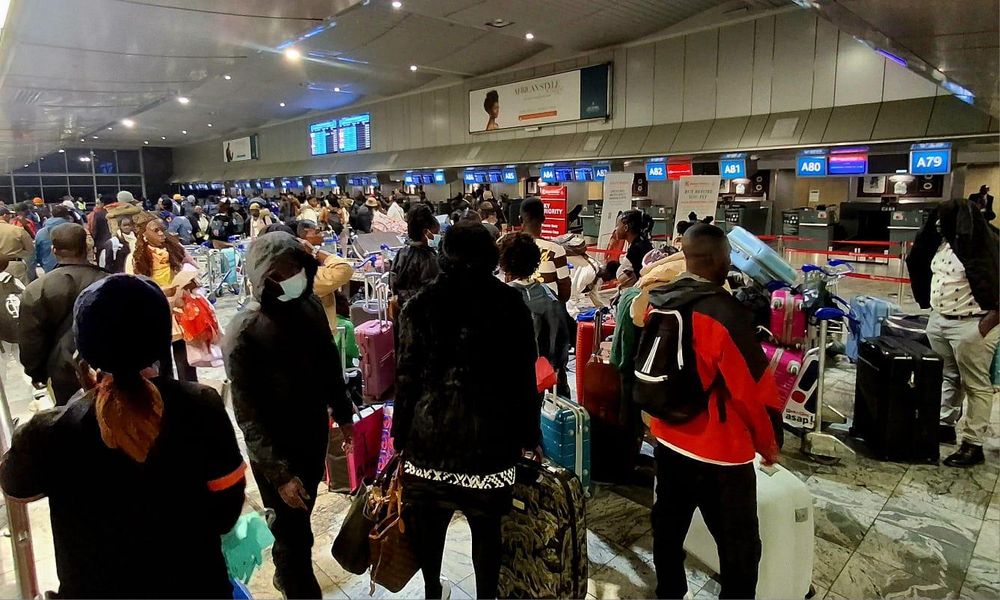
South Africa Deports Hundreds of Ghanaians Amid Immigration Crackdown: Repatriations, Protests & Backlog Blame
A chartered flight carrying 295 Ghanaian nationals landed at Kotoka International Airport in Accra this week, marking the latest mass repatriation following a sustained period of anti-immigrant unrest in South Africa. The group was processed by the Border Management Authority (BMA) at OR Tambo International Airport before being transported out of the country, according to officials from both nations.
The repatriation follows a series of public demonstrations in South Africa directed at foreign nationals, which have exacerbated anxieties regarding safety and legal status among immigrant communities. Many of those who opted to return to Ghana cited a volatile climate and the difficulty of maintaining consistent documentation as primary reasons for their departure.
Diplomatic and Administrative Challenges
Ghana’s High Commissioner to South Africa, Charles Owiredu, has attributed the high number of undocumented nationals to significant backlogs within South Africa’s Department of Home Affairs. According to Owiredu, the administrative delays in processing visa renewals and residency permits have left many foreign nationals in a state of legal limbo, rendering them vulnerable to detention and deportation despite their efforts to regularize their status.
The South African government, through the BMA, maintains that the deportations are part of routine enforcement of the Immigration Act. Commissioner Michael Masiapato of the BMA stated that the authority is tasked with ensuring that all individuals residing within South African borders comply with existing visa regulations. The BMA has intensified its oversight at major transit hubs, including OR Tambo, to identify individuals without valid permits.
Strained Community Relations
The atmosphere in several South African urban centers has remained tense as localized protests against undocumented migration continue. These demonstrations have frequently targeted businesses and residential areas where immigrants are concentrated, leading to reports of harassment and intimidation. For many Ghanaian nationals, the decision to leave was prompted by the perception that the local environment had become increasingly hostile, limiting their ability to continue working or living securely.

Humanitarian organizations and community leaders have monitored the situation closely, noting that the fear of spontaneous violence has acted as a catalyst for the recent surge in voluntary repatriations. While the South African government has condemned acts of vigilantism, the persistence of anti-immigrant sentiment has created a tricky landscape for diplomatic negotiations between Pretoria and Accra.
The South African Department of Home Affairs has yet to provide a timeline for clearing the current backlog of immigration applications. Meanwhile, the Ghanaian government continues to coordinate with South African authorities to facilitate the return of its citizens, with further repatriation flights currently under consideration by embassy officials in Pretoria.