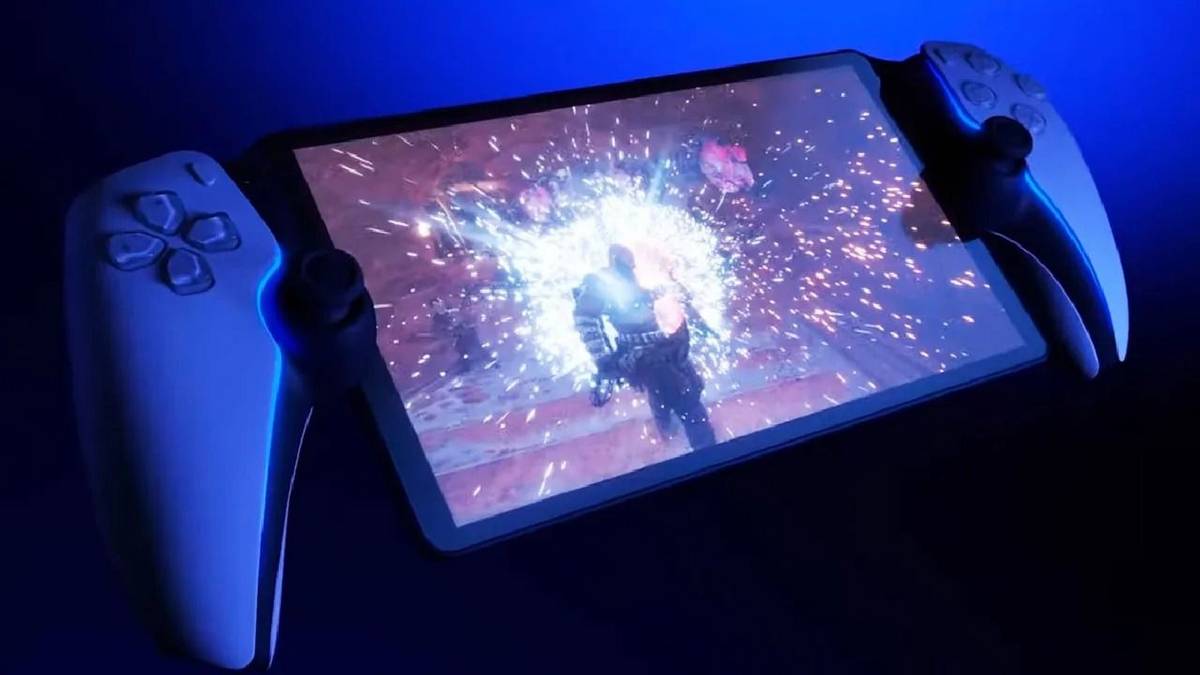
Sony PS6 Leaks: Hybrid Handheld Console Expected by 2027 or 2028
Sony is pivoting the PlayStation 6 architecture away from the traditional home-console model toward a hybrid ecosystem, according to recent corporate disclosures and industry leaks. The company aims to move “beyond the traditional living room,” signaling a shift toward a device that blends high-end stationary performance with portable versatility, likely targeting a 2027 or 2028 release window.
- Architectural Pivot: PS6 is expected to move from a fixed-box model to a hybrid handheld/console form factor.
- Deployment Window: Leaks point to a hardware launch between 2027 and 2028.
- Ecosystem Shift: Increased focus on cloud integration and portable SoC (System on Chip) efficiency to reduce latency across devices.
The industry is currently grappling with the “silicon ceiling”—the point where increasing Teraflops in a living-room box yields diminishing returns in visual fidelity while creating unsustainable thermal loads. By shifting to a hybrid model, Sony is addressing the bottleneck of hardware tethering. This move mirrors the industry trend toward ARM-based efficiency seen in Apple’s M-series chips, where unified memory architecture reduces the latency between the CPU and GPU.
Hardware Specifications and the SoC Efficiency Gap
While Sony has not released a final spec sheet, architectural analysts point to the necessity of a custom SoC that balances TDP (Thermal Design Power) for a handheld mode with the raw compute power required for 4K/120Hz output. According to Ars Technica, the challenge for any “hybrid” console is managing thermal throttling without sacrificing the clock speed of the GPU cores.
To maintain performance parity, Sony will likely lean on a combination of local compute and edge computing. This reduces the reliance on massive heat sinks and allows for a smaller physical footprint. For developers, this means optimizing for variable power states, ensuring that a game can scale its resolution and frame rate dynamically as the device switches from a docked state to a portable state.
| Metric | Traditional Console (Est.) | Hybrid PS6 Target (Projected) |
|---|---|---|
| Architecture | x86-64 (Fixed) | Custom Hybrid / ARM-influenced |
| Thermal Management | Active Air/Liquid Cooling | Dynamic TDP Scaling |
| Primary Bottleneck | Power Draw / Heat | Battery Density / Thermal Throttling |
This shift in hardware requires a complete overhaul of the current SDK (Software Development Kit). Developers cannot simply port a PS5 game to a hybrid PS6; they must implement aggressive containerization and resource management to ensure the OS doesn’t crash during a state transition. For enterprises managing large-scale gaming networks or cloud-gaming infrastructure, this increases the need for high-bandwidth, low-latency networking solutions. Firms are increasingly relying on [Relevant Tech Firm/Service] to optimize their edge server deployments to handle the burst traffic associated with hybrid cloud-streaming.
The Implementation Mandate: Optimizing for Hybrid State Transitions
From a systems engineering perspective, the transition between “Docked” and “Handheld” modes is essentially a hot-swap of power profiles. Developers will likely use APIs that trigger a change in the rendering pipeline based on the power source. Below is a conceptual representation of how a developer might handle a power-state change via a hypothetical Sony System API to prevent GPU crashes during a transition.
// Conceptual C++ snippet for PS6 Power State Transition
#include <ps6_system_api.h>

void OnPowerStateChange(PowerState newState) {
    if (newState == PowerState::Handheld) {
        // Drop resolution to 1080p, cap FPS at 60, enable FSR/DLSS
        RenderEngine::SetResolution(1920, 1080);
        RenderEngine::SetTargetFPS(60);
        RenderEngine::EnableUpscaling(true);
        Logger::Log("Transitioned to Portable Mode: Throttling TDP to 15W");
    } else if (newState == PowerState::Docked) {
        // Restore 4K resolution, unlock FPS, disable aggressive throttling
        RenderEngine::SetResolution(3840, 2160);
        RenderEngine::SetTargetFPS(120);
        RenderEngine::EnableUpscaling(false);
        Logger::Log("Transitioned to Docked Mode: TDP scaled to 250W");
    }
}
Cybersecurity Risks in a Mobile Ecosystem
Moving the PlayStation experience into a portable, “beyond the living room” format introduces a massive increase in the attack surface. A stationary console is typically protected by a home firewall; a hybrid device connects to diverse, untrusted public Wi-Fi networks. This exposes the system to man-in-the-middle (MITM) attacks and packet sniffing.
To mitigate this, Sony must implement end-to-end encryption (E2EE) for all game data streams and potentially move toward a Zero Trust architecture for account authentication. According to documentation found on GitHub regarding secure boot protocols, any device that allows portable OS updates must have a strictly verified chain of trust to prevent the installation of unauthorized firmware (homebrew) that could compromise the PlayStation Network (PSN).
As these devices move into the wild, the risk of physical hardware tampering increases. This creates a demand for specialized hardware security audits. Corporations and high-net-worth individuals using integrated gaming/workstations are already deploying [Relevant Tech Firm/Service] to conduct penetration testing on their endpoints to ensure that a compromised gaming device cannot act as a gateway into a secure corporate VLAN.
The Competitive Matrix: Sony vs. The Market
Sony is not operating in a vacuum. The move to a hybrid model is a direct response to the success of the Nintendo Switch and the rise of the Steam Deck. However, Sony’s goal is “Pro” performance, not just “Portable” performance.

- Nintendo Switch: Focused on efficiency and proprietary IP; uses aging Tegra architecture.
- Steam Deck/ROG Ally: Open x86 architecture; high power draw; focuses on a library of existing PC games.
- PS6 Hybrid: Aims for a “closed-loop” high-performance ecosystem with first-party optimization and integrated cloud offloading.
The success of the PS6 will depend on whether Sony can solve the “battery vs. teraflop” equation. If they rely too heavily on the cloud to maintain performance, they risk latency issues that alienate the core “hardcore” gamer. If they rely too heavily on local hardware, the device will either be too bulky or suffer from severe thermal throttling. This is why the integration of a dedicated NPU (Neural Processing Unit) for AI-driven upscaling—similar to NVIDIA’s DLSS—is critical. By using AI to “guess” pixels rather than rendering them natively, Sony can maintain 4K visuals while drawing significantly less power.
For users who encounter hardware failure in these complex hybrid systems, the repair cycle will become more difficult. The integration of components into a tighter SoC means that a single capacitor failure could brick the entire unit. This necessitates a move toward certified professional repair services, where [Relevant Tech Firm/Service] provides component-level diagnostics that go beyond simple module replacement.
The trajectory of the PS6 suggests that the “console war” is no longer about who has the biggest box under the TV, but who owns the most seamless transition between different compute environments. Sony is betting that the future of gaming isn’t a place you go, but a state that follows you.
Disclaimer: The technical analyses and security protocols detailed in this article are for informational purposes only. Always consult with certified IT and cybersecurity professionals before altering enterprise networks or handling sensitive data.