
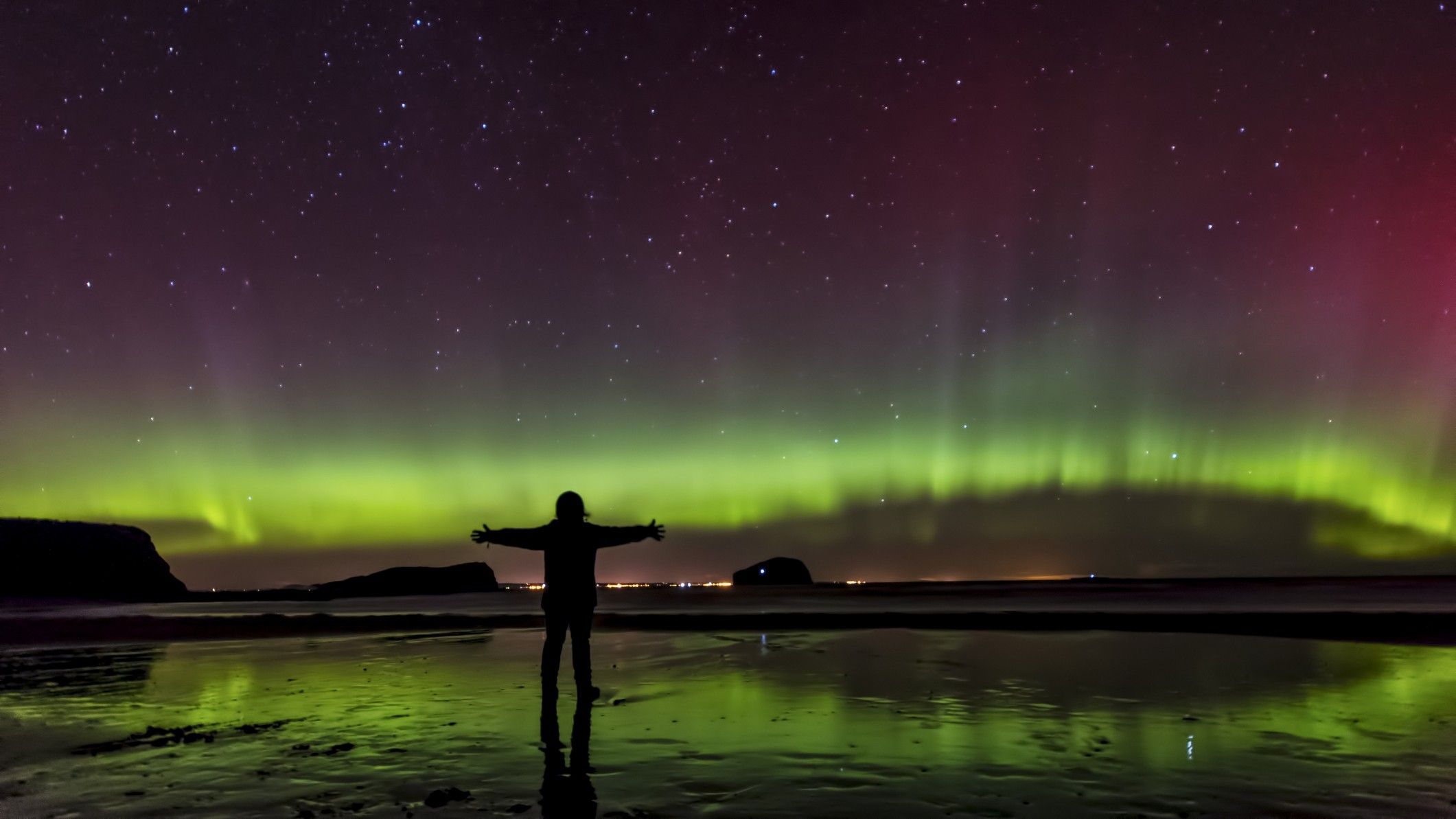
Geomagnetic Storms Expected to Bring Northern Lights to Northern Latitudes This Week
WASHINGTON – A series of coronal mass ejections (CMEs) are currently en route to Earth and are predicted to cause minor to moderate geomagnetic storms, potentially resulting in visible auroras across northern regions, according to forecasts from the National Oceanic and Atmospheric Governance (NOAA) and the U.K. Met Office.The peak of this space weather activity is anticipated around October 16, with elevated aurora chances continuing through October 17.
CMEs are large expulsions of plasma and magnetic field from the Sun. When these reach Earth, they interact with our planet’s magnetic field, and charged particles can funnel toward the poles, colliding with atmospheric gases and creating the vibrant displays known as the northern lights (aurora borealis) and southern lights (aurora australis).
NOAA and the U.K. Met Office both anticipate the storms will reach G1-G2 levels, meaning the aurora may be visible in northern Scotland, Canada, and northern U.S. states – conditions permitting. Space weather physicist Tamitha Skov notes that Earth has already experienced a preliminary impact, with three additional storms and a fast solar wind stream expected to follow.
The current solar activity is fueled by Region AR4246, a large and magnetically complex sunspot group that has already produced several M-class flares, including an M2.7 flare on October 13 linked to one of the approaching CMEs. While the predicted storms are moderate, thier close timing increases the likelihood of spectacular auroral displays.
