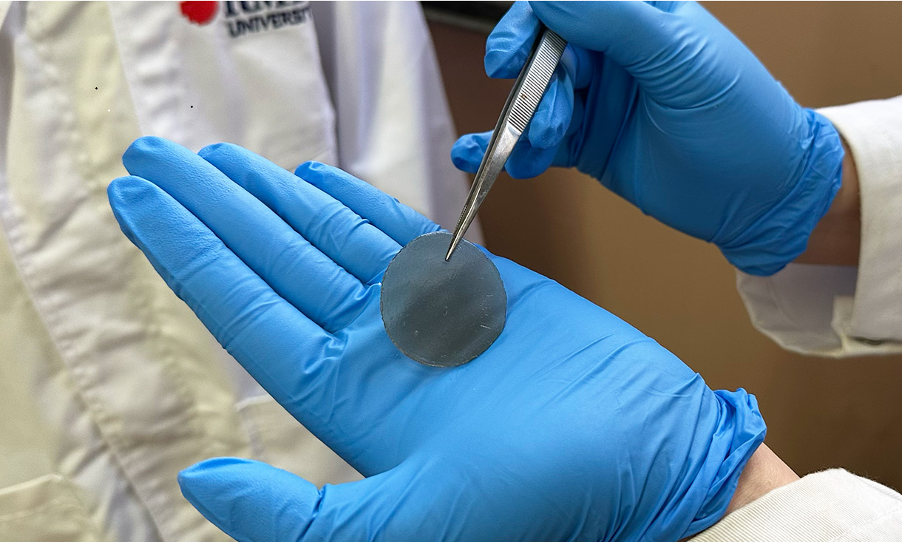
Smart Hydrogel Patch Detects & Treats Chronic Wounds – New Scalable Design
Australian researchers have developed a smart hydrogel wound dressing capable of detecting early signs of infection and simultaneously releasing therapeutic agents to promote healing, offering a potentially simpler and more scalable approach to chronic wound care.
The innovation, spearheaded by a team at RMIT University in Melbourne, centres on embedding carbon-based nanomaterials – known as carbon dots – within an ionically crosslinked sodium alginate hydrogel. This combination creates a patch that functions as both a sensor and a treatment delivery system, responding dynamically to changes in the wound environment.
Chronic wounds, which include conditions like diabetic ulcers and pressure sores, represent a significant burden on healthcare systems due to their protracted healing times and heightened risk of infection. Current management often requires frequent assessment and intervention, yet existing wound dressings typically offer limited insight into the underlying biological processes. While advanced “smart” dressings have emerged, combining both monitoring and treatment capabilities in a practical, cost-effective format has proven challenging.
The RMIT team’s approach aims to overcome these hurdles by leveraging the multifunctional properties of carbon dots. These nanoscale particles act as pH-responsive fluorescent sensors, detecting shifts in wound alkalinity – a key indicator of infection – while also exhibiting nanozyme-like activity, providing a therapeutic benefit. According to research published in Chemical Engineering Science, the dressing’s fluorescence changes in response to pH levels, with a strong signal detected around pH 6, demonstrating the sensing function remains intact after integration into the hydrogel.
Researchers envision the fluorescence signal being captured by portable smart devices, enabling point-of-care or even at-home monitoring. This could be particularly valuable for patients requiring frequent wound review, especially those in rural areas or aged care facilities where access to diagnostic facilities may be limited. The system can also automatically release therapeutic nanozymes when infection is detected, or clinicians or patients can manually trigger the release by applying gentle pressure to the dressing.
“Being able to address potential infection at the earliest opportunity is critical to chronic wound management, making this real-time system a potential gamechanger for healthcare,” said Nan Nan, a PhD candidate at RMIT and first author of the study.
The fabrication process is designed for scalability, utilizing readily available materials like sodium alginate, a common hydrogel-forming biomaterial, and a straightforward crosslinking method with calcium ions. Carbon dots are directly incorporated into the alginate solution before gelation, avoiding complex manufacturing steps that have hindered the commercialization of other smart dressing technologies. The researchers found that the addition of carbon dots altered the hydrogel’s network structure, influencing both its sensing capabilities and its mechanical properties.
Dr. Haiyan Li, a senior lecturer at RMIT’s School of Engineering, emphasized the potential to overcome existing translational barriers. “Many smart wound dressings developed in research laboratories are difficult to translate into real clinical products because they rely on complex designs or expensive sensing systems,” she said. “Our approach integrates sensing and dual-mode therapeutic functions into a single dressing with a simple, streamlined design, which helps address some of the key challenges that have previously limited commercial translation.”
The team acknowledges that further research is needed before the technology can be widely adopted. Validation in appropriate in vivo wound models is the next critical step, to assess performance under realistic conditions, including wound exudate, bacterial load, and mechanical stress. Issues related to reproducibility, shelf life, sterilization, regulatory approval, cost, and integration with digital health platforms also require attention.
Dr. Lei Bao, a senior lecturer at RMIT’s School of Engineering, stated that the next phase will focus on further biological testing and preparing the technology for real-world applications. “our goal is to translate this research into practical smart wound dressings and integrate this smart platform into a digital health ecosystem, where the data from the patch is collected, analysed, and used to drive clinical decisions to advance chronic wound management.”
The researchers are currently seeking industry partners to refine and scale up the technology for commercialization.