
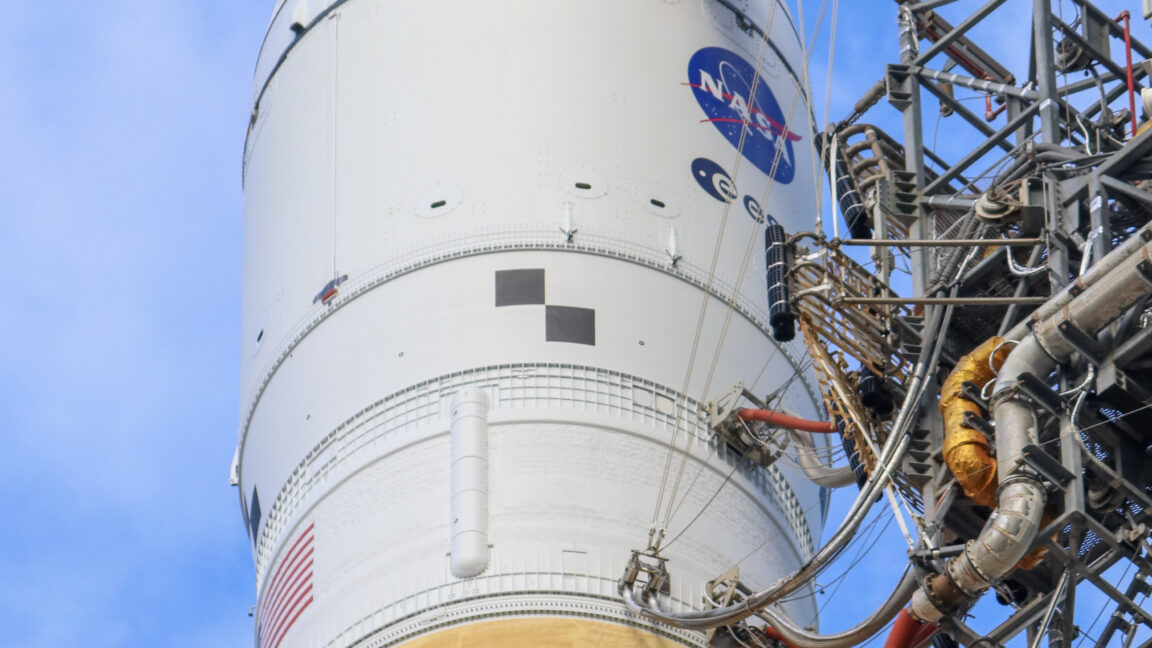
NASA is preparing to roll back the Space Launch System rocket and Orion spacecraft from Launch Complex 39B at Kennedy Space Center in Florida, delaying the Artemis II mission after an interruption in helium flow to the rocket’s upper stage was detected Friday evening, officials announced Saturday.
The issue surfaced during a routine operation to repressurize the system, according to NASA Administrator Jared Isaacman. While the rocket is currently in a “safe configuration” with a backup system providing purge air, the problem necessitates a return to the Vehicle Assembly Building (VAB) for investigation, and repair.
“Regardless of the potential fault, accessing and remediating any of these issues can only be performed in the VAB,” Isaacman wrote in a social media post. The rollback process is expected to start no later than Tuesday, effectively eliminating the March launch window.
The helium system, critical for purging the upper stage engine and pressurizing propellant tanks, had performed flawlessly during two prior Wet Dress Rehearsals (WDRs) – full-scale fueling simulations conducted at the launch pad, according to NASA.
This isn’t the first time a helium-related issue has plagued the SLS program. A similar problem was encountered during preparations for the Artemis I mission in 2022, ultimately traced to a failed check valve on the upper stage. NASA officials are currently considering several potential causes for the current anomaly, including a similar valve failure, a problem with the umbilical interface connecting the rocket to the launch tower, or a fault within a filter.
The decision to initiate rollback preparations now, despite the forecast of high winds on Sunday which could complicate the removal of pad access platforms, is intended to preserve the possibility of a launch within the April window, NASA stated. Technicians have already begun disassembling temporary work platforms installed for retesting the rocket’s flight termination system.
NASA had been targeting a launch as early as March 6, the first of five potential launch opportunities in March, after agency officials expressed optimism about readiness at a briefing just one day prior. The availability of launch dates is constrained by the Moon’s orbit, flight trajectory requirements, and thermal and lighting considerations, allowing for approximately five days of launch opportunities per month.
It remains unclear whether NASA will conduct another fueling test once the SLS rocket is back at the launch pad, or if additional work will be performed on the hydrogen umbilical near the base of the rocket, which experienced recurring leaks during the Artemis I and Artemis II campaigns. While newly installed seals performed well during Thursday’s countdown demonstration, concerns remain that vibrations from transporting the rocket to and from the pad could potentially damage them.
