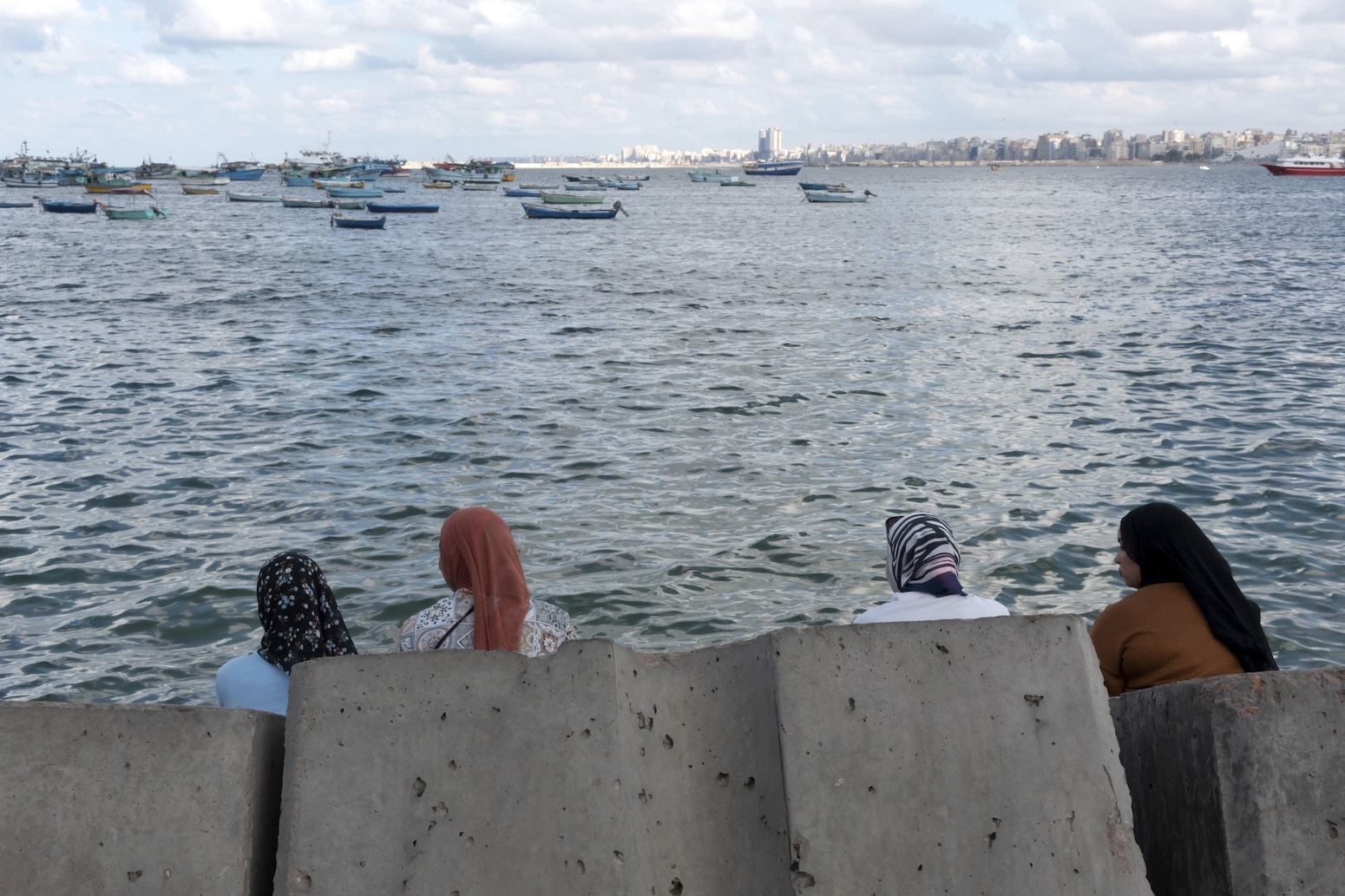
Sinking Land and Rising Seas Could Expose 7 Million People in Africa’s Coastal Megacities to Flooding by 2050
More than seven million people living in Africa’s coastal megacities face increased flood risks by 2050 due to the combined effects of rising sea levels and sinking land.
New research published on November 27 in Science Advances warns that subsidence is accelerating the threat to infrastructure and residents across the continent.
The study, led by researchers at Virginia Tech, utilized satellite radar observations from the European Space Agency’s Sentinel-1 missions to map vertical land motion in 20 major coastal cities. While global sea-level models often overlook local land changes, this analysis identifies specific "subsidence hotspots" where the ground is dropping significantly, Phys.org reported.
Lagos, Nigeria, and Alexandria, Egypt, are the most vulnerable locations identified in the analysis. According to Carbon Brief, these two cities alone account for five million people and $150 billion in assets potentially exposed to flooding by mid-century. The research attributes this sinking, or subsidence, to human activities such as groundwater extraction and fossil fuel drilling, alongside natural seismic or volcanic movement.
| City | Annual Subsidence Rate |
|---|---|
| Alexandria, Egypt | 6.3mm |
| Lagos, Nigeria | 5.2mm |
The study notes that these rates are comparable to those observed in rapidly sinking south-east Asian megacities like Jakarta and Manila, Carbon Brief reported. In Alexandria, the satellite-measured subsidence is projected to increase relative sea-level rise by approximately 36% by 2050 under an intermediate-emissions scenario, according to Phys.org.
The model assumes 2020 population and infrastructure levels to isolate the physical impact of sea-level rise and land movement. However, the authors acknowledge that Africa is the world’s fastest-urbanizing region, meaning these estimates could shift as cities grow or if populations move away from threatened zones, Carbon Brief noted.
The refined SSP2–4.5 projections raise relative sea level by 35.8% and the flood-exposed area by about 15% by 2050.
Across the 20 cities studied, an extreme sea-level event could expose more than 7 million people, more than 1 million buildings and approximately USD 180 billion in assets by mid-century.
Lagos, Nigeria, experiences a subsidence rate of 5.2mm annually, primarily driven by human activities such as groundwater extraction and fossil fuel drilling. This rate places it among the most vulnerable coastal cities globally, comparable to rapidly sinking megacities like Jakarta and Manila.
The model assumes 2020 population and infrastructure levels to isolate the physical impact of sea-level rise and land movement.