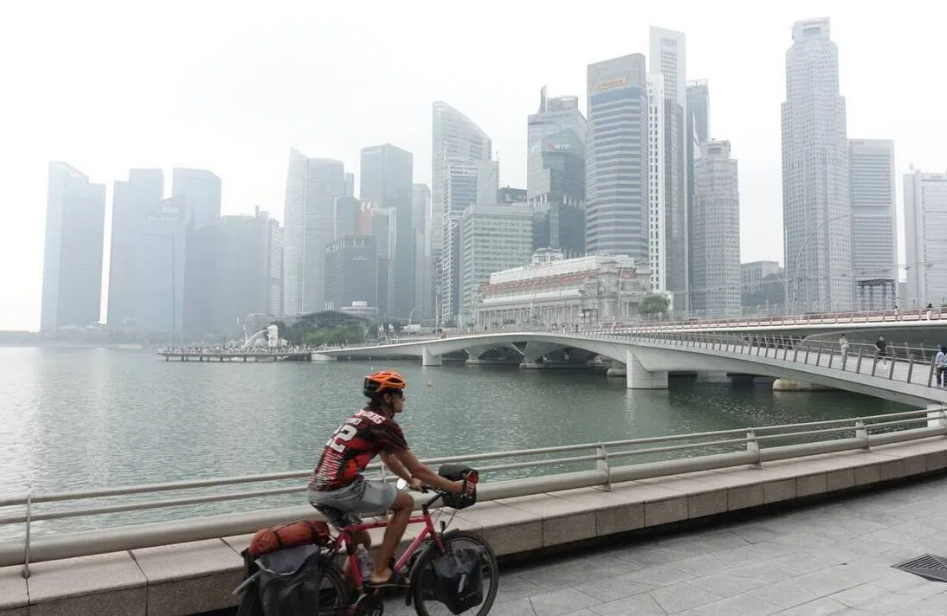
Singapore Central Region Air Quality Hits Unhealthy Range as PSI Reaches 102
Official figures released by the National Environment Agency (NEA) show that on September 14, 2026, air quality in the central region of Singapore reached the unhealthy tier, registering a 24-hour Pollutant Standards Index (PSI) score of 102. The deterioration stems from transboundary smoke plumes driven by persistent fires in Kalimantan and Sumatra.
Official PSI Readings and Regional Breakdown
The National Environment Agency reported that air quality crossed back into the unhealthy threshold on the morning of September 14, 2026. While the central region hit 102, readings across the rest of the island remained varied. According to official figures at noon on September 14, the 24-hour PSI stood at 91 in both the east and west, 82 in the south, and 79 in the north.
This development marks a return to poor air conditions following a brief reprieve. PSI readings across the island had previously fallen back into the moderate spectrum on September 11, 2026, after crossing into the unhealthy band earlier in the month when central Singapore hit 101 on September 4. Prior to September 2026, the last time the PSI hit unhealthy levels due to haze was in October 2023.
Meteorological Factors and Regional Hotspots
Authorities have attributed the current haze episode to regional climate drivers.
Prior alerts published by the National Environment Agency warned of an elevated haze threat spanning from June to October, driven by warmer and drier weather conditions linked to both the Indian Ocean Dipole and El Nino.
Dry conditions were observed across the southern Association of Southeast Asian Nations (ASEAN) region, accompanied by numerous hotspots. According to the National Environment Agency, hotspots were detected in southern Sumatra, as well as in western, central, and southern Kalimantan. Additional hotspots appeared in peninsular Malaysia and Java.
Moderate to dense smoke plumes continued to drift toward Singapore from Kalimantan, alongside smoke plumes observed in southern Sumatra. Transboundary haze was also noted in parts of Sarawak, peninsular Malaysia, and southern Vietnam, where monitoring stations registered moderate to unhealthy readings.
Forecast and Public Health Guidance
Looking ahead, the National Environment Agency advises that air quality for the subsequent 24-hour period will remain in the moderate to the lower end of the unhealthy range. While showers are forecast over northern Sumatra and north-western Borneo in the coming days, dry weather conditions are expected to persist over Kalimantan and central and southern Sumatra. Prevailing winds blowing from the south-east or south mean that the risk of smoke haze affecting Singapore remains present.
Under official guidelines, air quality is considered unhealthy when the PSI ranges from 101 to 200. During these periods, the National Environment Agency advises the public to cut down on outdoor activities. Moderate air quality spans a PSI of 51 to 100, while values from 0 to 50 are classified as good.
The persistence of regional land and forest fires highlights the ongoing vulnerability of urban centers to transboundary environmental pressures. As weather patterns continue to favor the transport of smoke plumes across the Malacca Strait and surrounding waters, local authorities maintain continuous surveillance to update advisories as conditions evolve.