
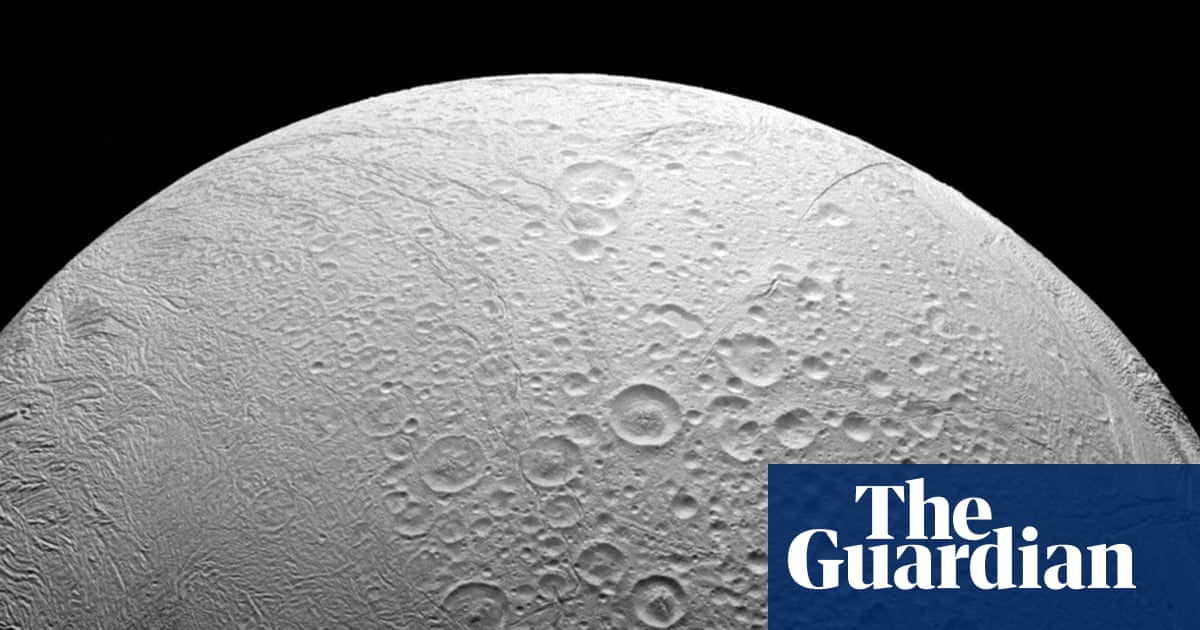
Potential for Life Boosted as Scientists Focus on Saturn’s Enceladus
WASHINGTON D.C. – Teh search for extraterrestrial life is intensifying, with growing optimism focused on Saturn’s moon Enceladus as a prime location to find evidence of life beyond earth. While the hunt for biosignatures on distant exoplanets presents significant challenges, researchers believe our solar system, particularly icy moons like Enceladus and Europa, offers a more accessible ”natural laboratory” for discovery.
Scientists face hurdles in detecting life on exoplanets, requiring planetary-scale changes to atmospheric composition to be visible from vast distances. “It has to change the whole planet so that you are able to see it on an exoplanet,” explained researcher Freissinet. “In other words, local pockets of life that do not produce such large-scale changes might be missed.” Moreover, analyzing atmospheres requires an exoplanet to pass in front of its star, and even promising evidence can be difficult to confirm.
By contrast, Enceladus, located 1.27 billion km from Earth, and Europa, a moon of Jupiter, are believed to harbor subsurface oceans, making them compelling targets for in situ inquiry. NASA and the European Space Agency (ESA) are already planning missions to Enceladus, with instruments designed to detect molecules indicative of life.
“To me, in the solar system, that’s where we will find life,” Freissinet stated.
Experts emphasize that studying our solar system isn’t a replacement for exoplanet research, but a complementary approach. Data gathered from these nearby bodies can refine theories and models used to assess the habitability of exoplanets.
“looking in our own back yard is a win-win,” said Dr. Jörn Helbert, head of the solar system section at ESA. He highlighted Enceladus as exhibiting all the hallmarks of habitability scientists seek in exoplanets.
The potential implications of a discovery on Enceladus are profound. Finding life there woudl suggest life isn’t a random occurrence, but perhaps “everywhere in the galaxy,” according to Freissinet. Conversely, a lack of evidence despite favorable conditions could necessitate a reevaluation of our understanding of habitability and the likelihood of life emerging on potentially habitable worlds.
Dr. Nathalie Cabrol, director of the Carl Sagan Center at the SETI Institute, underscored the value of studying nearby environments, noting, “The issue with exoplanets is that we don’t know much about the environment.”
