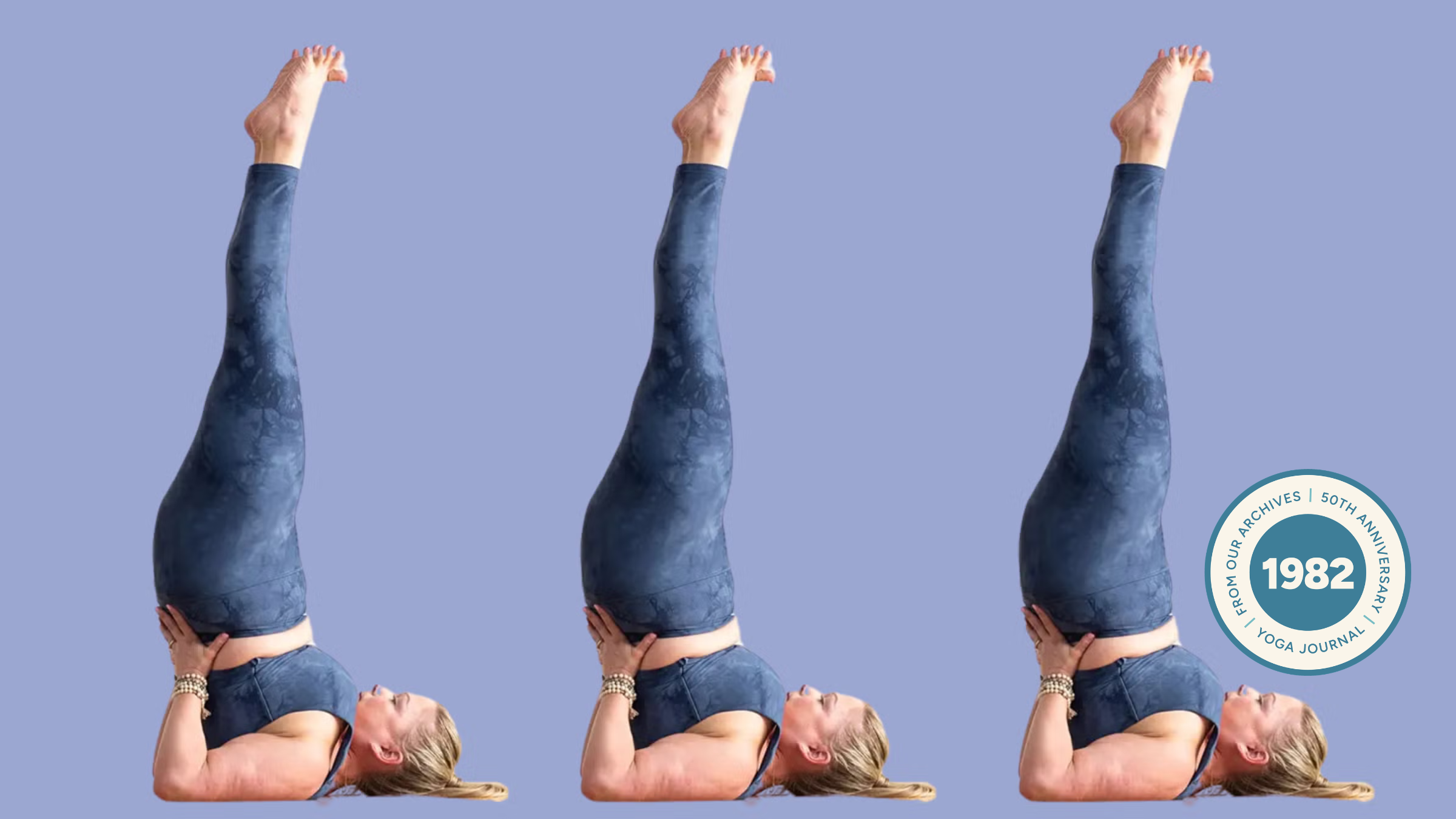
Shoulderstand Yoga Pose: Benefits and Variations
The act of inverting the human body—shifting the gravitational relationship between the heart and the brain—triggers a complex cascade of physiological responses. While the shoulderstand is often framed as a cornerstone of wellness, its clinical implications extend far beyond simple flexibility, touching upon hemodynamics and spinal biomechanics.
Key Clinical Takeaways:
- Inversions induce significant shifts in cerebral perfusion and venous return, necessitating caution for individuals with cardiovascular instability.
- The cervical spine bears disproportionate axial load during shoulderstands, increasing the risk of injury in patients with pre-existing degenerative disc disease.
- Clinical screening for hypertension and glaucoma is essential prior to initiating an inversion-based practice to prevent acute vascular events.
The transition from a standard upright posture to a full inversion represents a significant challenge to the body’s homeostatic mechanisms. In a shoulderstand, the heart must work against gravity to pump blood from the lower extremities back to the thoracic cavity, while simultaneously managing an increased volume of blood flowing into the cranial vault. This shift activates the baroreceptor reflex, which attempts to regulate blood pressure by modulating heart rate and peripheral vascular resistance. For the healthy practitioner, this is a benign stressor; however, for those with underlying pathology, it can precipitate a clinical crisis.
The Hemodynamics of Cranial Inversion and Vascular Risk
When the body is inverted, the hydrostatic pressure in the head increases substantially. This elevation in intracranial pressure can be hazardous for individuals with uncontrolled hypertension or those suffering from glaucoma. The increase in intraocular pressure during an inversion can exacerbate optic nerve damage, making it imperative that practitioners undergo a baseline screening. For those experiencing blurred vision or chronic ocular pressure, consulting with board-certified ophthalmologists is a critical safety prerequisite.
the sudden shift in blood volume can stress the cardiovascular system. In patients with congestive heart failure or severe arrhythmia, the increased venous return to the right atrium may overwhelm the heart’s pumping capacity, potentially leading to pulmonary edema or acute cardiac distress. This physiological reality underscores the need for a multidisciplinary approach to wellness, where practitioners coordinate with specialized cardiologists to determine their hemodynamic tolerance for inversions.
“The physiological stress of a sustained inversion is not merely a matter of balance, but a systemic challenge to the autonomic nervous system. We must move away from the ‘one size fits all’ approach to yoga and toward a clinical model of contraindication and clearance.”
Biomechanical Stress and Cervical Spine Pathogenesis
From a musculoskeletal perspective, the shoulderstand places the cervical vertebrae in a position of extreme flexion while supporting a significant portion of the body’s mass. This creates a high-compression environment for the intervertebral discs and the surrounding ligamentous structures. In individuals with cervical spondylosis or a history of herniated discs, this axial loading can lead to nerve root compression or, in severe cases, spinal cord injury.

The pathogenesis of injury in this pose often stems from improper alignment, where the weight shifts from the shoulders to the neck. This misalignment transforms the cervical spine into a primary weight-bearing pillar—a role it is not anatomically designed to fulfill. To mitigate these risks, patients with limited neck mobility or chronic pain should seek the guidance of licensed physical therapists to develop a strengthening protocol that stabilizes the scapulae and improves thoracic mobility before attempting full inversions.
The Clinical Utility of Variations and Modified Practices
The concept of a “mini-practice” through variations is not merely a matter of convenience but a clinical necessity for risk stratification. By introducing modifications—such as using bolsters or blocks to elevate the shoulders—the angle of inversion is reduced, thereby lowering the intracranial pressure and reducing the compressive load on the cervical spine. This graded exposure allows the practitioner to build the necessary proprioception and neuromuscular control without bypassing safety thresholds.

These variations function as a form of physical titration. Just as a physician would slowly introduce a medication to monitor for adverse reactions, a practitioner can use modified inversions to monitor their body’s response to hemodynamic shifts. This approach reduces the probability of orthostatic hypotension upon exiting the pose, a common occurrence where a rapid return to an upright position causes a sudden drop in blood pressure, potentially leading to syncope.
Addressing the Evidence Gap in Integrative Medicine
Despite the widespread adoption of inversions in global wellness culture, there is a notable scarcity of large-scale, double-blind, placebo-controlled trials specifically targeting the long-term clinical outcomes of the shoulderstand. Much of the current literature relies on observational data or small sample sizes, often lacking the rigor of NIH-funded longitudinal studies. This gap in clinical evidence often leads to the proliferation of unsubstantiated claims regarding endocrine regulation or “detoxification.”
True clinical progress requires a transition toward evidence-based integrative medicine. Rather than relying on anecdotal success, the medical community is beginning to look toward functional MRI (fMRI) and continuous blood pressure monitoring to quantify the exact impact of inversions on cerebral perfusion. Until such data is standardized, the standard of care remains a cautious, individualized application of the practice, supervised by healthcare professionals who understand the intersection of biomechanics and vascular health.
As we refine our understanding of how gravity influences human physiology, the shoulderstand serves as a potent reminder that “wellness” must be grounded in clinical safety. The future of this practice lies in the synthesis of traditional movement and modern diagnostic precision. By integrating the expertise of physiatrists, cardiologists, and physical therapists, One can transform a potentially risky inversion into a calibrated tool for physical and mental resilience. For those looking to integrate these practices safely, utilizing a directory of vetted medical specialists ensures that the pursuit of health does not inadvertently lead to injury.
Disclaimer: The information provided in this article is for educational and scientific communication purposes only and does not constitute medical advice. Always consult with a qualified healthcare provider regarding any medical condition, diagnosis, or treatment plan.