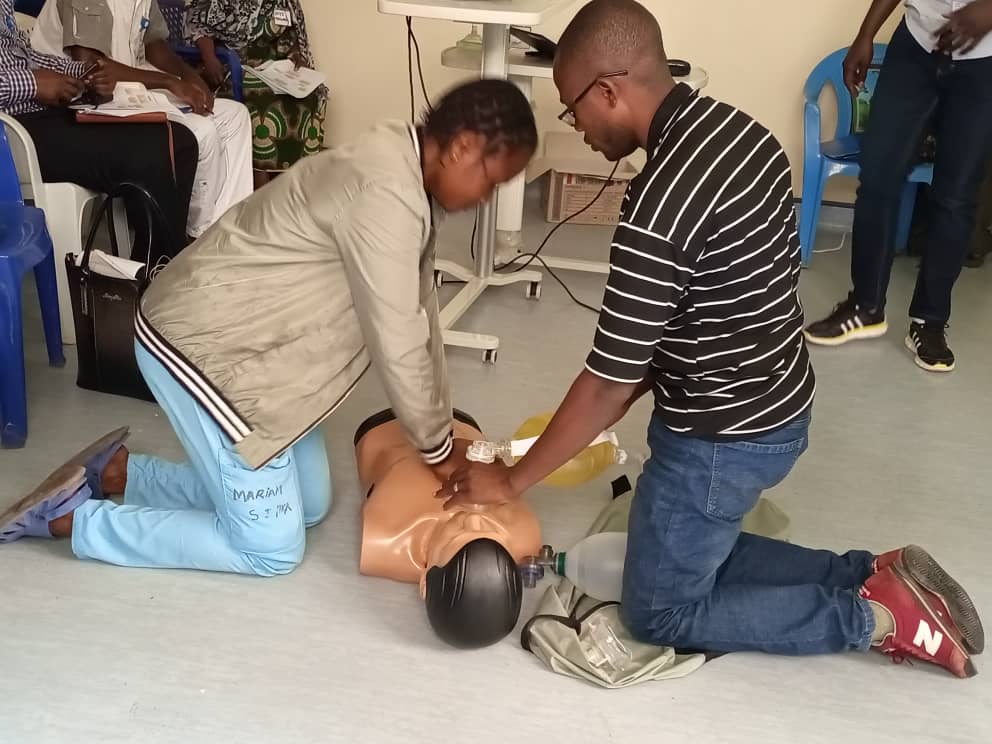
Shortage of Emergency Medicine Specialists a Major Public Health Challenge in DRC
The Democratic Republic of the Congo (DRC) faces a critical deficit in specialized emergency medical services, a systemic gap that directly compromises patient outcomes during the “golden hour” of acute trauma and medical crisis. According to Dr. Foreman Mabala, a prominent voice in the region’s medical community, the scarcity of trained emergency medicine specialists represents a fundamental failure in public health infrastructure, leaving hospitals under-equipped to manage time-sensitive pathologies that require immediate, standardized intervention.
Key Clinical Takeaways:
- Emergency medicine is a distinct medical specialty requiring specialized training to stabilize patients during life-threatening events, such as cardiac arrest, stroke, or severe trauma.
- The current lack of specialized workforce in the DRC results in delayed triage and suboptimal standard-of-care delivery, increasing preventable morbidity and mortality.
- Addressing this gap necessitates a multi-layered approach, including the formalization of emergency medicine training programs and the integration of advanced diagnostic protocols at the point of care.
The Clinical Consequences of Workforce Deficits
Emergency medicine is defined by the rapid stabilization of patients presenting with undifferentiated, acute medical conditions. In the absence of physicians board-certified in emergency medicine, these cases are frequently managed by general practitioners or surgical residents lacking specific training in advanced airway management, hemodynamic resuscitation, and acute toxicology. Per the World Health Organization (WHO) guidelines on emergency care systems, the lack of a formal emergency medicine residency program creates a cascade of failures in triage accuracy and resource allocation.
When hospitals lack dedicated emergency specialists, the “standard of care”—the level of treatment that a reasonably competent physician would provide under similar circumstances—is frequently missed. Patients suffering from acute myocardial infarction or hemorrhagic shock require rapid initiation of evidence-based, time-dependent protocols. As Dr. Mabala emphasizes, the current infrastructure in the DRC often relegates these responsibilities to personnel who are not optimally positioned to manage the pathogenesis of acute, multisystem physiological failure.
Epidemiological Risks and Systemic Barriers
The morbidity associated with delayed emergency intervention is well-documented in clinical literature. Research published in The Lancet Global Health highlights that mortality rates for trauma and acute illness are inversely proportional to the availability of specialized emergency care. The burden is compounded by a lack of cohesive, nationwide emergency medical service (EMS) systems capable of bridging the gap between the field and the hospital.
For patients and their families, the absence of specialized care means that even if a facility is reached, the subsequent diagnostic and therapeutic steps may be inconsistent. This environment necessitates a proactive approach to patient safety. For those seeking specialized guidance or clinical consultation in areas where emergency infrastructure is currently developing, it is essential to engage with vetted board-certified specialists who can provide a bridge to necessary tertiary care.
Strategic Infrastructure and Professional Development
Solving the emergency medicine crisis in the DRC requires more than just capital investment; it demands the establishment of academic pathways for residency training. Clinical training models, such as those overseen by the WHO’s Emergency Care Programme, provide the blueprint for integrating emergency medicine into the national healthcare curriculum. These frameworks emphasize the development of “Emergency Care Units” (ECUs) that function as the hospital’s frontline, utilizing standardized triage protocols to minimize time-to-treatment.
Healthcare institutions are increasingly recognizing that the transition toward specialized emergency care is an operational necessity. Pharmaceutical distributors and medical device providers operating in the region are currently evaluating their supply chains to ensure that essential emergency medications—such as vasopressors, thrombolytics, and advanced airway equipment—are available to the limited number of specialized units that do exist. For stakeholders and healthcare administrators, consulting with healthcare regulatory compliance experts is a critical step in ensuring that new emergency protocols align with both international clinical standards and local legislative requirements.
Future Trajectory for Emergency Medicine in the DRC
The path forward involves the formal recognition of emergency medicine as a primary specialty, ensuring that practitioners are incentivized to pursue this discipline. As the medical community in the DRC continues to advocate for these changes, the focus remains on building a sustainable workforce capable of delivering high-quality, standardized care. The evolution of this field will likely mirror advancements seen in other developing healthcare markets, where the introduction of standardized clinical pathways significantly reduced in-hospital mortality rates.
For patients requiring urgent medical navigation or for healthcare providers aiming to optimize their emergency department workflows, professional guidance is available. Engaging with specialized medical advisory services can provide the necessary intelligence to navigate these systemic complexities and improve patient outcomes.
Disclaimer: The information provided in this article is for educational and scientific communication purposes only and does not constitute medical advice. Always consult with a qualified healthcare provider regarding any medical condition, diagnosis, or treatment plan.