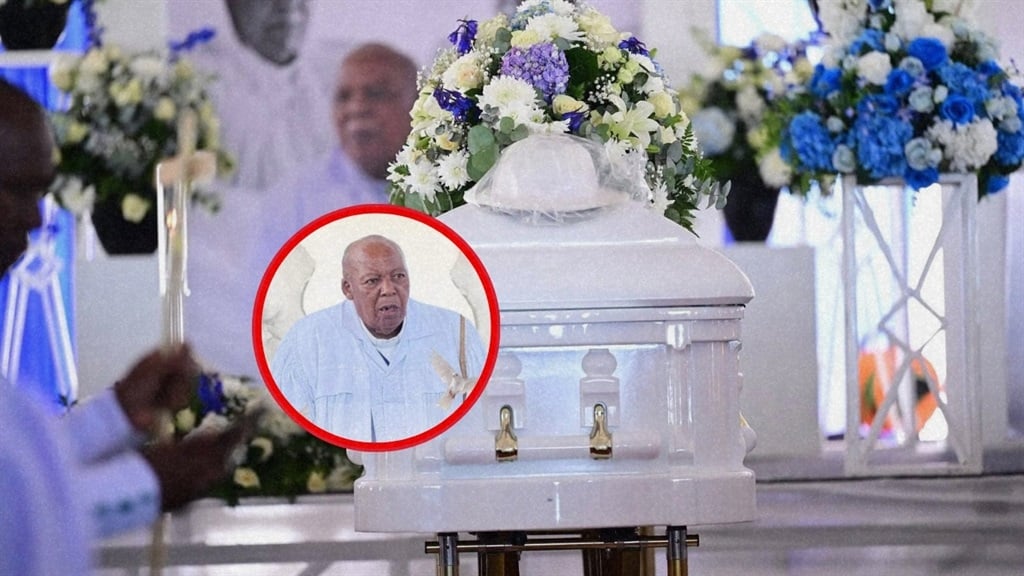
Shocking Discovery: Bricks Found Instead of Body in Coffin During Funeral
A funeral for a church president was halted after a coffin, initially believed to contain his body, was found to contain only bricks, according to multiple South African news reports and court documents. The incident, which unfolded during a service in the Eastern Cape province, has raised questions about the circumstances surrounding the death and the integrity of the burial process, with authorities now investigating whether foul play was involved.
The discovery came to light on Tuesday when a court in the Eastern Cape temporarily halted the funeral proceedings. According to The Witness, a local news outlet, the coffin was opened in the presence of the court and church officials. “The coffin was found to contain bricks instead of a body,” said a court official, who requested anonymity due to the sensitivity of the case. The church president, whose name has not been publicly disclosed, had been scheduled for burial following a period of mourning.
Investigators are now examining whether the bricks were placed in the coffin as part of a fraudulent scheme, possibly to conceal the true circumstances of the death. “This is a serious matter that requires thorough investigation,” said a spokesperson for the South African Police Service (SAPS), who confirmed that a case of fraud and possible criminal activity had been opened. The spokesperson added that no arrests had been made at this stage, but that the police were working closely with the court and church authorities to determine the next steps.
Why did the court intervene in the funeral?
The court’s decision to halt the funeral was based on concerns raised by legal representatives and family members, who questioned the legitimacy of the burial process. According to IOL, a South African news platform, the court cited “irregularities” in the handling of the deceased’s remains as justification for the intervention. These irregularities included the absence of a proper death certificate and discrepancies in the documentation provided by the church.

Legal experts consulted by Daily Sun suggested that the court’s actions were a precautionary measure to prevent a potential miscarriage of justice. “In cases where there are doubts about the authenticity of a death, courts often intervene to ensure that due process is followed,” said Advocate Thabo Mthembu, a legal practitioner based in East London. He noted that such interventions were not uncommon in South Africa, particularly in cases involving high-profile individuals or those with complex family dynamics.
What happens next in the investigation?
Police have confirmed that forensic experts are examining the bricks found in the coffin to determine whether they bear any marks or residues that could provide clues about the deceased’s whereabouts. Meanwhile, the church has suspended all funeral-related activities pending the outcome of the investigation. A statement released by the church leadership described the situation as “unprecedented and deeply troubling,” but declined to comment further until the police concluded their inquiries.

Sources close to the investigation indicate that authorities are also reviewing financial records related to the church and its president, as fraud allegations have been raised. “There are indications that funds may have been misappropriated, which could be linked to the irregularities surrounding the death,” said a source familiar with the case, who spoke on condition of anonymity. The SAPS has not confirmed these allegations, but officials have acknowledged that financial discrepancies are part of their ongoing probe.
How does this compare to other cases of funeral fraud in South Africa?
While the specifics of this case remain under investigation, it echoes a pattern of funeral-related fraud that has been documented in South Africa in recent years. In 2021, a similar incident occurred in KwaZulu-Natal when a coffin was found to contain bricks instead of a body, leading to the arrest of several individuals accused of orchestrating the fraud. That case was linked to a dispute over inheritance and the distribution of the deceased’s assets.
Legal experts warn that such cases often involve complex family dynamics, financial disputes, or even criminal activity aimed at exploiting the deceased’s estate. “Funeral fraud is a growing concern in South Africa, particularly in communities where traditional burial practices intersect with modern legal and financial systems,” said Mthembu. He advised families to exercise caution and seek legal counsel when dealing with the remains of a loved one, especially in cases where there are unresolved disputes or financial incentives.

As the investigation continues, the church president’s family remains in limbo, with many members expressing shock and disbelief at the turn of events. “We were all prepared to say our final goodbyes, only to be confronted with this shocking revelation,” said a family member who attended the interrupted funeral. The individual, who requested anonymity, added that the family was now left grappling with both grief and the legal fallout of the discovery.
No further details have been released regarding the identity of the church president or the specific circumstances leading to the bricks being placed in the coffin. The SAPS has urged the public to avoid speculation and await the outcome of the investigation, which could take weeks or even months to conclude.