
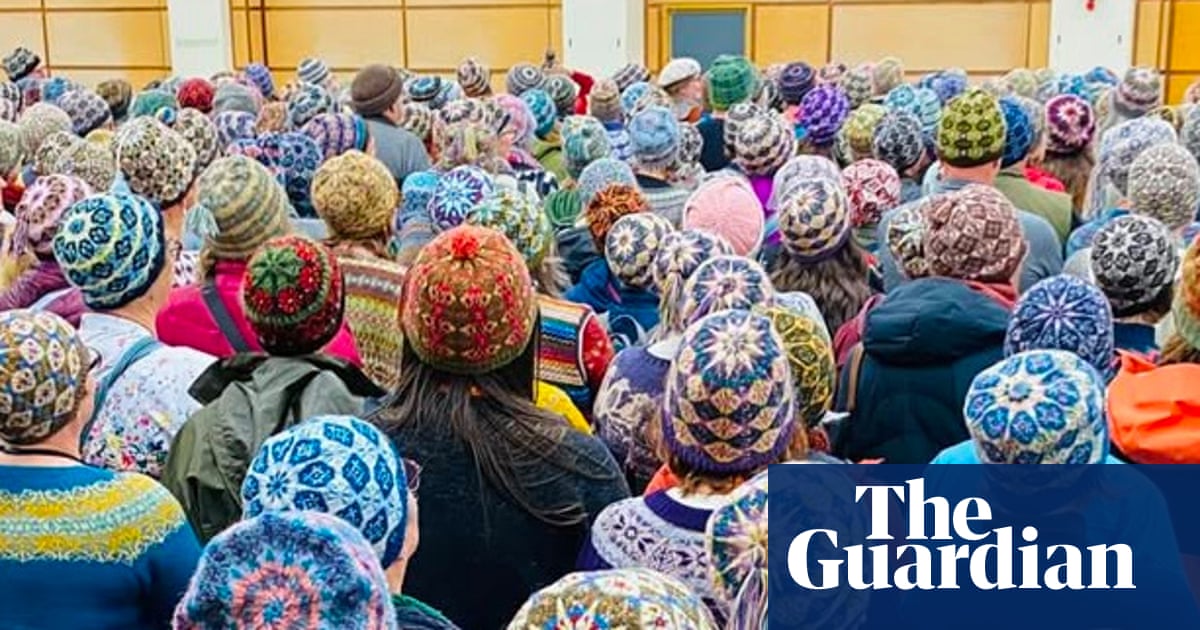
Shetland knitters Accuse tom Daley’s Show of Cultural Appropriation
LERWICK, SCOTLAND – Knitters from the Shetland Islands are voicing strong objections to Channel 4’s new crafting competition, the Games of Wool, hosted by Tom daley, accusing the program of cultural appropriation regarding the use of the term ”Fair Isle.” The controversy centers on what islanders describe as the widespread misuse of the term to describe any form of stranded knitting, rather than the specific, historically significant techniques and patterns originating from Fair Isle, Shetland.
The dispute highlights a growing concern among Shetland’s knitting community about the erosion of conventional practices and the economic impact of fast fashion labeling designs as “Fair Isle” without adhering to authentic methods,including the use of native Shetland wool.
“the anger should be understood as a response to what for many is the final straw – or perhaps pin – after decades of fudging of terms and techniques,” explained a local knitter who wished to remain anonymous. “The problem is that a lot of businesses, designers, pattern publishers use the term Fair isle and its techniques incorrectly. The term is used for any kind of stranded knitted of which there are many, but Fair isle is a distinct set of patterns and unique knitting skills that have been passed down through generations.”
Fair Isle knitting is deeply embedded in Shetland’s cultural and economic history, traditionally providing a vital income for women on the islands. Helen Barwick, who runs Shetland Stitch Club, a mobile sewing school, emphasized the feminist dimension of the issue. “You have to remember that this is a huge industry up here, and traditionally a way for Shetland women to earn a decent income, that has been killed off by fast fashion which labels designs as Fair Isle when they don’t stick to the tradition of even using Shetland wool.”
Barwick, who recently relocated to Shetland after discovering the technique in London, penned an open letter to Channel 4, asserting that the Fair Isle tradition is inextricably linked to the peopel and textiles of the islands. She highlighted the unique qualities of Shetland wool, derived from native sheep, and its crucial role in creating the distinctive, dense fabric. “It is done with Shetland wool, from native Shetland sheep – a fibre so brilliant that it gave rise to this long tradition.The natural variation in color of the fleece lends itself brilliantly to colour work,and its natural crimp means the fibres cling and felt together,creating a patterned fabric every bit as dense and strong and something made in one yarn.”
While welcoming the sharing of skills and knowledge exemplified by events like Shetland Wool Week, Barwick expressed sadness over the challenges knitters face in earning a living from their craft.”It makes me sad that it’s so difficult to make a living out of knitting nowadays. The reasons that Fair Isle is still thriving is through the unpaid labor of these passionate practitioners.”
Channel 4 has been approached for comment.
