Severe Perioperative Anaphylaxis and Positive Skin Tests to Rocuronium and Midazolam: A Case Report
A 50-year-old woman undergoing scheduled breast cancer surgery at a hospital experienced severe perioperative anaphylaxis, leading to sudden hypotension, extreme thoracic rigidity, and bronchospasm within minutes of anesthesia induction.
-
Key Clinical Takeaways:
- The patient developed life-threatening bronchospasm, hypoxia with a peripheral oxygen saturation dropping to 70%, and a generalized rash shortly after the administration of midazolam, propofol, fentanyl, and rocuronium.
- Subsequent skin testing performed fourteen days after the event returned positive results for both rocuronium and midazolam, though the midazolam concentration tested was ten times the maximum non-irritant intradermal limit recommended by the European Academy of Allergy and Clinical Immunology.
- Clinicians inadvertently re-administered rocuronium via an intensive care unit infusion before completing the allergy work-up, though no secondary anaphylactic reaction occurred during that exposure.
Anesthesia Induction and Sudden Hemodynamic Collapse
The patient was admitted for a planned quadrantectomy and sentinel lymph node biopsy to treat a right breast malignancy. Her medical history included allergic asthma with previous inhalant sensitizations identified in 1999, alongside a daily regimen utilizing a salmeterol and fluticasone propionate inhaler. Classified under American Society of Anesthesiologists physical status II, she presented with normal preoperative vital signs and blood pressure readings of 120/70 mmHg.
Ceftriaxone was given for antibiotic prophylaxis between 12:20 and 12:30. At 12:35, clinicians administered 2 mg of midazolam, 100 mg of propofol, 100 µg of fentanyl, and 40 mg of rocuronium, followed by tracheal intubation and maintenance with sevoflurane. Within minutes, the patient suffered profound hemodynamic instability, characterized by a blood pressure nadir of 75-80/40 mmHg, tachycardia reaching 110 beats per minute, and a drop in peripheral oxygen saturation to 70%. Arterial blood gas analysis performed twenty minutes after onset revealed severe respiratory acidosis with a pH of 7.164 and a partial pressure of carbon dioxide of 69.5 mmHg.

Emergency Resuscitation and Intensive Care Unit Management
Medical staff responded by increasing the inspired oxygen fraction to 1.0, initiating manual and protective mechanical ventilation with recruitment maneuvers, and administering epinephrine across three separate boluses totaling 150 µg. Staff also provided salbutamol via the breathing circuit and intravenous routes, alongside hydrocortisone, chlorphenamine, and methylprednisolone. Respiratory parameters gradually recovered, and the surgical procedure was postponed.
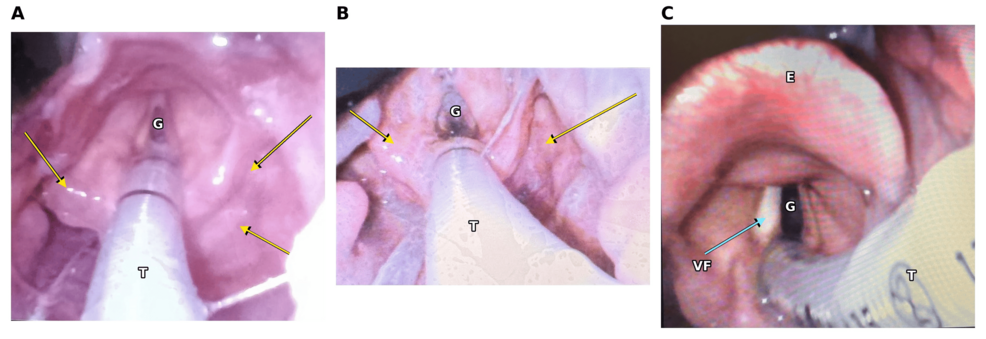
Transferred to the intensive care unit at 13:55, the patient received pressure-controlled ventilation, propofol sedation, and ongoing hemodynamic monitoring. Prior to any formal allergy investigation, a rocuronium infusion was administered in the intensive care unit starting at 15:00 at a rate of 30 mg per hour, delivering approximately 105 mg total over three and a half hours without triggering a renewed anaphylactic episode. Serial videolaryngoscopy documented marked laryngeal edema on the day of the reaction that gradually receded by the following day. Following a successful spontaneous breathing trial, the patient was extubated on day one and discharged home in stable condition on day three.
Skin Tests Show Reactions to Rocuronium and Midazolam
An allergy consultation on day seven recommended avoiding ceftriaxone and pursuing comprehensive drug skin testing. Inhalant skin-prick testing on day eleven confirmed prior sensitizations to cat and dog epithelia, Alternaria, and cypress, while latex prick testing remained negative. Subsequent drug skin testing performed on day fourteen in accordance with European Academy of Allergy and Clinical Immunology recommendations yielded positive reactions to rocuronium at 0.05 mg/mL and midazolam at 0.5 mg/mL. Skin tests for propofol, fentanyl, sevoflurane, and specific macrolide antibiotics showed no adverse reactions.
Analysis of the diagnostic protocol revealed a significant methodological complication regarding the midazolam assessment. The concentration utilized for the skin test was ten times higher than the current European Academy of Allergy and Clinical Immunology maximum non-irritant intradermal threshold of 0.05 mg/mL, leaving open the possibility that the positive midazolam result constituted an irritant false positive rather than true immunological sensitization.
The clinical picture remains complicated by the absence of an acute serum tryptase measurement drawn during the initial reaction window, as well as the ambiguous nature of the high-concentration midazolam skin test. While the negative subsequent anesthesia utilizing propofol, fentanyl, and sevoflurane clinically confirmed the safety of those agents, determining the exact contributory role of midazolam versus rocuronium continues to present an open question for the treating immunology team.
Worth a look