
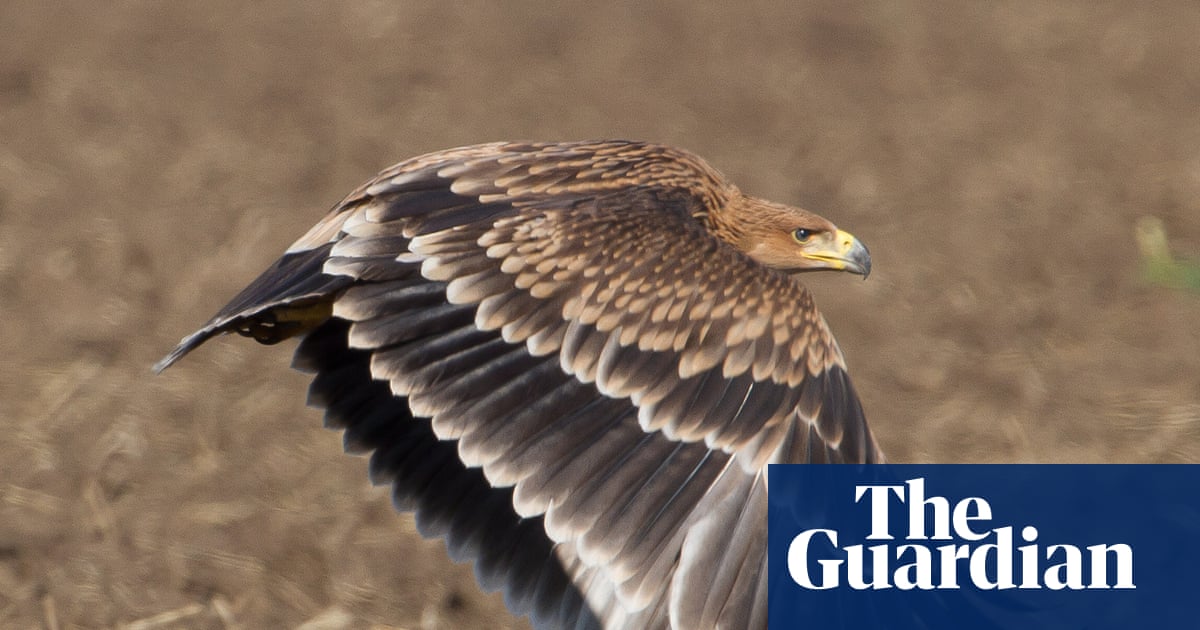
Northern Serbia is witnessing an improbable resurgence of the eastern imperial eagle, a species once teetering on the brink of extinction within the country. In 2017, only a single breeding pair remained, but recent counts by the Bird Protection and Study Society of Serbia (BPSSS) recorded 19 breeding pairs last year, with 10 successfully raising young.
The recovery, however, is a fragile one, built on decades of conservation efforts and a shift in attitudes towards a bird that was historically persecuted. Milan Ružić, executive director of BPSSS, describes a time when eagles were routinely shot, either for sport or perceived threats to livestock. “We’d point out there were fewer imperial eagles left in the entire country than people drinking beer in the room,” he said. “People suddenly cared.”
The decline of the eastern imperial eagle (Aquila heliaca) was a complex process, rooted in habitat loss and deliberate poisoning. Following World War II, the Yugoslav state implemented widespread poisoning campaigns targeting large carnivores like wolves and bears, using toxic bait distributed to farmers and shepherds. Eagles and vultures, scavenging on the carcasses, became unintended victims. “If you poison a sheep carcass in the open, eagles and vultures will be the first to uncover it,” Ružić explained. “If an eagle is shot, others learn. With poison, there is no warning.”
Intensification of agriculture in the Vojvodina region further exacerbated the problem. Oaks and poplars were felled to straighten fields and maximize yields, leaving the landscape one of Europe’s least forested. “You can drive here for an hour and a half and not spot a single tree taller than five metres,” Ružić noted. The loss of trees meant a loss of nesting sites, but too a decline in the eagle’s primary food source: ground squirrels, or sousliks, which thrive in grazed pastures. As cattle were moved indoors and grazing land converted to orchards, the souslik population plummeted.
By the late 1980s, the eastern imperial eagle population had dwindled to two small pockets in Serbia: the Deliblato Sands and the hills of Fruška Gora. The Deliblato population was lost in the 1990s. Fruška Gora held on until 2015, but Ružić believes a surge in fruit production following EU sanctions on Russia in 2014 – which led Serbia to fill the export gap – proved fatal. Pastures were converted into orchards, and a network of power lines sprung up, posing a significant threat to the fragile population.
The turning point came with the arrival of eagles from Hungary, where decades of conservation efforts had boosted the population from 20 pairs in the 1980s to 550 today. As the Hungarian population became saturated, young eagles began dispersing south, reaching Serbia in 2011.
Spurred by the EU-funded PannonEagle Life project, BPSSS launched a concerted effort to protect Serbia’s remaining breeding pair. Volunteers provided round-the-clock surveillance, and when a storm damaged the nest, conservationists intervened to rebuild it, temporarily removing the chicks to ensure their survival.
Today, BPSSS continues to monitor territories, rehabilitate injured eagles, and engage with local communities. The organization is also working to address ongoing threats, including illegal poisoning and collisions with power lines. Ružić acknowledged the challenges of combating a deeply ingrained mentality of using poison to control pests. “It’s a mentality problem,” he said. “It often starts with a neighbour’s barking dog or a fox taking chickens. Poisoning a piece of meat is a cheap, easy solution.” Since 2000, BPSSS has recorded approximately 300 poisoning incidents.
Recent efforts to track the eagles’ movements have also presented bureaucratic hurdles. Ružić explained that importing satellite tags now requires extensive documentation to prove they are being used for research, not for military purposes. “We had to sign documents proving we’re using them to track birds, not to wage a bloody war,” he said.
Despite the obstacles, the trend is positive. The population is expanding southwards along river corridors, and many of the birds are still young, meaning the potential for future growth is significant. However, the recovery remains precarious, and the long-term success of the conservation efforts will depend on continued vigilance and collaboration.
