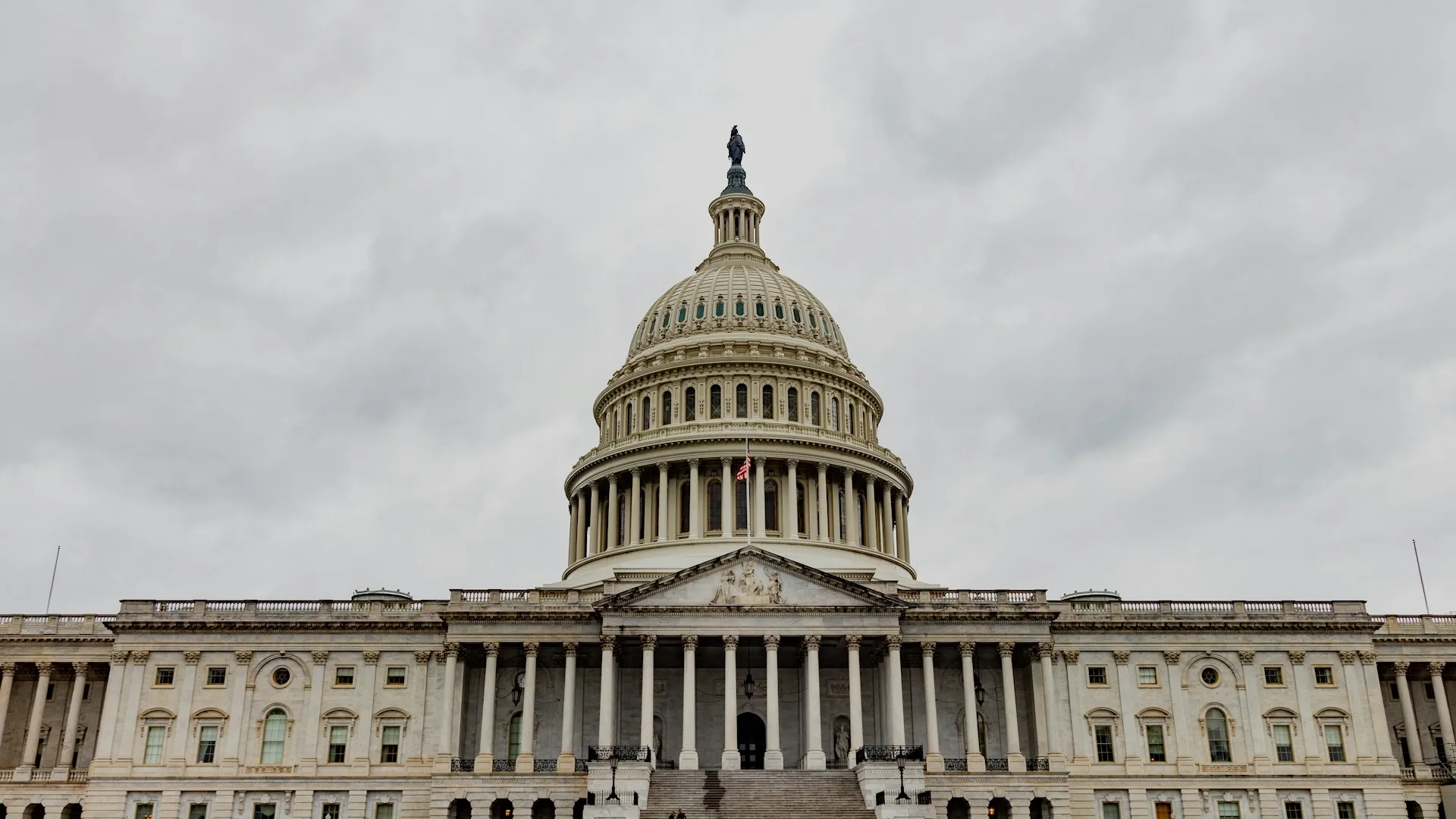
Senate Fails to Advance CLARITY Act 49-50; Trump Ethics Cited
The United States Senate fell short on September 15 of reaching the majority needed to end debate on the CLARITY Act, recording a 49 to 50 vote, according to the US Senate.
Democratic negotiating leaders blocked the legislation because of unresolved ethics questions surrounding Donald Trump’s cryptocurrency assets. Former CFTC Chairman Christopher Giancarlo stated on Tuesday of last week at the SALT London conference that he was “pretty glad” the bill did not pass, according to Finanzen.
“It had slowly begun to die in the six months prior to the interview and became unpopular with everyone due to additional regulatory requirements,” Giancarlo told Cointelegraph.
Giancarlo argued that the legislation became overly complicated because lawmakers attempted to accommodate competing interests. He said that the SEC and CFTC already hold the authority to regulate crypto markets, according to It Boltwise. According to his remarks, the internet and artificial intelligence developed without dedicated enabling statutes, calling the practice of writing rules before technology “kind of a European thing.”
The collapse of the bill leaves market participants facing different regulations. Stock values and broker processes across the sector now depend on whether existing financial regulators fill the gap without congressional action.aktiencheck.de said that the Fear-and-Greed-Index stands at 11, with the Coinbase stock closing on Monday at $119.84 on its yearly low, while the Circle stock dropped on Tuesday to $54.63.
Federal regulators are signaling independent moves following the legislative failure. SEC Chairman Paul Atkins declared in September that the commission will act decisively “with or without regulatory legislation” inside its statutory powers. CFTC chief Michael Selig said that his agency remains “firmly determined and ready to get its regulations for the new financial world off the ground,” according to finanzen.ch.
Bernstein analysts anticipated an aggressive and swift rulemaking process immediately following the September 16 Senate vote. Charley Cooper of Ava Labs, who previously served as CFTC chief of staff, estimated that more than six months could pass before final rules take effect. Stablecoins remain largely unaffected by the legislative outcome because they fall under the GENIUS Act.

Atkins raised a critical counterargument in August, emphasizing that only a statute provides permanent certainty since a future administration can rescind agency rules.
“Only a law is indispensable for lasting rules,” Atkins said in August regarding the limitations of executive agency frameworks.
Worth a look
- Sui Launches Hashi Bitcoin Finance Protocol on Mainnet With hBTC Token
- FTC Denies Petition to Repeal Credit Repair Upfront Fee Ban
- Trump's Beef Quota Filled About 37% in Month One; Ground Beef Fell 13 Cents (daybreakwire.com)
- Trump Calls Nuclear Arms Limits Difficult After Xi, Putin Summit (newsy-today.com)