
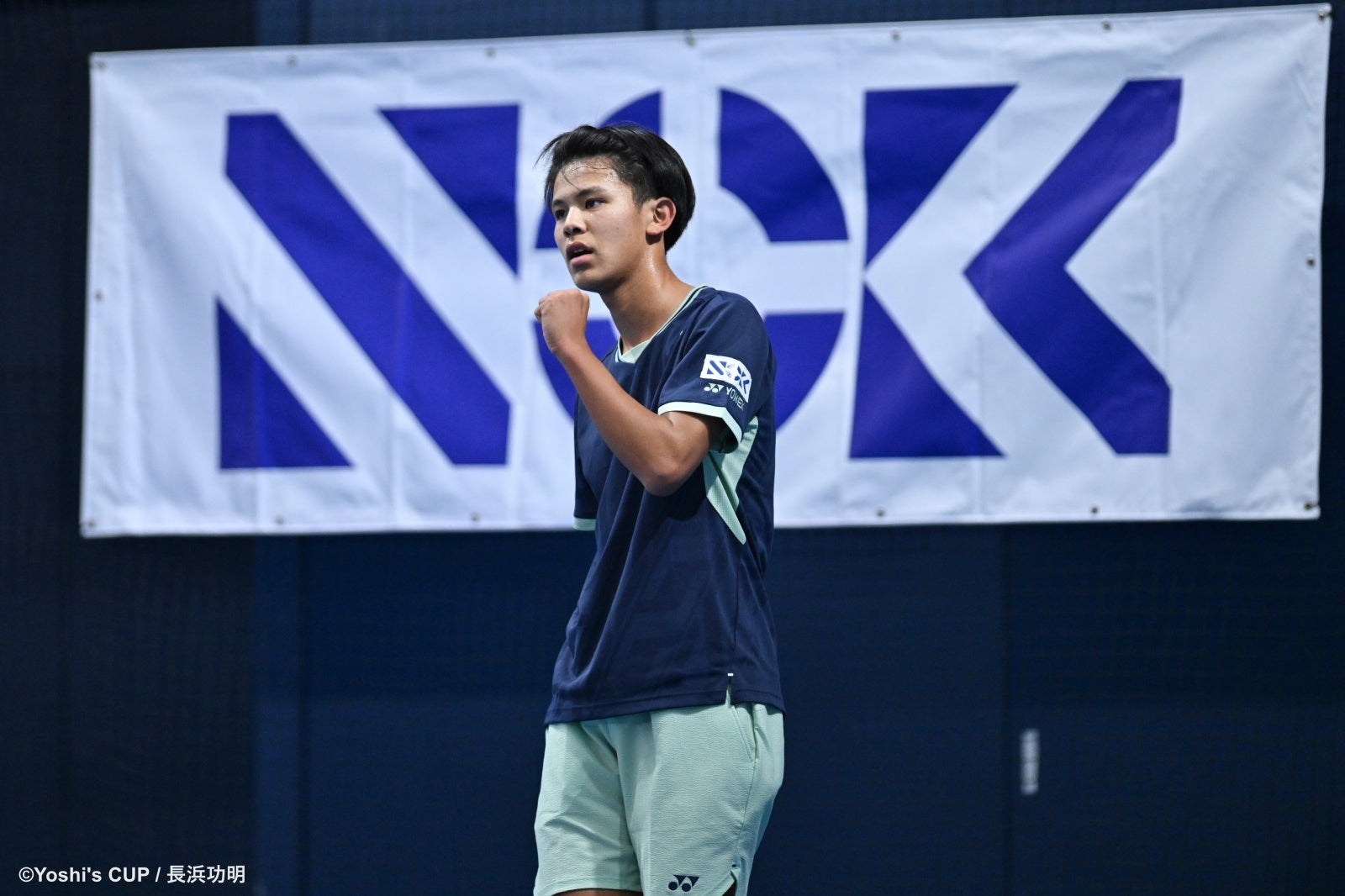
Yoshi’s CUP, driven by professional player Yoshihito Nishioka, is now at the center of a structural shift involving Japan’s elite youth sports growth. The immediate implication is a more formalized pipeline that could elevate Japanese tennis on the global stage while attracting corporate investment and media attention.
The Strategic Context
Since its inception in 2021, Yoshi’s CUP has evolved from a modest junior event with a ¥1 million winner’s grant to a five‑year program delivering ¥5 million in support, international study opportunities, and media exposure via streaming platforms. This growth mirrors broader Japanese trends: a demographic imperative to nurture high‑performance talent, increasing private sector willingness to sponsor sports as a vehicle for brand visibility, and a national agenda to diversify soft‑power assets beyond traditional strongholds such as baseball and soccer.The tournament’s location at Ariake Tennis Forest-Japan’s premier tennis venue-reinforces its ambition to become a recognized stepping‑stone toward ITF and Grand Slam participation.
core Analysis: Incentives & Constraints
Source Signals: The press release confirms that the event ran dec 12‑14 2025, offered ¥5 million in travel and coaching support, included a study stint at IMG Academy, and attracted a roster of corporate sponsors (e.g., International Sports Culture Foundation, NOK Corporation, U‑NEXT). Winners and awardees articulated personal goals of competing internationally,while organizer Nishioka highlighted the value of live streaming and the prospect of future wild‑card entries rather than further prize‑money increases.
WTN Interpretation: Nishioka leverages his personal brand and active tour status to create a self‑sustaining talent pipeline, aligning his short‑term visibility with long‑term national tennis ambitions. Corporate sponsors gain association with a rising star and access to a youthful demographic, satisfying marketing objectives in a market where sports sponsorship is increasingly data‑driven. The amplified prize fund and overseas exposure address structural constraints faced by Japanese juniors-limited funding for travel, scarcity of high‑level competition, and a cultural emphasis on academic pathways. However, the model remains dependent on continued private sponsorship and the ability of winners to translate support into measurable performance gains abroad, which can be hindered by the limited depth of domestic competition and the high cost of sustained overseas training.
WTN Strategic Insight
“When elite athletes turn into talent incubators, the resulting private‑public nexus can accelerate a nation’s soft‑power export faster than traditional federation‑led programs.”
Future Outlook: Scenario Paths & Key Indicators
Baseline path: If corporate sponsorship remains stable and the streaming audience continues to grow, Yoshi’s CUP will solidify its role as Japan’s premier junior tennis conduit. Winners will increasingly secure ITF wild‑cards,achieve higher junior rankings,and attract additional overseas coaching resources,gradually raising Japan’s representation in junior Grand Slams and,over the medium term,the ATP/WTA tours.
Risk Path: If sponsor commitment wanes-due to broader economic slowdown or shifting marketing priorities-or if the tournament fails to produce measurable international breakthroughs, the model could lose credibility. A decline in funding woudl reduce overseas travel support, limiting exposure for Japanese juniors and perhaps prompting athletes to seek alternative development routes abroad, diluting the domestic talent pool.
- Indicator 1: Quarterly sponsorship renewal announcements from key partners (e.g., U‑NEXT, Avex Entertainment) over the next six months.
- Indicator 2: Performance metrics of Yoshi’s CUP alumni in ITF junior events and any awarded wild‑cards for professional tournaments within the next 12 months.
