
Secondhand Shopping Becomes Key Holiday Gifting Strategy as Consumers Seek Value and Uniqueness
- The U.S. secondhand apparel market grew 13% in 2025, according to GlobalData.
- ThredUp reported that holiday-season sales grew 37% between 2023 and 2025.
- 70% of global consumers surveyed by eBay say secondhand shopping is important for managing their budgets.
- A survey from The Consumer Collective found 34% of people believe secondhand products offer better value than new ones.
Economic pressures, including a 0.4% rise in the consumer price index in October, have prompted shoppers to seek value, CNBC reported.
While total holiday sales are projected to exceed $1 trillion, much of that growth is attributed to inflation. Katherine Cullen, a global senior retail analyst at EY, told CNBC that consumers are increasingly willing to “splurge selectively,” making the resale market a more attractive option for holiday gifting.
This shift in consumer behavior breaks from traditional retail patterns. ThredUp, which historically saw a dip in activity during the holidays, now reports that its seasonal sales are growing faster than its annual average. “We were the inverse of traditional retail,” says Alon Rotem, ThredUp’s chief strategy officer.
A survey commissioned by ThredUp found that 62% of Americans plan to purchase at least one secondhand item for the holidays, with 55% preferring a unique vintage find over a mass-produced new item. “It’s a way to really express an individual style, find something unique, something that really fits their own vibe and personality.” “Uniqueness has a premium in their minds,” Rotem said.
| Demographic | Plan to purchase secondhand |
|---|---|
| Millennials | 78% |
| Generation Z | 70% |
The appeal of the secondhand market extends beyond clothing into furniture, books, and electronics. For many shoppers, the hunt for pre-owned goods provides a sense of discovery. “I think this has been their version of the thrill of the hunt that millennials loved during the recession days,” Cullen told CNBC. Vanessa Roberts, a 37-year-old Los Angeles resident, estimated that 70% of her holiday gifts this year will be sourced from secondhand stores.
Roberts said that she often finds higher-quality items in thrift stores than are currently available on retail shelves. “It’s been a fun little challenge, where it’s like a little scavenger hunt when I go into the thrift store,” she said.
“I’m definitely thrifting for the holidays – I do it every year.” “It’s crazy that you can find better quality items at the thrift store right now from 20 years ago versus what you can find at stores right now,” she said.
Retailers are responding to this trend, with brands such as Patagonia, Lululemon, and Madewell beginning to offer pre-owned selections, CNBC reported. On the financial markets, shares of companies like eBay and Savers Value Village have trended upward this year, though shares of ThredUp and The RealReal have declined year to date.
He said interest in secondhand this holiday season is “much stronger” than last year. “I can buy a product that’s used, and it almost has cachet around it,” Iannone told CNBC. “It’s becoming just a more established part of consumers’ shopping and gifting routines,” Jamie Iannone, CEO of eBay, told CNBC.
Economic pressures steer shoppers toward resale
Holiday spending rose 4.1% last year, the National Retail Federation reported, yet many shoppers said their money did not stretch as far as they wanted.
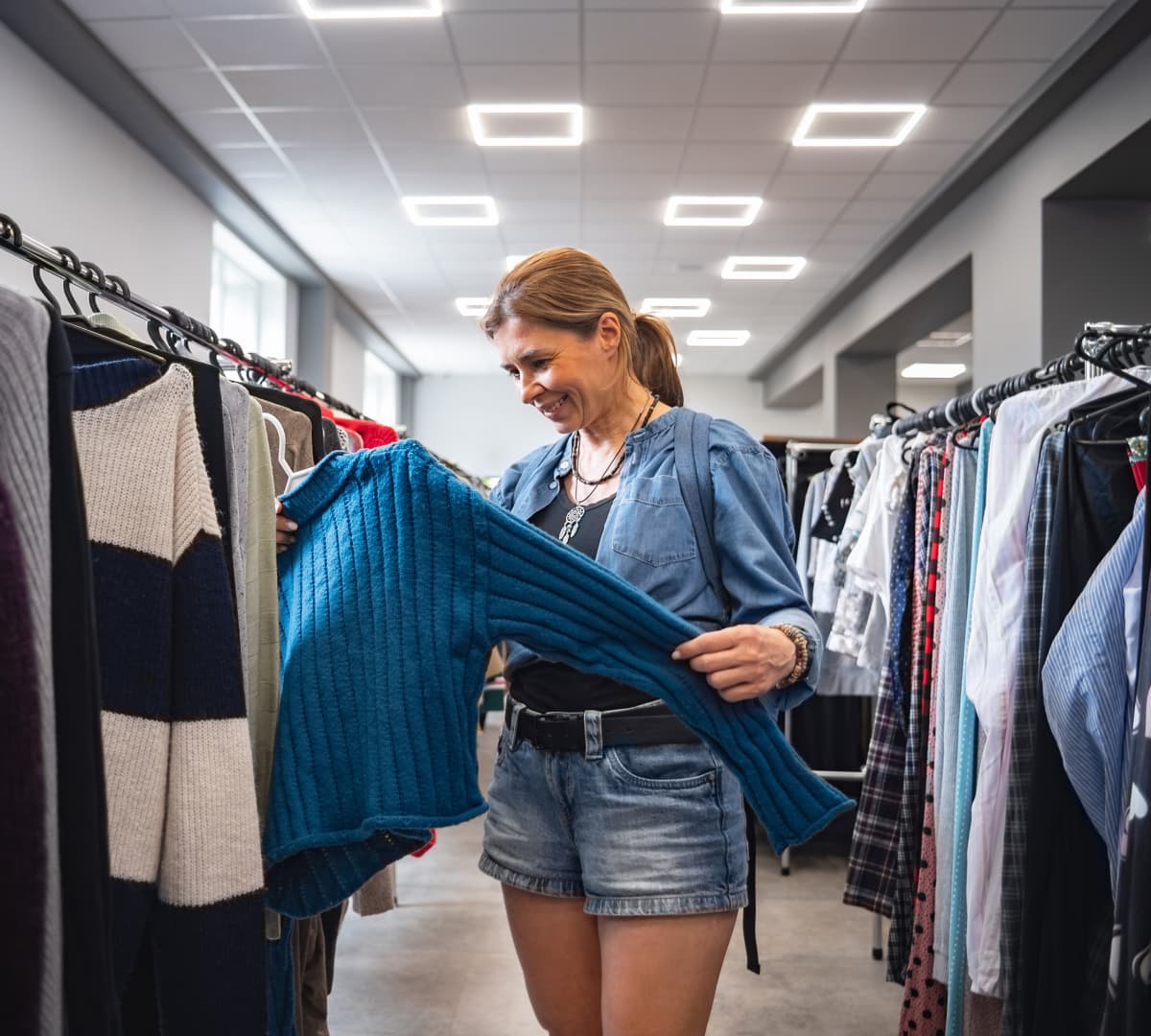
The consumer price index rose a seasonally adjusted 0.4% in October, more than anticipated, CNBC reported. Katherine Cullen, a global senior retail analyst at EY, told CNBC that shoppers are “willing to spend at the top level, [but] they’re willing to splurge selectively” and are “looking for value, which I think is something that is making secondhand resale and re-commerce more attractive.”
Retailers and markets respond to the shift
Jamie Iannone, eBay’s CEO, told CNBC that consumer interest in secondhand this holiday season is “much stronger” than last year and that buying pre-owned gifts is seen as “very normal.” He added that a used product “almost has cachet around it.” Cullen said that uniqueness is spreading beyond apparel into furniture, electronics and books as shoppers seek items that fit the recipient’s personality.
It is unclear whether the momentum of secondhand gifting will keep growing at the same pace in 2027, though 89% of respondents in an eBay survey said they plan to spend the same amount or more on resale products next year.