Sea Level Rise Threatens Coasts and Ecosystems, tameteo.com Reports
Powerful Waves Lash Coastal Homes as Global Sea Levels Accelerate
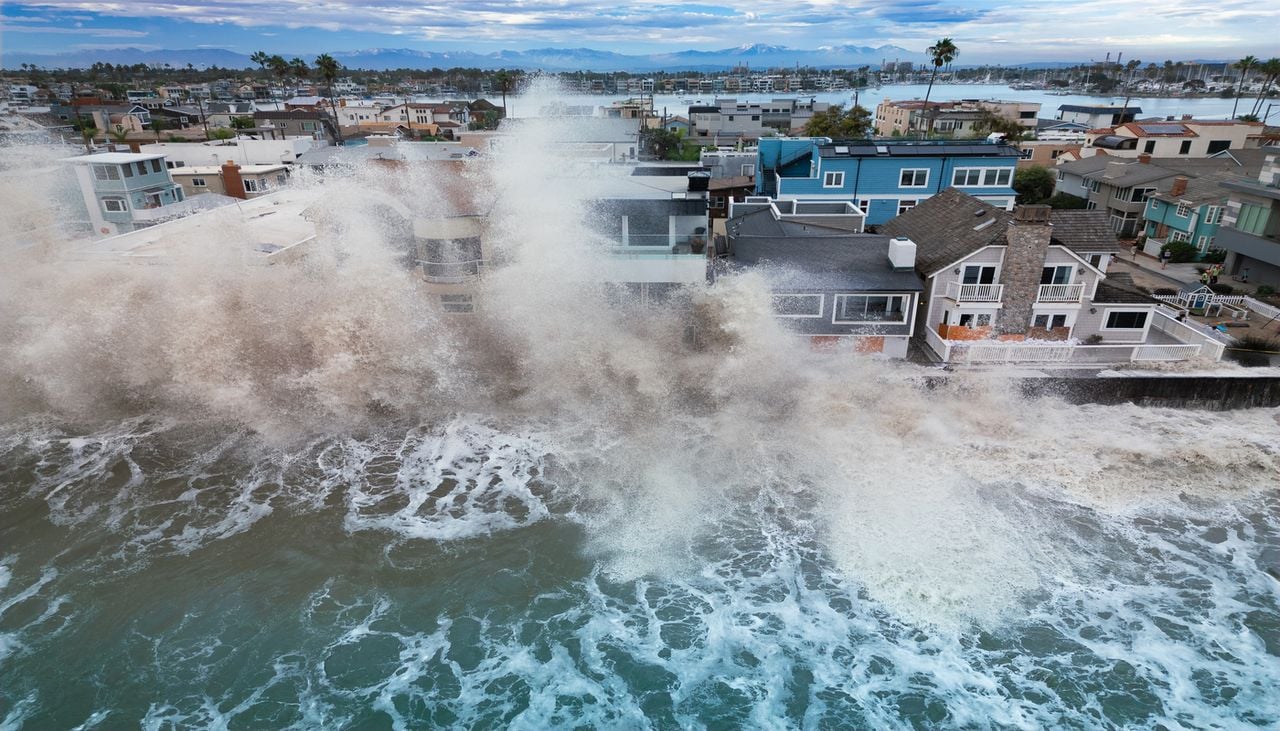
Powerful waves crashed against seaside residences and hurled water over coastal defenses, illustrating the escalating risks of erosion and submersion threatening shorelines worldwide, tameteo.com reported on October 18, 2026. Global mean sea level rose by 20 centimeters between 1901 and 2018, with an additional 10.6-centimeter increase recorded since 1993, driven primarily by human activities since at least 1970.
The Tech TL;DR:
- Global mean sea level is rising faster than at any point in the past three millennia, driven primarily by melting glaciers, ice sheets, and thermal expansion of warming oceans.
- Approximately 770 million people live in zones less than five meters above high-tide levels, facing severe risks from increased storm surges and coastal erosion.
- Small Island Developing States require an estimated $6 billion annually by 2035 for climate adaptation, though public funding severely lags behind these requirements.
Melting Ice Sheets and Thermal Expansion Drive Unprecedented Rates
According to tameteo.com, two main mechanisms explain the acceleration of sea level rise: glaciers and ice sheets are melting at a sustained pace, while seawater expands as it warms. Variations in continental water storage also contribute to the shift. This evolution varies significantly by region due to local land movements and ocean currents. In Jakarta, excessive groundwater pumping caused certain areas to subside by up to 15 centimeters per year over the past decade. Under a moderate emissions scenario, the global average sea level could rise by another 56 centimeters by 2100 relative to 1995-2014 levels.
Statistical extremes have shifted dramatically alongside these physical changes. Extreme events that historically occurred only once per century have seen their frequency multiplied by 12 since 1900. Under moderate emission projections, these extreme occurrences could happen at least annually by the end of the century. Beyond residential damage, rising waters and salt intrusion threaten drinking water networks, sanitation systems, and agricultural lands. Low-income populations often lack the resources to withstand these impacts, while the population living within five kilometers of coasts grew by 28 percent between 2000 and 2018.
Ecosystems Trapped by Coastal Compression and Coral Degradation
Coastal wetlands, including mangroves, estuaries, mudflats, and seagrass beds, lost nearly 28 million hectares—an area comparable to Ecuador—since 1970. When human infrastructure blocks these natural habitats from migrating inland as the sea rises, they become trapped between the ocean and human development, a process known as coastal compression. Coral reefs face dual pressures from warming waters and sedimentation. Rising sea levels reduce light availability in shallow areas, while erosion carries sediments that disrupt coral feeding and reproduction. Since 1980, approximately 10 percent of global coral cover has vanished due to ocean warming.
Cultural heritage is similarly exposed. In Africa, 56 out of 284 cultural and natural sites face threats from coastal flooding and erosion, a figure projected to reach 191 by 2050 under moderate emissions. UNESCO World Heritage sites face widespread vulnerability, with 136 locations impacted under a 3°C global warming scenario, according to a 2014 study cited by tameteo.com.
Financial Gaps in Adaptation and Infrastructure Defense
Mitigation strategies combine emissions reduction with local adaptation measures. Venice relies on mobile barriers to protect its lagoon during high tides, while other regions restore mangroves, restrict construction in vulnerable zones, or relocate critical infrastructure. However, financial resources remain unevenly distributed. Small Island Developing States, often comprising low-lying atolls, require an estimated $6 billion per year by 2035 to adapt to climate change. Actual public funding for adaptation reached only $1.2 billion during the 2022-2023 period, according to United Nations figures.
Reducing emissions remains essential to capping future sea level rise, alongside preserving natural habitats, adapting regional planning, and funding vulnerable communities.