
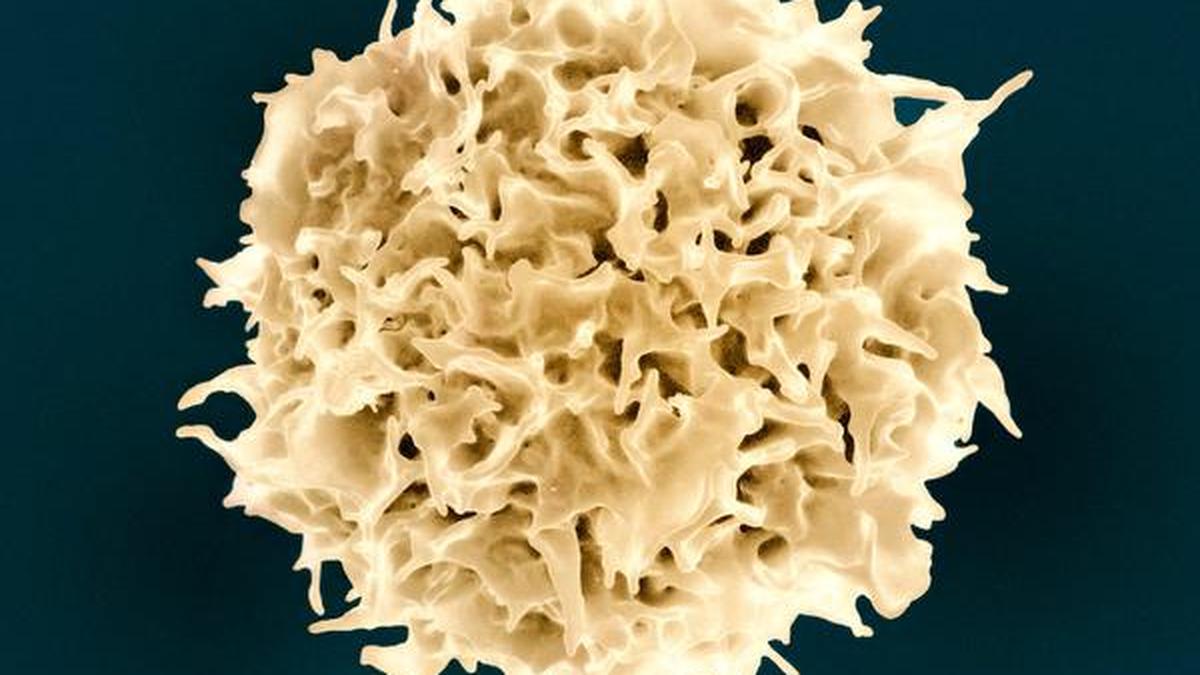
AI Designs Proteins to Supercharge Immune Cells
New Harvard Research Boosts Fight Against Cancer and Infections
Researchers at Harvard University have harnessed the power of artificial intelligence to engineer novel proteins capable of dramatically increasing immune cell production. This breakthrough promises to revolutionize treatments for a range of diseases, including cancer and viral infections.
Revolutionizing T Cell Generation
A team led by Rubul Mout has developed AI-designed proteins that activate a critical cellular pathway known as Notch signalling. This pathway is essential for guiding stem cells to develop into T cells, the body’s front-line defenders against pathogens and cancerous cells.
Notch signalling is a fundamental cell-to-cell communication system crucial for development and maintaining bodily balance. When the body faces threats like viral infections or cancer, an increased number of T cells is required for an effective immune response.
“In response to viral infections or cancer, the body requires a higher production of T cells to mount an effective immune defence. However, this process depends on the activation of the Notch signalling pathway, for which no effective molecular activators have been available.”
—Rubul Mout, Principal Scientist
Previous methods for activating Notch signalling in labs involved immobilizing certain molecules on culture dishes, which proved impractical for human therapeutic use. The quest for a soluble activator that could function within the body led the team to employ AI-driven protein design.
AI-Powered Innovations in Immunotherapy
The researchers utilized cutting-edge AI techniques, akin to those that contributed to David Baker‘s 2024 Nobel Prize in Chemistry, to create a library of custom-designed soluble Notch agonists. These proteins were rigorously tested for their ability to activate the Notch pathway and promote T cell development and function.
This innovation has already demonstrated success in generating large quantities of T cells in laboratory bioreactors. This is a significant advancement, addressing the escalating demand for T cells in treatments like CAR T-cell therapy for cancer patients worldwide.
When administered to mice during vaccination, these AI-designed agonists significantly enhanced immune responses. The study noted an increased production of memory T cells, which are vital for long-term immunity and vaccine efficacy. As of 2023, CAR T-cell therapy has been approved for treating several blood cancers, with ongoing research expanding its potential applications.
Future of Immune Therapies
Dr. Mout expressed enthusiasm for the potential applications of this technology. He highlighted the prospect of using engineered synthetic proteins to simultaneously link T cells with cancer cells, boost cancer cell destruction, and counteract the immune-suppressing tumor microenvironment.
“What excites me the most is using this technology to engineer synthetic proteins that simultaneously bridge T cells and cancer cells, boost T cell-mediated killing, and neutralise the immunosuppressive tumour microenvironment. Our goal is to develop next-generation immunotherapies and cancer vaccines,” he added.
The collaborative effort included contributions from George Daley, Dean of Harvard Medical School, Stephen C. Blacklow of Harvard Medical School, Urban Lendahl from the Karolinska Institutet, and R. Grant Rowe of the Dana-Farber Cancer Institute.
