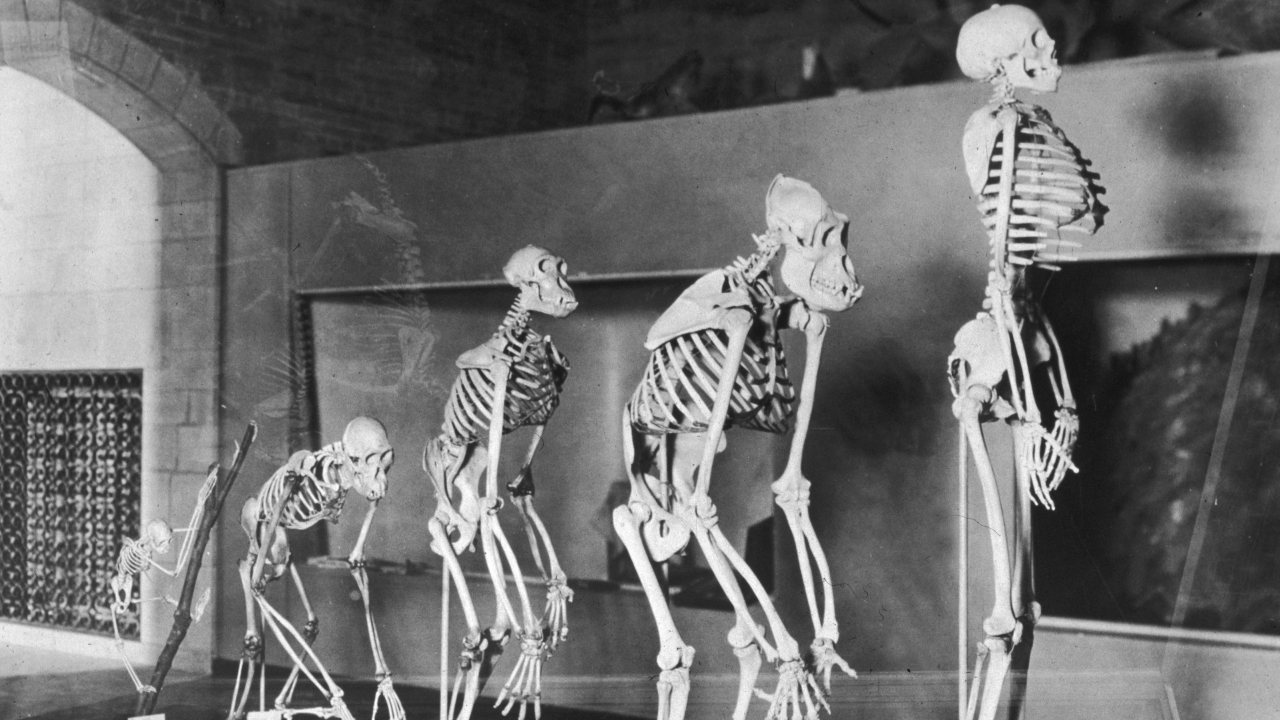
Scientist Claims There Was No Human Evolution Revolution
A Brazilian paleoanthropologist has dismissed the idea of a “revolution” in human evolution, arguing that genetic and fossil evidence shows gradual, not abrupt, changes over millennia. According to Dr. Walter Neves, director of the Laboratory of Human Evolution at the University of São Paulo, the concept of a sudden evolutionary leap—often tied to theories of modern human emergence in Africa—lacks scientific support.
Neves, whose research has focused on early human migration to the Americas, told Aventuras na História that the narrative of a “revolutionary” shift in human cognition or anatomy is a “myth” perpetuated by popular science and media. “There is no evidence of a single, dramatic event that transformed Homo sapiens into what we are today,” he said. “Evolution is a slow, incremental process, with small genetic variations accumulating over generations.”
His remarks challenge a widely held assumption in evolutionary biology, where some researchers point to abrupt changes in brain size, tool use, or symbolic behavior—such as cave art or burial rituals—as evidence of a “revolution.” Neves countered that these developments occurred over thousands of years, with overlapping populations and gene flow between species, including Homo sapiens and Neanderthals.
Why does this debate matter?
Neves’ stance aligns with a growing body of genetic research that emphasizes continuity over rupture. A 2023 study published in Nature analyzed DNA from ancient humans and found that modern populations retain traces of interbreeding with archaic species, suggesting no clean evolutionary “break.” However, other researchers, such as Harvard’s Dr. David Reich, argue that certain cultural innovations—like the invention of language or long-distance trade—may have accelerated cognitive evolution in discrete phases.
“The idea of a revolution implies a before and after,” Neves said. “But the fossil record shows a mosaic of traits appearing and disappearing across regions, not a single origin point.” His laboratory’s work on Brazilian fossils, including the 11,500-year-old Lapa do Picareiro remains, supports this view, showing anatomical features shared with both African and Asian populations.
How does this challenge mainstream narratives?
Neves’ criticism targets two dominant frameworks in paleoanthropology:
- The “Out of Africa” model: The theory that modern humans originated in Africa around 300,000 years ago and migrated globally, replacing other hominins. Critics like Neves argue this oversimplifies the evidence, which includes regional adaptations and hybrid lineages.
- The “Great Leap Forward”: A hypothesis that around 50,000 years ago, humans underwent a sudden cognitive and behavioral shift, enabling complex culture. Neves dismisses this as a “just-so story” lacking fossil or genetic corroboration.
Instead, he advocates for a “multiregional” perspective, where human evolution involved parallel developments in different parts of the world, with gene flow rather than replacement driving change.
What are the implications for archaeology?
If Neves is correct, it forces archaeologists to rethink how they interpret artifacts. For example, the sudden appearance of beads or engraved tools in Europe around 40,000 years ago—often cited as evidence of a “revolution”—might instead reflect gradual cultural diffusion. “We’ve been guilty of reading our own expectations into the record,” Neves said. “The data doesn’t support a single origin event.”
His views have drawn pushback from some colleagues. Dr. Chris Stringer of the Natural History Museum in London, a proponent of the “Out of Africa” model, told BBC Science that while evolution is incremental, “certain innovations do seem to cluster in time,” suggesting periods of accelerated change. Stringer pointed to the rapid spread of symbolic culture in Eurasia as evidence of a “revolutionary” phase, even if not a genetic one.

The debate underscores a broader tension in science: between narratives that emphasize discontinuity (revolutions, breakthroughs) and those that highlight continuity (gradualism, blending). With new genomic tools allowing finer-grained analysis of ancient DNA, the question of whether human evolution was revolutionary or incremental may soon find clearer answers.
Neves’ laboratory continues to analyze Brazilian fossils, while international teams, including those at the Max Planck Institute for Evolutionary Anthropology, are mapping genetic links between ancient populations. The next phase of research may hinge on whether future discoveries reveal abrupt shifts in specific traits—or confirm that evolution, like history, is a story of slow, overlapping changes.