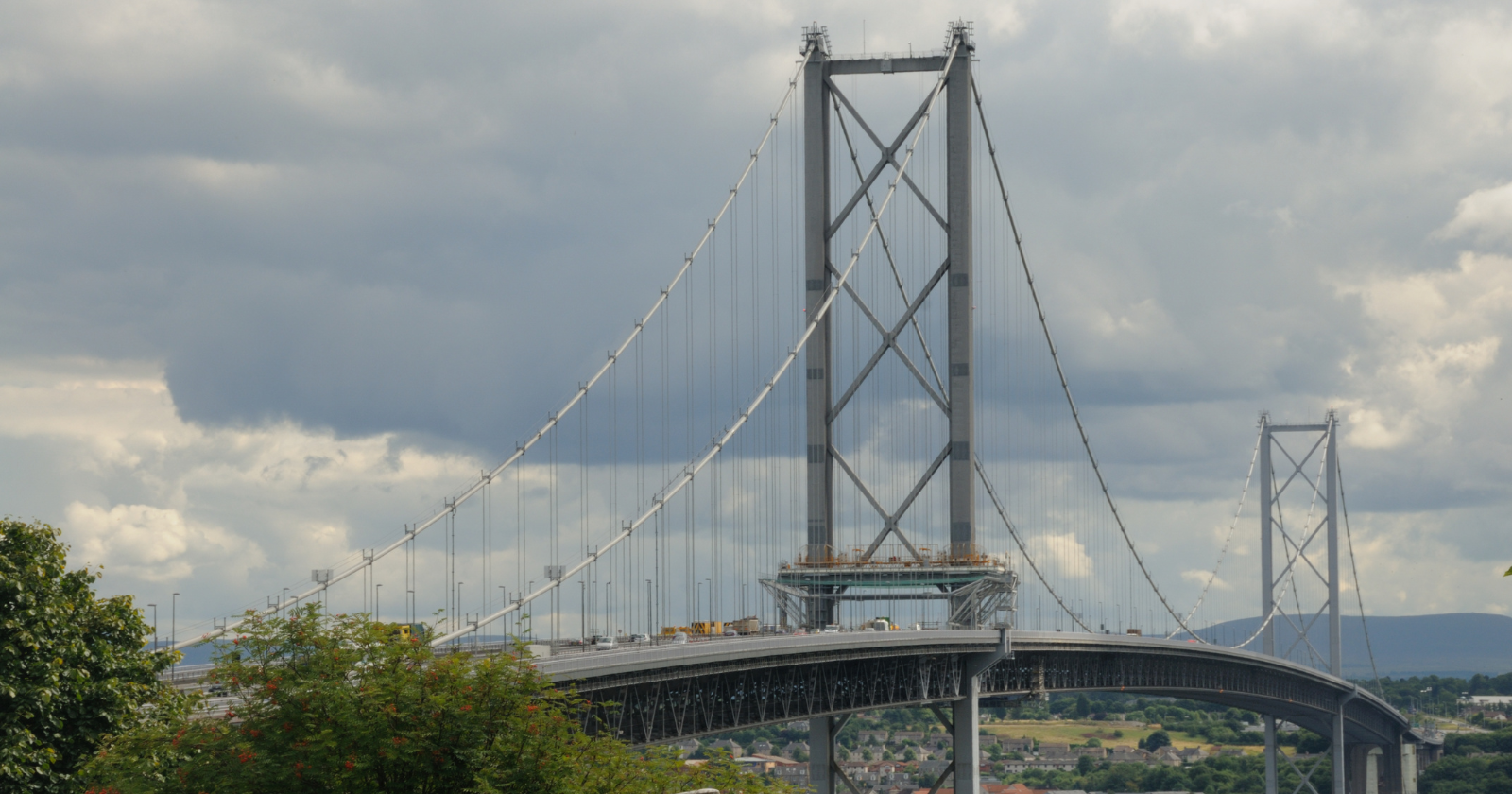
Saving Scotland’s Forth Road Bridge from Cable Corrosion
Forth Road Bridge Cable Corrosion: Engineering Analysis and Dehumidification Architecture
Opened in 1964 and designated as a Category A listed structure in 2001, the 13,800-tonne crossing relies on two main cables containing 11,618 high-tensile galvanized steel wires apiece, each measuring approximately 4.98mm to 5mm in diameter.
The Tech TL;DR:
- Structural Deficit: Corrosion running to the center of the 600mm cables caused an 8% to 10% loss of strength.
- Engineering Mitigation: Engineers deployed an airtight sheath and active dry air injection system to halt further oxidation.
- Operational Lifecycle: Originally built for 24 million vehicles annually, the bridge faced severe strain from 40-tonne freight limits before supplementary routes were planned.
Cable Architecture and Failure Vectors
The Forth Road Bridge’s main cables are crucial structural components that transfer dead and live loads from the deck down to the main towers, side towers, and north and south anchorages. Completed bundles were originally coated in red lead paste, wrapped with soft galvanized wire, and painted. However, inspection campaigns led by engineering consultants AECOM revealed that moisture ingress had bypassed initial protective measures.
Corrosion was not limited to the surface wires; it ran deep into the core of the 600mm cable bundles. By that point, traffic usage had scaled from over four million vehicles in its first operational year to more than 24 million vehicles by 2006. Increased weight limits permitting 40-tonne freight lorries across five axles placed heavy cyclic loading on infrastructure that was failing to maintain its original safety margins.
Dehumidification Protocols and System Deployment
To arrest internal oxidation without completely dismantling the primary load-bearing elements, engineers evaluated global remediation methods. Following a worldwide review of mitigation techniques, Feta and AECOM selected cable dehumidification. This industrial engineering approach involves encasing the aerially spun cables within a tightly sealed synthetic wrapping system and injecting continuous streams of very dry air into the interstitial voids between the individual wires.
By dropping the relative humidity inside the cable sheath below the chemical threshold required for oxidation, the system halts active corrosion. AECOM designed the mechanical and electrical specifications, set up access platforms with contractors, and established monitoring protocols to track internal moisture levels. Drying operations commenced in December 2009. By 2013, monitoring data indicated that corrosion was effectively neutralized as an active threat, proving that large-scale civil infrastructure can benefit from active environmental control loops rather than purely passive coatings.
For enterprises managing critical physical infrastructure, maintaining rigorous uptime requires continuous monitoring and rapid intervention.
Traffic Demands and Infrastructure Succession
Feta notified the Scottish Executive that a replacement crossing was necessary, leading the Scottish Government under Alex Salmond to approve the construction of the Queensferry Crossing in 2009. While the original intention was to reserve the ageing suspension bridge strictly for public transport, cycles, and pedestrians, ongoing maintenance constraints underscore the fragility of aging civil assets under heavy transportation demands.

Engineers handling long-lifecycle projects must balance load specifications against environmental degradation vectors. Utilizing automated diagnostic pipelines helps site reliability teams catch hardware anomalies early. System administrators can implement continuous telemetry logging using diagnostic routines such as the following configuration query:
# Sample telemetry polling configuration for structural sensor array
sensor_id: "FRB-CABLE-04"
poll_interval_sec: 300
metrics:
  - relative_humidity
  - internal_temperature
  - acoustic_emission_count
alert_threshold_rh: 40.0
action: "trigger_dryer_override"
Editorial Kicker
The preservation of the Forth Road Bridge illustrates that infrastructure resilience depends as much on active environmental mitigation as it does on initial metallurgical quality. As digital and physical systems alike age under relentless utilization, automated telemetry and continuous environmental controls will dictate whether critical assets survive or require complete replacement.
*Disclaimer: The technical analyses and security protocols detailed in this article are for informational purposes only. Always consult with certified IT and cybersecurity professionals before altering enterprise networks or handling sensitive data.*