San José Planning Commission Recommends Data Center Standards, Shift of Approval Power
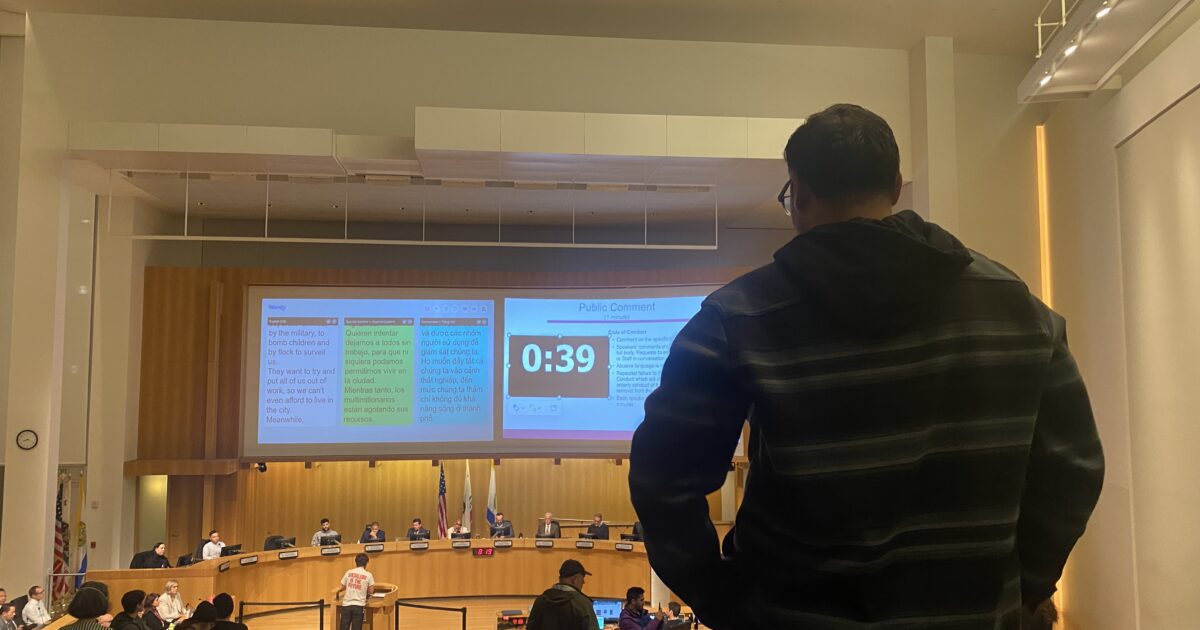
The San José Planning Commission voted unanimously on Wednesday to recommend a new set of data center regulations to the City Council, including a controversial shift in oversight that would empower commissioners rather than city staff to approve large-scale projects.
The proposed normas propuestas mandate that developers utilize 100% renewable energy and recycled water for cooling, implement noise-reduction barriers, and ensure construction workers are paid prevailing wages.
Shifting Approval Authority to Commissioners
Under the city’s existing procedure, the Director of Planning holds the authority to unilaterally approve new data center projects. Michael Young, vice chair of the planning commission, successfully proposed an amendment to transfer this power to the commission itself. Young argued that the City Council lacks the capacity to review land-use decisions on an individual basis, necessitating a stronger role for the appointed commission.
“I am very disappointed that the planning commission has been left out of this process. I think it’s a mistake,” Young said during the meeting, as reported by San José Spotlight. “The city has a planning commission for a reason. The council does not have the time or resources to analyze land use on an individual basis. These are very large projects that raise great concern in the community.”
Economic Impact and Community Fees
The proposed framework introduces specific financial requirements for developers intended to mitigate the burden on city infrastructure. Projects would be subject to an affordable housing or commercial linkage fee of $5.20 per square foot. Developers would also pay a $50,000 per megawatt energy reliability fee to offset increased electrical demand.
| Revenue Category | Estimated Financial Impact |
|---|---|
| Commercial Linkage Fee | $2.6 million for a 500,000 sq. ft. building |
| Energy Reliability Fee | $50,000 per megawatt |
| Annual City Revenue | $3.4 million to $6.8 million per data center |
| Projected Total Annual Revenue | Up to $75 million if all planned projects proceed |
Leah Toeniskoetter, executive director of the San José Silicon Valley Chamber of Commerce, noted in a letter to the commission that while these projects provide necessary jobs and revenue, there is a risk that excessive fees could diminish the city’s regional competitiveness, according to San José Spotlight.
Concerns Over Health and Equity
The four-hour debate highlighted significant community apprehension regarding the cumulative health impacts of data center clusters. Residents and commissioners expressed concern over a lack of data regarding infrasound, with some participants calling for a delay to allow for further study of potential physiological effects.
Commissioner Daniel Cao noted the absence of definitive research on the matter, stating, “The uncertainty about what those specific health impacts are does cause concern. I don’t think anyone here knows what the cumulative health impacts are.”
Manuel Pineda, the deputy city manager, countered that the projects adhere to the California Environmental Quality Act. He said that the state has yet to establish a threshold for efectos del infrasonido, but indicated the city would incorporate such standards if they are eventually adopted at the state level.
Planning Commission Chair Chuck Cantrell criticized the current proposal for its failure to address equity, particularly for vulnerable communities. “This report seems to have never asked who takes the risk and who gets the benefit,” Cantrell said. “Once again, equity is missing from all of this.”
Final Decision Scheduled for December
The San José City Council is scheduled to review the commission’s recommendations during its meeting on December 8. If the council votes to adopt the proposal, the new standards could take effect immediately via an urgency ordinance. Developers and community groups are monitoring the process closely, as the outcome will dictate the regulatory environment for data center investment in the region for the coming decades.
For project proponents and community stakeholders, the upcoming council session represents the final opportunity to influence the policy before it becomes law.
The commission itself is established by the City Charter to advise the Council on land use and is empowered by the Municipal Code to grant certain permits, such as Conditional Use Permits, and to act as an appellate body on Planning Director decisions.
The City Council’s decision on the commission’s recommendations is set for December 8.
- Bishop Crociata Calls EU States’ Rwanda Return Hubs ‘Deportation
- Fiji Declares National State of Disaster Over Worsening El Niño Drought
- APEC Leaders Pose for Family Photo in Shenzhen; Analyst Sees Return of Great-Power Diplomacy (time.news)
- SpaceX Share for Every Kid Needs a Charity and Treasury's Approval (daybreakwire.com)