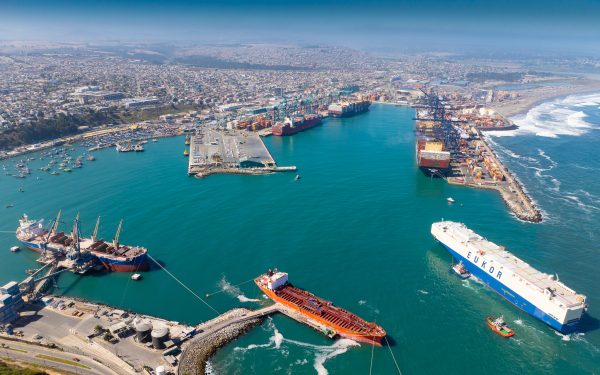
San Antonio Port: Transshipment Potential and Regional Cargo Trends
A study commissioned by Camport recommends postponing the construction of the San Antonio Outer Port in Chile, citing a lack of sufficient transshipment cargo to justify the immediate investment. The report suggests the port would primarily capture cargo from other Chilean ports, limiting its viability as a regional hub according to current projections.
The decision creates a significant bottleneck for the Valparaíso region. While the project aimed to modernize Chile’s maritime infrastructure, the reality is a gap between ambitious urban planning and actual market demand. For the local economy, this delay isn’t just a pause in construction; it is a freeze on projected jobs and industrial growth.
Market Limitations and the Transshipment Gap
The core of the issue lies in the “transshipment” capacity—the process of moving cargo from one vessel to another. According to the Camport study, San Antonio would struggle to attract international transshipment volumes, instead relying on a low proportion of cargo from the Southern Macrozone and a medium proportion from other domestic sources. This means the port would essentially be competing with its own neighbors rather than expanding Chile’s global trade footprint.
This lack of demand makes the project a financial risk. When infrastructure projects of this scale lack a guaranteed cargo flow, the cost of capital increases. Developers and stakeholders are now forced to reconsider the project’s timing to avoid creating a “white elephant” facility that lacks operational utility.
The regional economy of San Antonio depends heavily on these expansions. Local businesses that invested in anticipation of the Outer Port—including warehouses and logistics hubs—now face a period of stagnation. Many of these firms are seeking [Logistics and Supply Chain Consultants] to pivot their business models toward existing port capacities while the Outer Port remains in limbo.
Regional Infrastructure and Economic Ripple Effects
The delay impacts more than just the shoreline. The San Antonio port area is deeply integrated into the national transport network. A postponement of the Outer Port affects the planned upgrades to rail and road connectivity that were designed to support increased throughput.
The Chilean government has historically pushed for the “Two-Port Strategy,” balancing the loads between Valparaíso and San Antonio. With one side of that equation stalled, the pressure on existing terminals increases. This congestion leads to higher costs for importers and exporters, who must now deal with longer wait times and increased drayage fees.
For companies operating in the region, the uncertainty creates a legal and contractual nightmare. Lease agreements and land-use permits tied to the port’s expansion are being renegotiated. To protect their interests, regional developers are increasingly relying on [Commercial Real Estate Attorneys] to navigate the complex land-use laws and contractual disputes arising from the project’s delay.
Comparative Outlook: San Antonio vs. Valparaíso
The tension between Chile’s two primary ports is highlighted by this setback. While San Antonio struggles with the viability of its Outer Port, Valparaíso continues to pursue its own modernization efforts, though often facing similar community and environmental hurdles.
| Metric | San Antonio (Proposed Outer Port) | Current Status/Trend |
|---|---|---|
| Primary Cargo Source | Domestic/Chilean Ports | Low International Transshipment |
| Project Status | Proposed Postponement | High Financial Risk |
| Regional Impact | Infrastructure Stagnation | Increased Pressure on Existing Berths |
The study’s finding that the port would only capture cargo from other Chilean ports indicates a failure in the initial regional demand forecasting. If the goal was to make San Antonio a “hub” for the South Pacific, the current data suggests the market isn’t there yet.
The Path Forward for the Valparaíso Region
Postponing the project does not mean the need for a modern port has vanished. It means the strategy must shift from “build it and they will come” to a data-driven approach that aligns construction with actual shipping lane growth. The Ministry of Transport and Telecommunications and the National Port Service will likely need to coordinate a new master plan that accounts for these revised cargo projections.

In the interim, the focus shifts to optimizing the current infrastructure. This involves digitalization of customs and the implementation of “smart port” technologies to squeeze more efficiency out of the existing berths. This shift toward efficiency over expansion requires a new set of technical expertise in port management and digital integration.
The local community in San Antonio remains caught between the desire for economic development and the reality of environmental and logistical constraints. The delay provides a window for more rigorous environmental impact assessments, but it also leaves workers in a state of precariousness.
The failure to secure a viable transshipment model is a warning for other infrastructure projects across Latin America. Without a verified, international demand signal, massive concrete investments can quickly become liabilities. As the region waits for a new timeline, the immediate priority for stakeholders is risk mitigation and the securing of [Environmental Compliance Specialists] to ensure that when the project does restart, it doesn’t collapse under the weight of regulatory failures.
The future of San Antonio’s maritime dominance now depends on whether the government can attract genuine international shipping lines to commit to the port, or if the city will remain a secondary player in the shadow of more agile regional competitors.