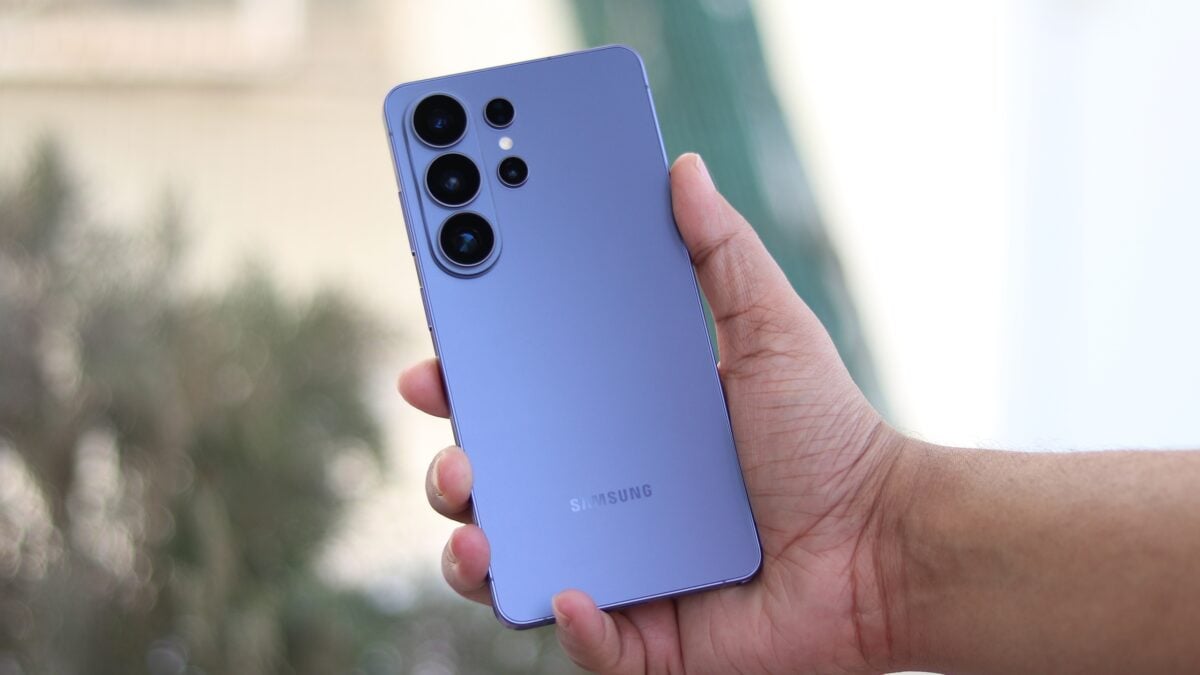
Samsung Galaxy S26 Ultra Elevates Sports Broadcasting at Street League Skateboarding
The shift from monolithic broadcast rigs to distributed mobile endpoints is no longer a theoretical exercise. Samsung’s deployment of the Galaxy S26 Ultra at the Street League Skateboarding (SLS) DTLA Takeover on April 4 marks a pivot toward treating flagship handsets as modular broadcast nodes rather than mere consumer gadgets.
The Tech TL;DR:
- Deployment: Galaxy S26 Ultra units were embedded directly into rails, ledges, and gaps during the SLS DTLA Takeover to capture high-impact POV angles.
- Workflow: Mobile feeds are integrated into live production pipelines, enabling near-instant replay and broadcast-level delivery.
- Enterprise Precedent: This follows a similar deployment at the Olympic Winter Games Milano Cortina 2026 opening ceremony in collaboration with Olympic Broadcasting Services (OBS).
For most, a smartphone camera is a tool for social media. For a broadcast engineer, it is a potential point of failure. The primary bottleneck in live sports is the “blind spot”—the physical impossibility of placing a traditional 4K broadcast camera inside a grinding rail or under a ledge without obstructing the athlete or risking equipment destruction. Samsung is attempting to solve this spatial constraint by leveraging the form factor of the S26 Ultra, but the real challenge isn’t the camera; it’s the telemetry and the transport layer. Moving high-bitrate, low-latency video from a device embedded in a skate feature to a production switcher requires a robust wireless backbone to avoid the dreaded frame-drop during a live hit.
Hardware Integration: Mobile Endpoints vs. Traditional Rigs
The S26 Ultra’s role in the SLS 2026 season is essentially that of a remote probe. By utilizing the “Super Steady” stabilization suite, Samsung is mitigating the high-frequency vibrations inherent in skateboarding impacts, which would typically render a mobile feed useless for broadcast. This isn’t about “better” images—it’s about the viability of the placement. Traditional cameras are tethered by SDI cables and heavy tripods; the S26 Ultra operates as a wireless node, relying on the device’s internal NPU to handle real-time stabilization before the stream hits the encoder.
| Metric/Feature | Traditional Broadcast Camera | Galaxy S26 Ultra (Broadcast Mode) |
|---|---|---|
| Physical Footprint | High (Requires Rigging/Tripods) | Minimal (Embedded in Course) |
| Signal Transport | Hardwired SDI/Fiber | Wireless IP-based Stream |
| Placement Flexibility | Limited to Safe Zones | Extreme (Rails, Ledges, Gaps) |
| Stabilization | Mechanical Gimbals/Dollys | Electronic (Super Steady) |
| Deployment Speed | Slow (Cable Runs Required) | Rapid (Node Deployment) |
This architectural shift introduces significant network stress. To maintain “broadcast-level performance,” the connectivity must handle massive uplink throughput without jitter. In an environment like DTLA, where signal interference is rampant, the reliance on mobile hardware necessitates a highly optimized network slice. Enterprise-grade deployments of this scale often require managed network service providers to ensure that the wireless handoffs between the embedded devices and the production hub don’t collapse under the load of multiple 4K streams.
The Production Pipeline: From Rail to Replay
Integrating a mobile device into a professional live production workflow involves more than just hitting “Record.” The footage must be ingested into a production switcher (like a Ross or Grass Valley system) in real-time. This typically involves an RTMP (Real-Time Messaging Protocol) or SRT (Secure Reliable Transport) stream. The S26 Ultra acts as the encoder, compressing the raw sensor data into a streamable format that the production team can trigger for instant replay.
For developers looking to replicate this type of mobile-to-broadcast ingestion, the logic follows a standard stream-push architecture. While Samsung handles the proprietary side of the S26 Ultra’s broadcast integration, a generic implementation using FFmpeg to push a mobile camera feed to a broadcast server would look like this:
# Example: Pushing a high-bitrate mobile feed to a production RTMP server ffmpeg -f android_camera -i /dev/video0 -c:v libx264 -preset ultrafast -tune zerolatency -b:v 6000k -maxrate 6000k -bufsize 12000k -pix_fmt yuv420p -g 60 -f flv rtmp://broadcast-hub.sls.local/live/rail_cam_01The utilize of zerolatency tuning is critical here. In sports broadcasting, a three-second lag between the skater landing a trick and the replay hitting the screen is an eternity. This is where the S26 Ultra’s internal processing power becomes a factor; the faster the device can encode the H.264 or H.265 stream, the lower the glass-to-glass latency.
Triage: The Physical and Digital Risks of Embedded Hardware
Embedding high-conclude electronics into a skateboarding course is, from a hardware perspective, a nightmare. The risk of physical impact—a board clipping a device or a skater landing directly on a ledge—is near 100%. This turns the deployment into a high-attrition scenario. When these devices fail, they cannot be sent to a standard consumer center; they require specialized electronics repair services capable of handling industrial-grade housing and rapid turnaround for live events.

Beyond the physical, there is the security vector. Every Galaxy S26 Ultra embedded in the course is an endpoint on the production network. If these devices are not properly segmented via VLANs, a compromised handset could theoretically provide a gateway into the broader broadcast infrastructure. Ensuring Android security best practices and strict endpoint authentication is mandatory when mobile devices are used as professional production tools.
The broader implication is clear: we are moving toward a “sensor-dense” broadcasting model. Whether it is the Olympic Winter Games Milano Cortina 2026 or a street competition in LA, the goal is to eliminate the distance between the athlete and the lens. By treating the S26 Ultra as a disposable, high-performance probe, Samsung is testing a future where the “camera crew” is replaced by a mesh of strategically placed mobile nodes.
As this trend scales, the demand for low-latency 5G infrastructure and ruggedized mobile integration will only grow. The industry is no longer asking if a phone can film a professional event, but rather how many phones can be networked into a single production stream without crashing the local cell tower. For CTOs in the media space, the focus now shifts from image quality to network orchestration and endpoint resilience.
Disclaimer: The technical analyses and security protocols detailed in this article are for informational purposes only. Always consult with certified IT and cybersecurity professionals before altering enterprise networks or handling sensitive data.