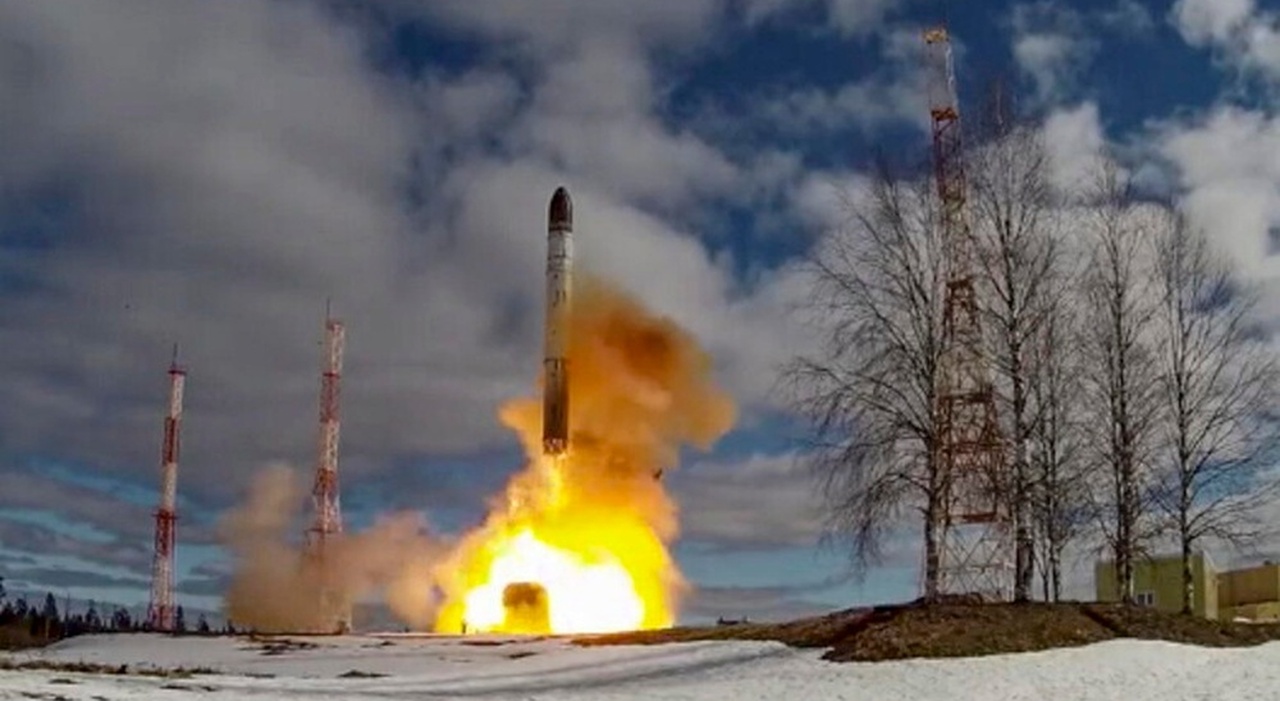
Russia’s Sarmat Missile: Putin’s New Nuclear Weapon to Challenge Western Defenses
Russia has successfully tested the RS-28 Sarmat, a super-heavy intercontinental ballistic missile (ICBM) designed to bypass all existing Western missile defense systems. Capable of carrying 15 nuclear warheads and utilizing hypersonic shuttle technology, the system is expected to be fully operational by 2026, fundamentally altering the global strategic landscape and the calculus of nuclear deterrence.
The successful testing of the Sarmat system represents more than a localized military advancement. it is a direct challenge to the established architecture of global security. For decades, the concept of strategic stability has relied on the perceived effectiveness of missile defense shields. The arrival of a weapon system specifically engineered to render these shields obsolete forces a massive recalculation of defense spending, treaty frameworks, and geopolitical risk for every major power on the planet.
The Hypersonic Threshold: Redefining Strategic Parity
The technical profile of the Sarmat, often referred to in media reports by its more ominous nickname, marks a significant departure from traditional ICBM capabilities. Unlike previous generations of long-range missiles, the Sarmat is designed to utilize hypersonic speeds, significantly reducing the reaction time available to defensive systems. This “hypersonic shuttle” capability, combined with a payload of up to 15 independent warheads, creates a saturation effect that current interceptor technologies are not equipped to handle.

By targeting the vulnerabilities in Western missile shields, the Sarmat shifts the power dynamic from defensive mitigation to offensive dominance. This development is not merely a matter of speed; it is a matter of complexity. The ability to deploy multiple warheads on a high-velocity trajectory means that a single launch could potentially overwhelm the multi-layered defense networks of NATO and its allies.
“The deployment of a system specifically designed to render existing interceptors obsolete is not merely a tactical upgrade; it is a fundamental challenge to the doctrine of strategic stability that has governed the West for decades.”
As the deployment timeline accelerates toward 2026, the international community faces a period of profound uncertainty. The ability of the Sarmat to penetrate all known defense systems suggests that the era of “impenetrable” missile shields may be coming to a close, necessitating a rapid pivot in how nations approach both offensive and defensive nuclear postures.
The Economic Ripple Effects of Escalating Deterrence
Geopolitical volatility of this magnitude does not exist in a vacuum; it has immediate and profound implications for the global economy. When the fundamental security of sovereign territories is called into question, the ripple effects are felt across every sector, from insurance and logistics to capital markets and energy security.
For multinational corporations, the acceleration of the Sarmat program introduces a new layer of “black swan” risk. The potential for sudden shifts in military alliances or the collapse of existing arms control treaties can lead to rapid changes in trade routes, sovereign credit ratings, and foreign direct investment (FDI) flows. As the threat of high-velocity, multi-warhead delivery systems increases, the necessity for sophisticated contingency planning becomes paramount.
To mitigate these emerging threats, institutional leaders are increasingly seeking specialized expertise. We are seeing a surge in demand for geopolitical risk management consultants who can model the impact of sudden escalations on supply chain integrity. As the legal frameworks governing international arms control and territorial sovereignty are tested, corporations are turning to international trade law specialists to navigate the increasingly complex landscape of sanctions and cross-border compliance.
Comparative Analysis: The Sarmat vs. Traditional ICBM Paradigms
To understand the magnitude of this shift, one must compare the Sarmat’s projected capabilities against the conventional standards of intercontinental ballistic missiles currently in operation.
| Capability Feature | Traditional ICBM Standards | RS-28 Sarmat Profile |
|---|---|---|
| Warhead Capacity | Single or limited multiple warheads | Up to 15 nuclear warheads |
| Velocity Profile | Ballistic trajectory (predictable) | Hypersonic shuttle (high-maneuverability) |
| Defense Interception | Vulnerable to multi-layered shields | Designed to penetrate all current shields |
| Strategic Impact | Maintains existing deterrence parity | Disrupts existing defensive architecture |
Navigating a Fragmenting Global Order
The Sarmat’s path to full operational status by 2026 is a catalyst for a broader restructuring of global power. This represents not just a Russian military milestone; it is a signal to the world that the existing rules of engagement are being rewritten. The implications extend far beyond the reach of a missile, affecting the very foundations of international cooperation and the stability of global markets.

For industries reliant on long-term stability—such as energy, telecommunications, and heavy manufacturing—the “Sarmat era” requires a move away from traditional risk models. The unpredictability of hypersonic-capable warfare necessitates a more agile approach to security and asset protection. Organizations are now tasked with hardening their digital and physical infrastructures against a backdrop of heightened state-sponsored tension.
As the strategic chessboard shifts, the ability to anticipate these movements will define the winners and losers of the next decade. Multinational entities must proactively engage with global security advisors to ensure that their operational continuity remains intact even as the geopolitical ground shifts beneath them.
The successful testing of the Sarmat is a clear indicator that the era of predictable deterrence is ending. In its place, a more volatile, high-velocity reality is emerging—one that demands not just military readiness, but a sophisticated, multi-disciplinary approach to global risk. To navigate this new landscape, leaders must look beyond the headlines and secure the specialized strategic partnerships necessary to manage a world where the old shields no longer hold.
Worth a look
- France student protests over school funding lead to over 6,600 arrests
- Julie Gbanmeton says childhood sexual violence shaped her activism
- Nuclear Clock vs. Atomic Clock: What Vienna and Beijing Actually Built (daybreakwire.com)
- £54 Million: UK Boosts Ukraine Aid and Tightens Russia Sanctions (newsdirectory3.com)