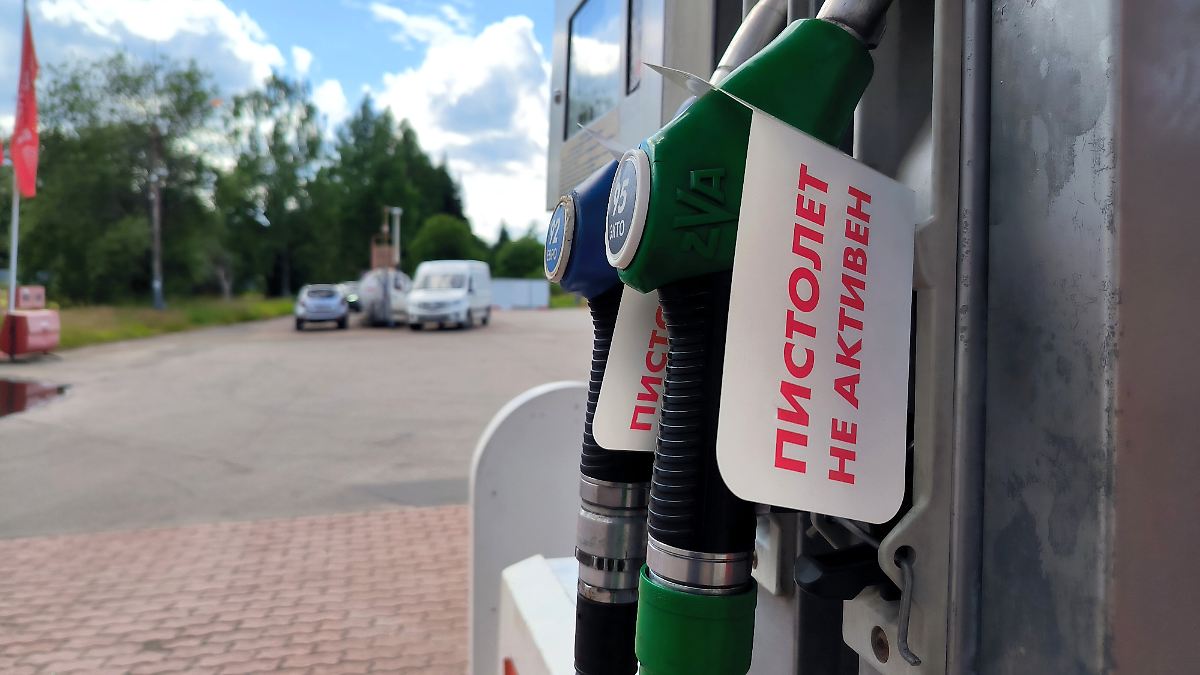
Russia’s Fuel Crisis: Economic Impact and Agricultural Risks
The crisis is not merely a local logistical failure; it is a systemic shock. For decades, the Eurasian Economic Union (EAEU) has operated on the assumption of cheap, reliable Russian hydrocarbons. That assumption is now dead. As Moscow prioritizes internal stability and military needs over export commitments, the “near abroad” is discovering that reliance on a single, volatile supplier is a strategic liability.
The economic fallout is immediate. In Russia, the agricultural sector is reeling. According to top agrar and WELT, farmers fear they will be unable to harvest crops due to the lack of available fuel for machinery. This creates a dangerous feedback loop: fuel shortages lead to harvest failures, which trigger food price inflation, further destabilizing a population already strained by the costs of a prolonged conflict.
The Mechanics of the Russian Fuel Shortage
The current crisis manifests as long queues at petrol stations and erratic pricing. While Frankfurter Rundschau notes that these shortages have not yet triggered widespread civil unrest, the economic pressure is mounting. Prices have surged to levels previously unseen in the domestic market, with BILD reporting peaks of 4 euros per liter.

This volatility is driven by a combination of refinery disruptions, sanctions-related logistical bottlenecks, and the redirection of fuel to the military effort. For the global market, this signals that Russia’s capacity to act as a reliable energy hub is evaporating. Companies operating in the region are now forced to seek alternative energy corridors.
Central Asia and the ‘Cluster Risk’
For Kazakhstan, Kyrgyzstan, and Tajikistan, Russia has transitioned from a reliable partner to a “cluster risk”—a term used by n-tv.de to describe a dangerous over-reliance on a single point of failure. These nations rely on Russian pipelines and refined products to keep their economies functioning.

The risk is most acute in the agricultural sector. If Russia cannot export fuel due to its own internal shortages, Central Asian farmers cannot plant or harvest. This transforms a Russian domestic crisis into a regional food security emergency.
To mitigate this, regional governments are scrambling to diversify. We are seeing a pivot toward the “Middle Corridor”—the Trans-Caspian International Transport Route.
Macro-Economic Ripple Effects
The Russian fuel crisis serves as a bellwether for the broader degradation of the Russian state’s industrial capacity. When a primary energy producer cannot fuel its own tractors, the long-term viability of its export model is called into question.
Comparative Impact Analysis:
- Domestic Russia: Hyper-inflation of fuel prices (up to 4 euros/L); imminent risk of crop failure; refinery instability.
- Central Asia: Strategic vulnerability; disruption of agricultural cycles; urgent need for non-Russian energy imports.
- Global Market: Increased volatility in energy futures; acceleration of the “Middle Corridor” trade route; shift in FDI away from Russian-linked infrastructure.
This instability is pushing multinational corporations to hedge their bets. The risk is no longer just about sanctions compliance, but about physical supply chain collapse.
The Geopolitical Shift
This is a fundamental realignment of power in Eurasia.

The reliance on the Russian rail network is being replaced by sea and road routes that bypass the Russian Federation entirely.
The crisis proves that “energy weaponization” is a double-edged sword. By prioritizing the war effort and ignoring domestic infrastructure maintenance, the Kremlin has compromised the very tool it used to exert influence over its neighbors.
The global chessboard has shifted. Russia is no longer the undisputed hegemon of Central Asia; it is now a liability. For the business community, the lesson is clear: diversification is not a luxury, but a survival strategy. Those who fail to decouple their logistics and energy dependencies from volatile regimes will find themselves stranded in the next crisis.