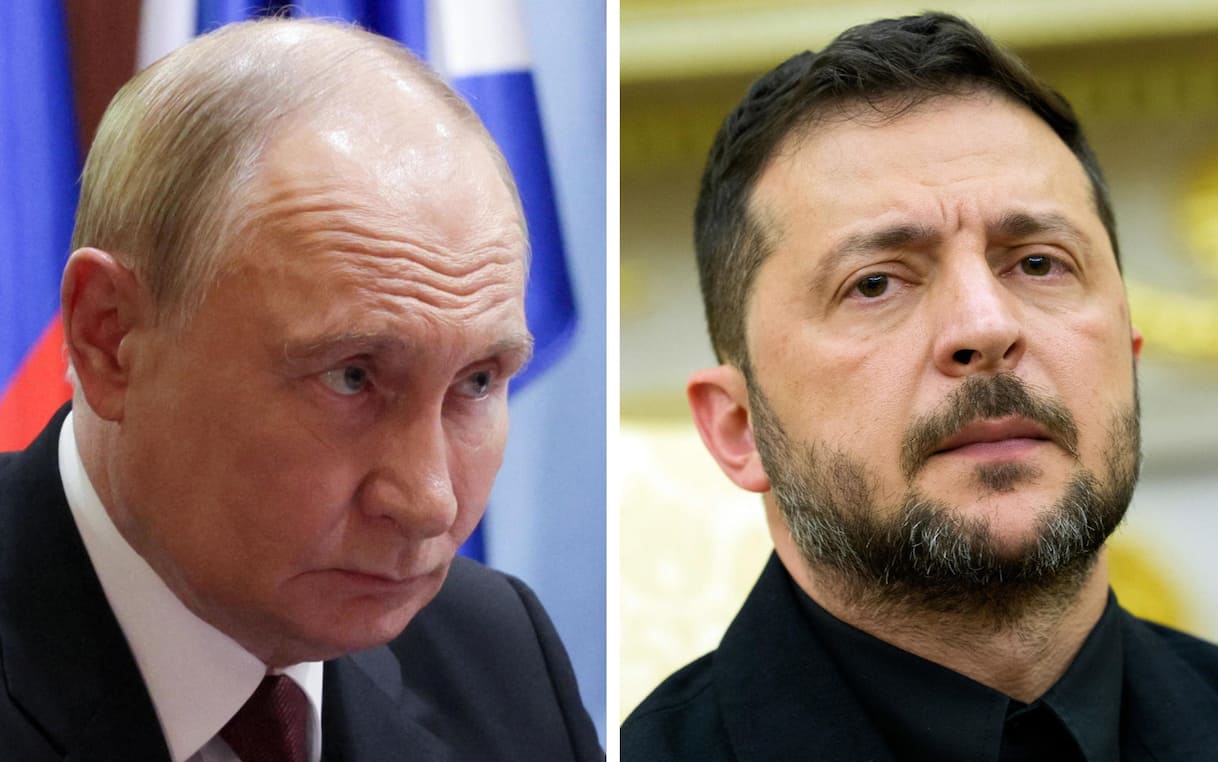
Russian President Continues to Show No Willingness to Meet with Ukrainian President
As of June 5, 2026, Russian President Vladimir Putin has formally rejected calls for direct peace negotiations with Ukrainian President Volodymyr Zelenskyy, signaling a hardening of Moscow’s stance. The stalemate persists as Russia continues to demand territorial concessions in the Donbass, while Kyiv frames the conflict as an existential struggle for sovereignty.
The diplomatic freeze between Moscow and Kyiv is not merely a bilateral failure; it is a profound rupture in the architecture of European security. With the conflict entering a protracted phase, the global business community is forced to confront a reality where traditional diplomatic off-ramps are being systematically dismantled. The refusal to engage in direct dialogue suggests that both parties are betting on a war of attrition, a scenario that necessitates a radical recalibration of risk management for any firm with exposure to the Eastern European theater.
For multinational corporations, the current geopolitical climate demands more than standard due diligence. When sovereign actors abandon the table, the regulatory and operational risks for private entities skyrocket. Companies operating in or near the conflict zone are currently engaging geopolitical risk consultants to map out long-term supply chain vulnerabilities that extend far beyond the immediate combat theater.
The Structural Divergence of War Economies
The Kremlin’s recent rhetoric, characterized by an insistence on territorial retention and a dismissive attitude toward international mediation, marks a shift toward a permanently mobilized state economy. While the Russian leadership has recently touted the resilience of its public debt compared to European counterparts, the macroeconomic reality is far more complex. The disconnect between state-sanctioned narratives of economic strength and the reality of prolonged military expenditure creates a volatile environment for foreign assets.

Investors and firms must look to sovereign debt and macro-economic analysts to discern how these fiscal policies impact long-term credit risks. The World Bank’s ongoing monitoring of global economic stability underscores that when a major resource-exporting nation enters a state of perpetual conflict, the ripple effects on commodity pricing and global trade liquidity are inevitable.
The refusal to communicate is the ultimate failure of diplomatic signaling. When the primary actors in a conflict stop talking, the space for de-escalation vanishes, leaving industry to navigate a landscape where political volatility is the only constant.
Logistical Gridlock and the Compliance Mandate
The collapse of peace efforts directly impacts the movement of goods and capital across the Eurasian landmass. As sanctions regimes evolve in response to the hardening of frontlines, the complexity of international trade compliance has reached an inflection point. It is no longer sufficient to merely track current sanctions lists; firms must anticipate the next wave of restrictive measures before they are codified.
Transnational distributors and logistics firms are finding that standard operating procedures are failing under the pressure of shifting border controls and dual-use technology restrictions. Here’s precisely where international trade compliance lawyers become essential assets. These professionals provide the technical framework necessary to maintain continuity in an environment where a single misstep in shipment documentation can lead to catastrophic legal exposure.
| Strategic Factor | Impact on Global Business |
|---|---|
| Diplomatic Stagnation | Increased long-term volatility and insurance premiums. |
| Resource Localization | Disruption of established Eurasian supply chains. |
| Regulatory Divergence | Escalating costs for cross-border legal and tax compliance. |
The Macro-Economic Ripple Effect
The rejection of peace talks acts as a pressure valve on global markets, forcing a permanent shift in how capital is allocated. The Bloomberg Geopolitics and Macro Strategy desks have noted that the persistence of such conflicts often leads to a “balkanization” of global trade, where firms are forced to choose between competing regulatory and economic blocs. This fragmentation is not temporary; it is a structural change in the global order.
For those managing cross-border infrastructure projects or large-scale energy investments, the instability of the current diplomatic environment is a primary barrier to capital deployment. The need for robust international arbitration counsel has never been higher, as corporations seek to insulate themselves from potential state-level expropriations or contractual defaults triggered by the ongoing conflict.
Navigating the New Diplomatic Reality
As we look toward the remainder of 2026, the absence of a diplomatic path forward leaves a vacuum that will be filled by military and economic force. Leaders in the private sector must move beyond the hope of a quick resolution. The “Zar-style” decision-making process described in recent reports emphasizes that the individual agency of state leaders is currently outweighing the collective pressure of the international community.
In this high-stakes environment, the difference between failure and survival often lies in the quality of your advisory network. Whether it is navigating complex cybersecurity infrastructure to protect against state-sponsored digital interference or seeking counsel on cross-border insolvency, the firms that succeed will be those that treat geopolitical intelligence as a core business function rather than a peripheral concern.
The chessboard is locked, and the players have signaled that they have no intention of clearing the board. For the global executive, the mandate is clear: prepare for a prolonged era of friction and ensure your firm is backed by the elite, specialized partners necessary to navigate the shifting currents of international power. The World Today News Directory remains the premier resource for identifying the legal, financial, and strategic consultants capable of guiding your operations through this period of profound systemic volatility.