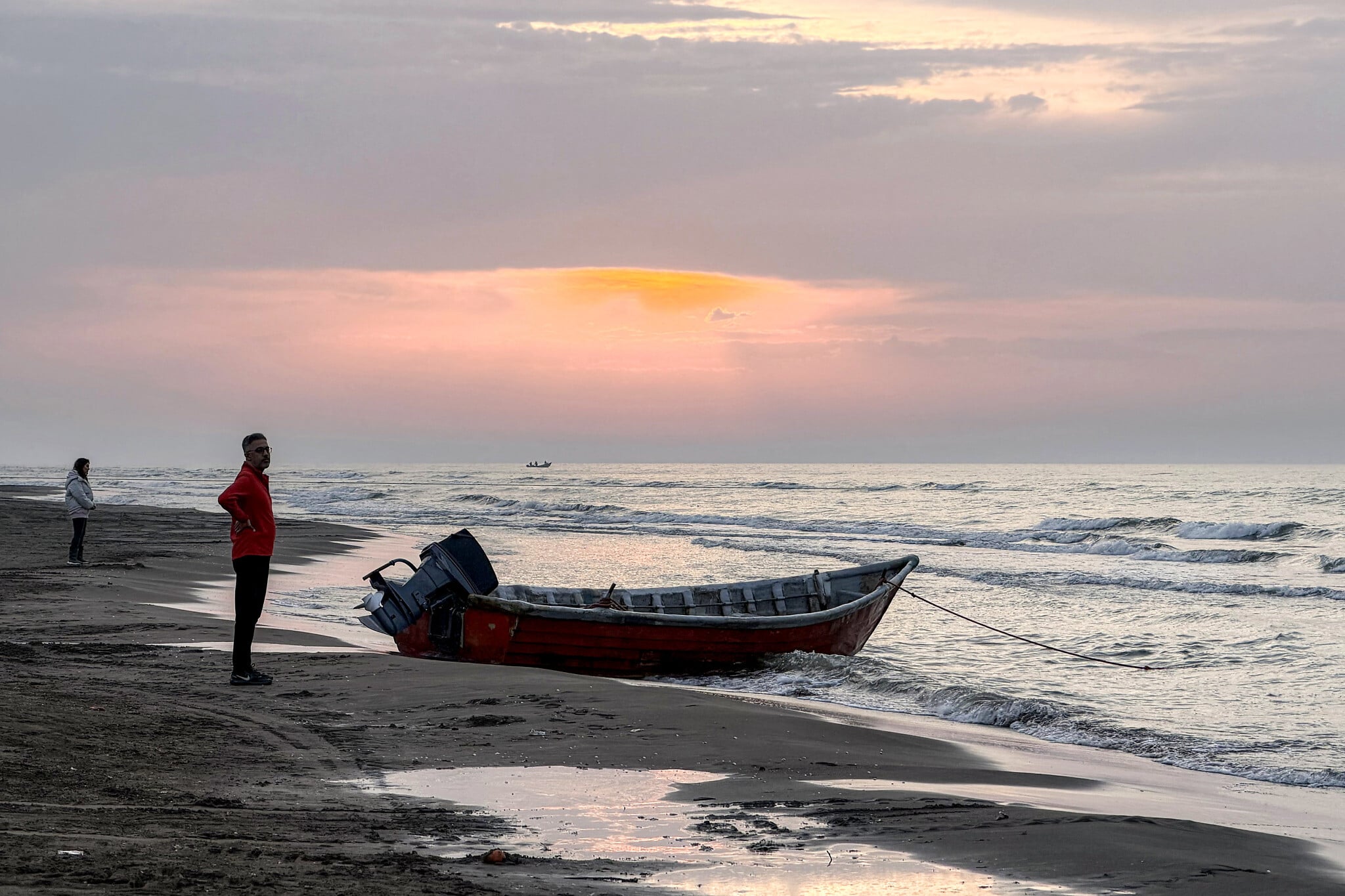
Russia Sends Iran Drone Parts via Caspian Sea to Bypass Hormuz Blockade
Russia is utilizing the Caspian Sea as a strategic corridor to deliver drone components to Iran, bypassing the naval blockade in the Strait of Hormuz. This covert logistics shift allows Tehran to replenish its military capabilities during a fragile ceasefire while evading international sanctions and Western maritime interdiction.
The discovery of this shipping route reveals a critical vulnerability in global maritime security. For decades, the West has relied on “chokepoint diplomacy”—the ability to squeeze a nation’s economy or military by controlling narrow waterways like the Strait of Hormuz. However, as the New York Times reveals, the Caspian Sea is transforming from a regional lake into a sanctuary for sanctions-busting trade.
When the primary doors to a nation are locked, they find a window. In this case, the window is the world’s largest inland body of water.
The Caspian Pivot: A New Architecture for Sanctions Evasion
The shift toward the Caspian Sea is not a random logistical choice; it is a calculated geopolitical maneuver. By moving sensitive military hardware—specifically drone components—away from the Persian Gulf, Russia and Iran are effectively neutralizing the impact of naval blockades. The Caspian Sea provides a closed environment where the two nations can coordinate shipments without the constant surveillance of international naval task forces.

This corridor allows for the movement of “dual-use” goods. While the shipments are aimed at restocking a drone arsenal, they often blend in with legitimate commercial traffic. This creates a “needle in a haystack” problem for intelligence agencies attempting to monitor the flow of prohibited technology.

“The shift toward inland maritime routes represents a fundamental evolution in sanctions evasion,” notes a leading analyst in Eurasian logistics. “By moving assets away from monitored chokepoints, states are effectively creating a shadow supply chain that operates outside the reach of traditional naval blockades.”
The implications extend beyond military hardware. This route establishes a precedent for how sanctioned states can maintain industrial viability. If drone parts can move freely, then advanced semiconductors, specialized machinery, and other restricted technologies can follow the same path.
Comparing the Chokepoints: Hormuz vs. The Inland Sea
To understand why the Caspian Sea is so valuable right now, one must compare it to the traditional route through the Persian Gulf. The Strait of Hormuz is one of the most heavily monitored strips of water on earth, making it nearly impossible to move illicit military cargo without detection.
| Feature | Strait of Hormuz | Caspian Sea Route |
|---|---|---|
| Visibility | High (International Surveillance) | Low (Regional Jurisdiction) |
| Interdiction Risk | Severe (Naval Blockades) | Minimal (Closed Waterway) |
| Legal Status | International Waters/Transit | Shared Regional Agreement |
| Strategic Role | Global Energy Chokepoint | Covert Logistics Bridge |
The Macro-Economic Shift: The North-South Corridor
This development is a symptom of a much larger economic project: the International North-South Transport Corridor (INSTC). This multi-modal network is designed to link India to Russia via Iran, bypassing the Suez Canal and the traditional maritime routes dominated by Western powers. By investing in the infrastructure of the Caspian region, Moscow and Tehran are not just evading current sanctions—they are building a permanent alternative to the Western-led global trade order.
The integration of this corridor suggests a long-term strategic alignment. As Russia seeks new markets and allies in the wake of its own international isolation, the Caspian Sea becomes the umbilical cord connecting it to the Middle East and South Asia. This shift is being monitored closely by the United Nations and various global trade monitors, as it threatens to render traditional economic sanctions obsolete.
Local economies along the Caspian coast are seeing a surge in port activity. This increase in traffic often leads to a complex web of “front companies” and shell corporations designed to mask the true origin and destination of the cargo. For legitimate businesses operating in the region, this environment creates a minefield of compliance risks.
Navigating the Legal Grey Zone
For international corporations and shipping firms, the rise of the Caspian “shadow route” creates an immense legal burden. The risk of “accidental” involvement in sanctions-busting is high, as cargo is frequently transshipped or relabeled to hide its nature. A single misplaced shipment can lead to catastrophic fines from the U.S. Treasury or other regulatory bodies.

Companies are now forced to implement far more rigorous “Know Your Customer” (KYC) and “Know Your Cargo” protocols. Navigating these penalties is a logistical and legal nightmare. Many firms are now consulting top-tier international trade attorneys to shield their assets and ensure their supply chains are not inadvertently touching sanctioned military flows.
the volatility of the region requires a new level of foresight. Businesses can no longer rely on static risk maps. They are increasingly employing geopolitical risk analysts to predict how the closure of one route will inevitably open another, often in jurisdictions with less transparency.
Even the physical movement of goods has become a specialty. As traditional shipping lanes become “tense,” there is a growing demand for maritime logistics consultants who specialize in non-traditional corridors and can verify the integrity of inland shipping routes.
The Caspian Sea is no longer just a geographic feature; it is a geopolitical tool. The ability of Russia to replenish Iran’s arsenal during a ceasefire proves that military superiority is not just about who has the most drones, but about who can move them without being seen. As the world watches the fragile peace in the Middle East, the real story is unfolding in the quiet waters of the north, where the rules of global trade are being rewritten in secret. Those who fail to adapt to this new geography of risk will find themselves blindsided by the next shift in the global power balance. To navigate these complexities, finding verified professionals through the World Today News Directory remains the only way to ensure operational security in an unstable world.