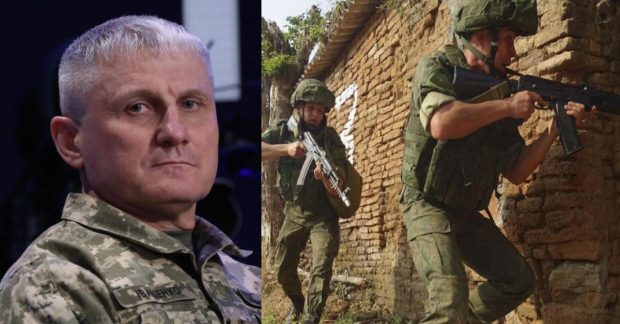
Russia May Exhaust War Resources by 2028, Says Ukraine Intelligence Chief
According to the Main Directorate of Intelligence of Ukraine (HUR), Russia faces the exhaustion of its military and economic resources to sustain its war against Ukraine by 2027 or 2028, provided international sanctions remain effective and properly enforced.
Strategic Projections on Russian Resource Depletion
The timeline for potential resource exhaustion hinges directly on the intensity of ongoing military and economic losses suffered by Russian forces. According to HUR chief Oleh Ivashchenko, while Moscow retains enough capacity to continue prosecuting the war through the immediate term, those reserves are on a finite trajectory.
“We do not rule out that this resource will last for both 2027 and 2028,” Ivashchenko stated in his interview with Ukrinform, emphasizing that halting this momentum requires robust cooperation among international partners. The effectiveness of sanctions remains a critical variable in cutting off the flow of dual-use technology, electronic components, machine tools, and specialized chemicals utilized by the Russian military-industrial complex.
Compounding these state-level economic strains, domestic sentiment inside Russia is shifting under the weight of mounting casualties and financial friction. Ivashchenko noted that more than 60 percent of the Russian population expresses opposition to the war, driven primarily by deteriorating economic conditions and severe human losses. Concurrently, regional budgets across the Russian Federation are increasingly incapable of sustaining the financial incentives required to fuel contract-based military recruitment, effectively signaling a near-exhaustion of current force-generation models.
Casualty Dynamics and Technological Attrition on the Battlefield
Intelligence data cited by HUR indicates that the average daily casualty rate for Russian forces ranges between 1,200 and 1,400 personnel—and occasionally reaches 1,500—encompassing both killed and severely wounded soldiers. Western intelligence assessments corroborate this high-attrition environment, estimating that monthly losses outpace new recruit inflows by roughly 6,000 personnel.

Modern technological developments have only accelerated this lethal dynamic. The proliferation of advanced unmanned aerial systems and artificial intelligence reconnaissance tools has fundamentally altered frontline realities.
These lethal conditions severely complicate tactical operations, particularly the extraction of wounded personnel from contested zones.
International Intelligence Assessments and Economic Pressures
Calculations by the Center for Strategic and International Studies (CSIS) place cumulative Russian military casualties since 2022 at significant levels.

The structural integrity of the Russian war machine depends heavily on intermediary third-party nations circumventing export controls. Ukrainian intelligence underscores that plugging these sanctions loopholes remains the single most effective lever for international partners seeking to accelerate the timeline of resource depletion outlined by military analysts.