
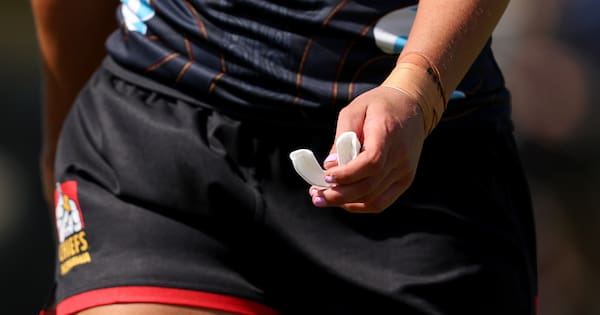
smart Mouthguards to Debut at Women’s Rugby World Cup, Signaling Potential Concussions in Real-Time
Table of Contents
auckland, new Zealand – August 14, 2024 – In a landmark move for player safety, “smart” mouthguards capable of flashing red to indicate a potential head injury will be utilized by all teams competing in the Women’s Rugby World Cup, hosted in England from August 22 to September 27.This represents a notable escalation in concussion detection technology within the sport, moving beyond post-play assessments to real-time alerts during matches.
How the technology Works
The mouthguards, developed with 3D intraoral scanning technology, measure both linear and rotational forces experienced by players during impacts. Previous generations, tested since 2023, transmitted data to a pitch-side laptop for doctor review when thresholds were met – 75G of force for men and 65G for women, coupled with 4500 radians per second squared. The new iteration adds a crucial visual component: a transparent mouthguard that promptly flashes red when these thresholds are exceeded, prompting referees to halt play.
World Rugby’s Push for Adoption
According to World Rugby, every player participating in the upcoming World Cup has opted-in to wear the mouthguards, with the exception of two players currently wearing braces.Dr. Éanna Falvey, World Rugby’s Chief Medical Officer, expressed optimism about wider adoption, stating that while the technology isn’t currently mandatory, he believes all players should utilize it. Trials have already been conducted in Major league Rugby and the World Under-20 Championship.
Addressing Player Concerns and challenges
Despite the potential benefits, the implementation hasn’t been without hurdles. Dr. Falvey noted resistance from some male players,citing concerns about the device being a Bluetooth-enabled technology,discomfort,and a reluctance to receive impact data. False positives – instances where the mouthguards signaled an impact that didn’t result in a concussion – have also been reported,including during the recent Super Rugby Pacific season. World Rugby is actively working to refine the technology and minimize these occurrences.
Gender Differences in Head Impacts
World Rugby data indicates that concussion rates are comparable between men’s and women’s rugby. Though,the data also reveals that women experience “significantly less likely” head acceleration events,suggesting differences in the nature of impacts sustained by players of each gender. This finding underscores the importance of tailored thresholds for concussion detection, as currently implemented with the 65G threshold for women versus 75G for men.
Looking Ahead: The Future of Concussion Detection in Rugby
The rollout at the Women’s Rugby World Cup is a pivotal step towards potentially making the smart mouthguards standard equipment across all levels of top-flight rugby. The technology represents a proactive approach to player welfare, aiming to identify and address potential concussions more effectively than traditional methods. Further research and refinement will be crucial to optimize the system, minimize false alarms, and ultimately, enhance the safety of players at all levels of the game. The success of this initiative could also pave the way for similar technologies in other contact sports,such as American football,ice hockey,and boxing.
