
The British government is considering legislation to remove Prince Andrew, Duke of York, from the line of succession to the throne, Defence Minister Luke Pollard confirmed in a BBC interview. The move comes after Prince Andrew’s arrest on February 19, 2026, on suspicion of misconduct in public office, stemming from allegations brought to light by the release of documents related to Jeffrey Epstein.
While Prince Andrew was stripped of his honorary military roles and royal patronages in October 2025, the removal of a royal from the line of succession is a separate, legally complex process. The Royal Family can remove titles, but altering the order of succession requires an Act of Parliament, as well as the consent of the other 14 Commonwealth realms where King Charles III is head of state, according to the BBC.
Australia has already signaled its support for such a measure. Prime Minister Anthony Albanese wrote to British Prime Minister Keir Starmer, stating his government would “support any proposal to remove Andrew Mountbatten-Windsor from the line of succession,” according to the Associated Press. Albanese emphasized the seriousness with which Australians view the allegations. New Zealand has also publicly indicated it would support a British-led effort to remove Prince Andrew from the line of succession, with Prime Minister Christopher Luxon stating his country would back any proposal put forward by the UK government, reinforcing the principle that “no one is above the law” while investigations continue.
Constitutional law expert Robert Hazell, as reported by the AP, noted that even the 2013 reform eliminating male primogeniture required “two years of lengthy negotiations” between the Commonwealth realms. The last actual removal of a royal from the line of succession occurred in 1936, following the abdication of Edward VIII.
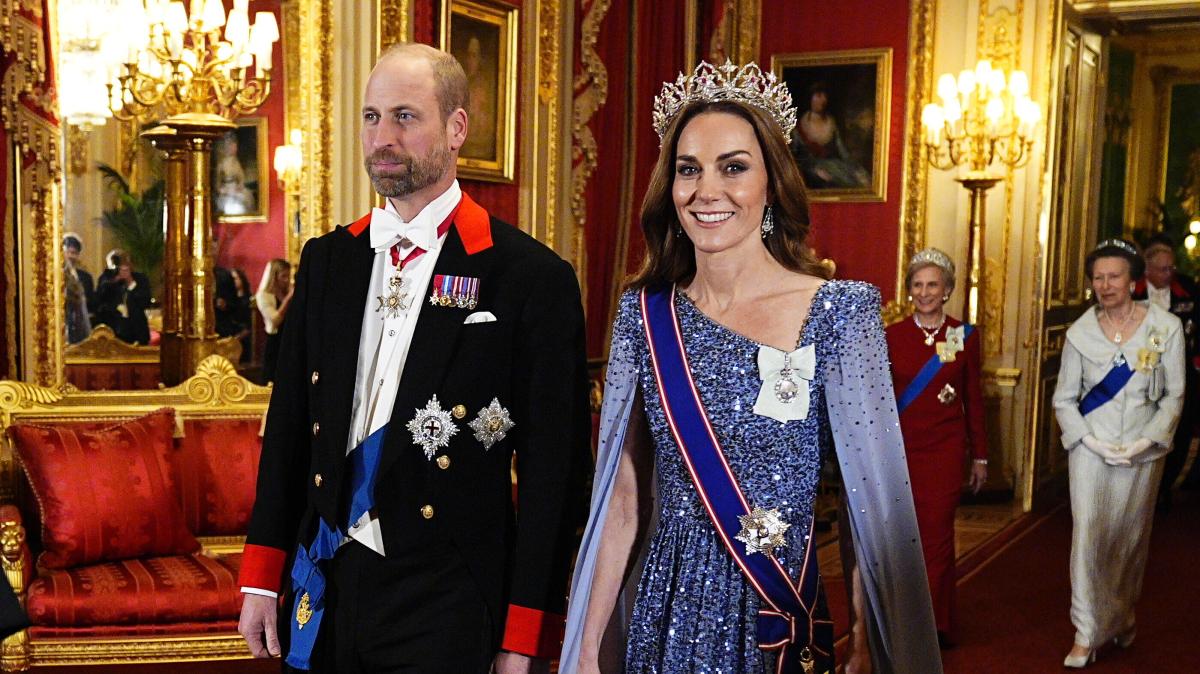
The potential removal of Prince Andrew from the line of succession would not alter the immediate order of succession. Prince William remains the heir apparent, followed by his children, Prince George, Princess Charlotte, and Prince Louis. Prince Harry and his children, Archie and Lilibet, follow in the line, with Prince Andrew further down the list. However, the debate carries significant political weight, as any discussion of the line of succession raises questions of stability. Historian David Olusoga told the BBC it reflects a “desperate desire within government and the Palace to draw a firebreak between this crisis and the wider monarchy.”
For Prince William and Princess Catherine, the focus on their family as the future of the monarchy is likely to intensify. A photograph of the Prince and Princess of Wales was released on Valentine’s Day, February 14, 2026, marking a continuation of their public engagements and a demonstration of familial stability. The question now is whether the British government will commit parliamentary time and international consultations to a symbolically significant, but legally complex, decision.
