
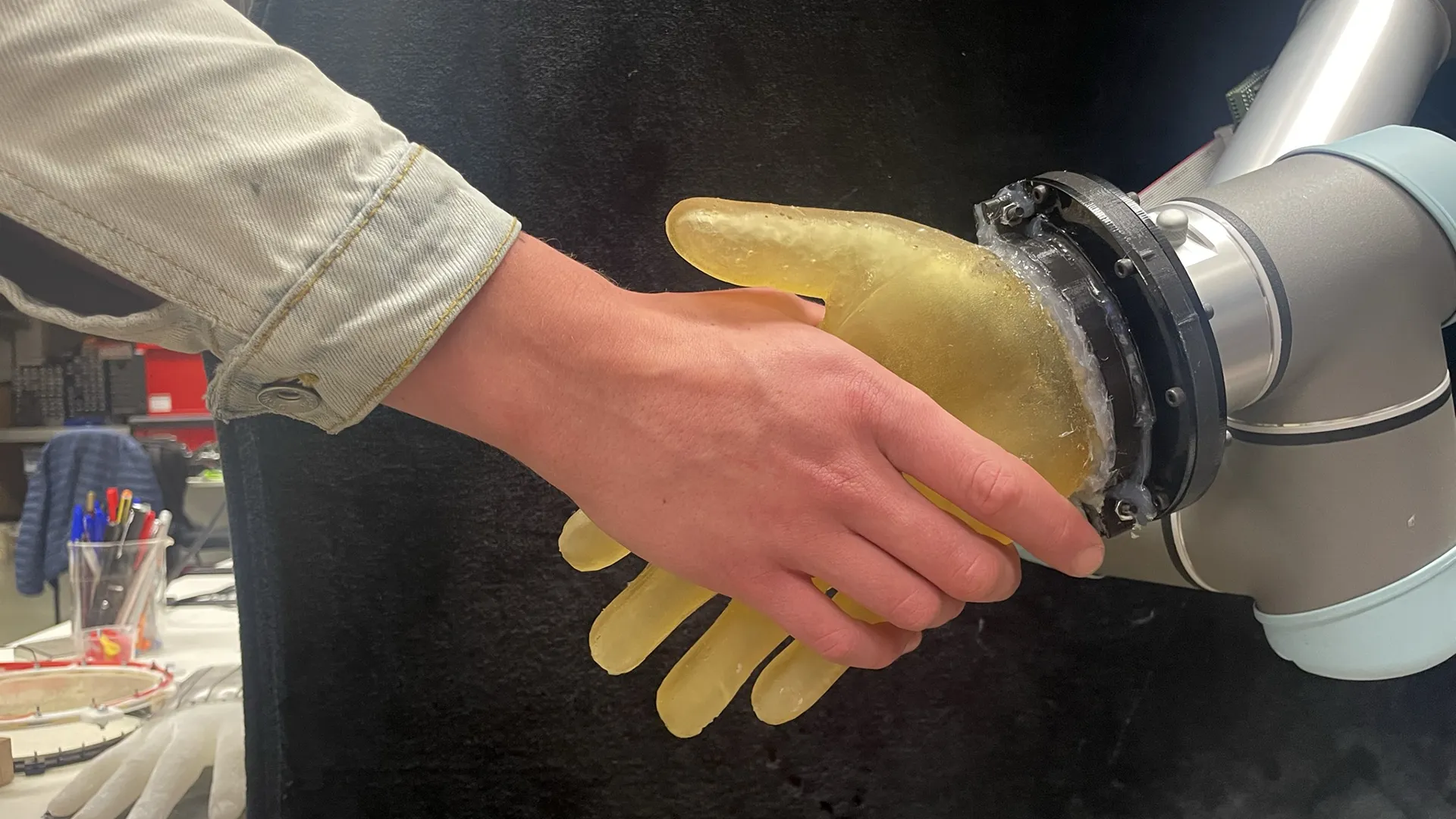
Robotic Skin Offers Human-Like Touch to Robots
Scientists have created an advanced, affordable robotic “skin” that allows robots to sense their surroundings much like humans do. This innovative technology could revolutionize robotics, potentially impacting fields from healthcare to disaster relief.
The Revolutionary Robotic Skin
Researchers from the University of Cambridge and University College London (UCL) have developed flexible, conductive skin. This easy-to-fabricate material can be molded into complex shapes. This electronic skin senses and processes various physical inputs, enabling robots to interact more effectively with the world.
Unlike existing robotic touch solutions with limited sensor coverage, this new skin acts as a complete sensor. It is more akin to human skin.
Scientists at Cambridge and UCL have developed a flexible, conductive electronic skin that can be added to robotic hands. The skin enables robots to detect information about their surroundings in a way that’s similar to humans. https://t.co/n1tXh58t6Z pic.twitter.com/zYlqg38QzT
— University of Cambridge (@Cambridge_Uni) December 29, 2023
While not quite as sensitive as human skin, the robotic version can detect signals from over 860,000 tiny pathways. This allows it to recognize pressure, temperature, and damage in a single material.
“Having different sensors for different types of touch leads to materials that are complex to make,”
—Dr. David Hardman, Lead Author
In 2023, the global robotics market was valued at $68.2 billion (Statista), highlighting the vast potential for advancements like this.
How It Works
The researchers used physical tests and machine learning to teach the skin which pathways are most important. This enables the robotic skin to efficiently sense different types of contact.
The technology uses a single type of sensor that responds differently to various touches, a process known as multi-modal sensing. While it is difficult to isolate the cause of each signal, multi-modal sensing materials are easier to manufacture and more durable.
The team melted a soft, stretchy, and electrically conductive gelatine-based hydrogel. They cast it into the shape of a hand. They tested various electrode configurations to gather the most helpful touch data. The researchers gathered over 1.7 million information pieces from just 32 wrist electrodes.
The team then tested the skin by applying heat, pressure, and even cutting it with a scalpel. They trained a machine learning model with the data to recognize the different types of touch.
Future Applications
Potential applications include humanoid robots and prosthetics, where touch sensation is critical. The robotic skin could also be useful in the automotive sector and for disaster relief.
“We’re not quite at the level where the robotic skin is as good as human skin, but we think it’s better than anything else out there at the moment,” said Dr. Thomas George Thuruthel.
Researchers are hoping to improve the electronic skin’s durability and conduct further tests on real-world robotic tasks. The research was supported by various organizations, including the Samsung Global Research Outreach Program and the Royal Society.
