
Robots and Bricklayers: A Collaborative Approach to Future-Proofing Construction
The construction industry is exploring ways to integrate robotics, not to replace skilled tradespeople, but to enhance their capabilities and prepare for the future. A recent workshop at the Technical University of Munich (TUM) demonstrated this concept firsthand, pairing student bricklayers with a robotic arm to construct a climate-optimized wall.
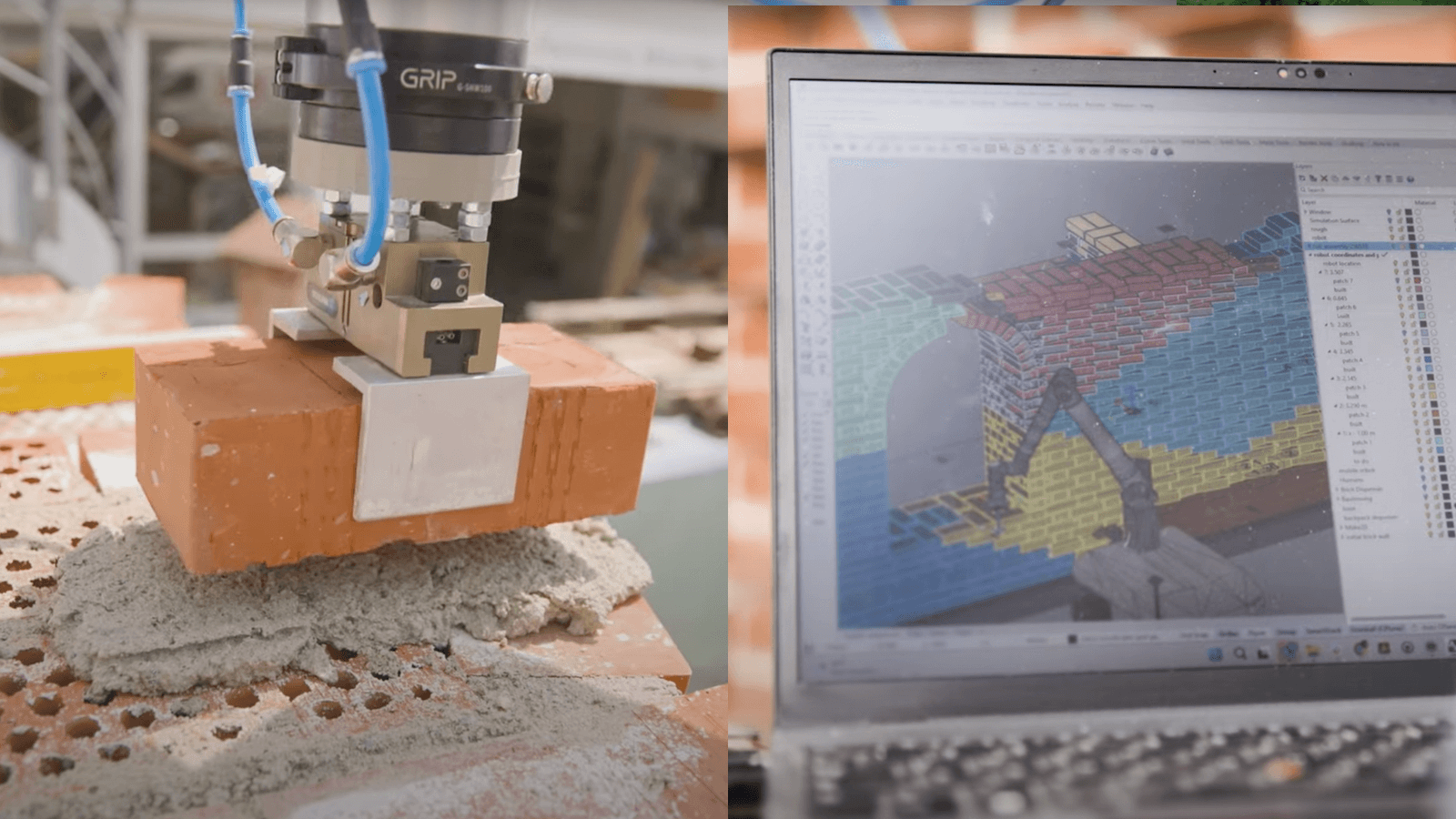
the robotic arm, mounted on a mobile platform, operated across a 4-meter wide and 2.5-meter high wall surface, ensuring complete accessibility. This wasn’t simply automation; the robot functioned using digital twins of the wall, seamlessly merging design and execution. The brickwork itself was digitally designed and then physically built with robotic precision, exceeding the accuracy achievable by even highly skilled human bricklayers.The intention isn’t displacement, but reinforcement. Markus Brückner, a trainer at Bouwgilde München-Bersberg, emphasized the robot’s value in tasks demanding high precision. “It is logical to build in this way.The robot offers precision at times when we cannot always do that,” he stated.
Initially, working alongside a robot was an adjustment for students. Dragan Stanojevic,a student involved in the project,noted that it quickly felt “very normal,” highlighting the goal of a collaborative,rather then a replacement,setup. The robot’s support proves particularly valuable for complex designs and projects requiring extraordinary accuracy.
A Wall Designed for Climate Resilience
The constructed wall isn’t merely a practice exercise. its design is specifically tailored to respond to varying climatic conditions. The placement of bricks at different angles, persistent by factors like sun exposure, is difficult to achieve manually but is easily managed with a digital configurator and robotic assistance.
The wall’s construction utilizes a single material – brick – chosen for its durability, ease of disassembly, and potential for reuse, supporting principles of circularity and reducing construction complexity. Weather-resistant bricks form the exterior, while insulating stones comprise the interior. The wall’s thickness, approximately 55 centimeters (four bricks thick), is 20 to 25 centimeters greater than standard, providing enhanced resistance to both heat and cold.
Empowering a New Generation of Construction Professionals
Professor Kathrin Dörfer of TUM’s Digital Fabrication department, and master bricklayer Laura Lammel, co-organized the workshop, underscoring the project’s core principle: strengthening craftsmanship through technology. “The combination of digital planning, robot version and human expertise opens new possibilities in the construction process,” Professor Dörfer explained.
This approach offers a promising future for young professionals, transforming a potentially threatened profession into one that is more robust and versatile. It’s about combining new digital skills with established techniques,ensuring the continued relevance and value of skilled trades in a rapidly evolving industry.
[Embedded YouTube Video from original article – included as a placeholder as direct embedding functionality varies]
