RNU4-2 Gene Mutations Linked to New Neurodevelopmental Disorders
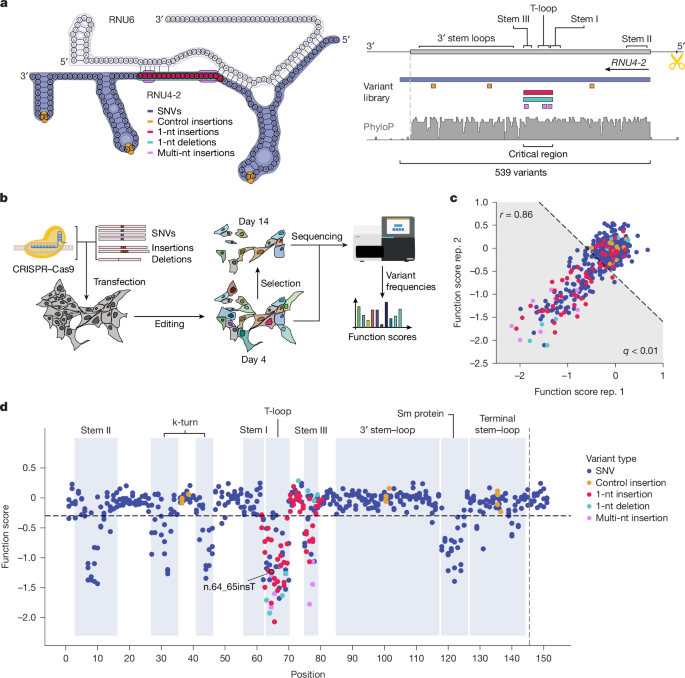
Researchers utilizing Genomics England’s National Genomic Research Library (NGRL) have identified that the non-coding gene RNU4-2 triggers both the prevalent dominant ReNU syndrome and a distinct recessive neurodevelopmental disorder. Published in Nature and Nature Genetics, these findings employ saturation genome editing to map genetic mutations affecting thousands of patients globally.
The move from academic curiosity to clinical utility is where the real capital friction resides. When a single non-coding gene is linked to an estimated 100,000 cases of neurodevelopmental disorders worldwide, the economic landscape for diagnostic infrastructure and targeted RNA therapeutics shifts from niche exploration to a scalable market. This isn’t just a medical milestone; We see a validation of the “data-as-an-asset” model in precision medicine.
For the biotech sector, the discovery of ReNU syndrome and its recessive counterpart exposes a massive gap in current diagnostic pipelines. Families have spent years in a diagnostic odyssey, a period of extreme fiscal and emotional inefficiency. The ability to pinpoint changes within a critical 18-nucleotide region of RNU4-2 transforms a vague clinical phenotype into a binary diagnostic event. To capitalize on this, healthcare providers are increasingly relying on specialized genomic diagnostic laboratories to integrate these new markers into standard screening panels.
The RNU4-2 Bifurcation: Dominant vs. Recessive Mechanics
The research, spearheaded by the University of Oxford, the Francis Crick Institute and the Garvan Institute of Medical Research, clarifies a complex genetic dichotomy. ReNU syndrome is a dominantly inherited disorder caused by approximately 20 specific changes within a small, critical region of the RNU4-2 gene. These variants almost exclusively arise de novo, meaning they occur spontaneously rather than being inherited from parents.

The market implication here is the sheer prevalence. With 100,000 estimated cases globally, ReNU syndrome is now recognized as one of the most common known neurodevelopmental disorders. This volume creates a compelling case for the development of standardized genetic tests.
Contrast this with the newly identified recessive disorder. This condition arises from biallelic variants—where an individual inherits altered copies from both parents—located outside the 18-nucleotide ReNU region. These mutations cluster within functionally critical elements of U4, specifically Stem II, the k-turn, and the Sm protein binding site. Clinically, this recessive form is distinct, presenting with white matter abnormalities and enlarged perivascular spaces, driven by a loss-of-function mechanism that reduces RNU4-2 transcript levels.
This distinction is critical for therapeutic developers. A dominant gain-of-function mutation requires a different pharmacological approach than a recessive loss-of-function deficiency. Firms navigating these differing pathways must secure rigorous intellectual property legal counsel to protect the specific molecular targets associated with each disorder.
Expanding the Spectrum: The RNU2-2 Connection
The research momentum extends beyond RNU4-2. Parallel studies published in Nature Genetics have uncovered a separate recessive condition: Recessive RNU2-2-related neurodevelopmental disorder. This condition is positioned as one of the most common genetic causes of severe childhood epilepsy.
The pathology is rooted in the almost complete absence of U2-2 RNA, produced by the RNU2-2 non-coding gene. The clinical manifestation is severe: early-onset epilepsy, developmental delay, low muscle tone, and limited speech. In some instances, it progresses to movement disorders that impede walking.
This discovery was made possible by the Manchester University NHS Foundation Trust, The University of Manchester, and the Icahn School of Medicine at Mount Sinai. By scanning thousands of genes within the NGRL, these teams converted raw genomic sequences into actionable clinical diagnoses.
The Macro Shift: How Genomic Data Moats Reshape Biotech
The reliance on the National Genomic Research Library (NGRL) underscores a broader trend in the life sciences: the emergence of the “genomic moat.” The NGRL is one of the world’s largest databases of its kind, providing the raw material necessary for saturation genome editing. This method allows scientists to systematically test every possible genetic change—over 500 distinct changes were analyzed in the RNU4-2 study—to create a comprehensive functional map.
This shift in methodology changes the industry in three fundamental ways:
- From Hypothesis to Saturation: Traditionally, researchers tested a few suspected mutations. Saturation editing eliminates the guesswork, allowing for the “perfect identification” of disease-causing changes. This reduces R&D waste and accelerates the time-to-market for diagnostic tools.
- The Non-Coding Gold Rush: For decades, the industry focused on protein-coding genes. The RNU4-2 and RNU2-2 breakthroughs prove that non-coding DNA—once dismissed as “junk”—is a primary driver of prevalent disease, opening an entirely new asset class for drug discovery.
- Centralized Data Dependency: The success of these studies reinforces the value of national genomic datasets. The ability to correlate genotype with phenotype across thousands of individuals creates a high barrier to entry for smaller firms without access to such libraries.
The operational burden of managing this scale of data is immense. The transition from a research paper to a clinical product requires robust enterprise data infrastructure capable of handling petabytes of genomic information although maintaining strict patient privacy compliance.
“The discovery of ReNU syndrome and the associated recessive disorders demonstrates the power of large-scale genomic datasets to uncover the genetic basis of prevalent conditions that were previously invisible to us.”
As the industry moves toward the next fiscal quarters, the focus will shift from identification to intervention. The mapping of the RNU4-2 and RNU2-2 genes provides the blueprint. The next phase involves the capital-intensive process of developing RNA-based therapies to either silence dominant mutations or restore function in recessive cases.
The trajectory is clear: the “invisible” parts of the genome are becoming the most visible opportunities for investment. For firms looking to enter this space or scale their existing genomic capabilities, the priority must be the integration of high-fidelity data with agile clinical trial frameworks. Finding the right partners to navigate this complexity is no longer optional—it is a prerequisite for survival in the precision medicine era. Those seeking vetted B2B partners in data management, IP law, or clinical research can find the necessary expertise within the World Today News Directory.