Review Finds No Consensus on Vitamin B12 as Survival Predictor
Tracking metabolic shifts during cancer treatment requires measuring specific micronutrients, yet researchers reported that existing studies have not established whether rising or falling vitamin B12 levels act as reliable predictors of survival following chemotherapy or radiotherapy.
-
Key Clinical Takeaways:
- A systematic review spanning literature from 2005 to 2025 identified 1,074 initial records regarding vitamin B12 levels, cancer, and radiation or chemotherapy.
- After removing duplicates, researchers found no explicit clinical studies definitively linking post-treatment vitamin B12 fluctuations to patient survival outcomes.
- Biological plausibility connects vitamin B12 to DNA synthesis and genomic stability, yet treatment-related toxicity and confounding variables complicate prognostic modeling.
Systematic Review Methodology and Database Filtering
The investigation evaluated literature published over a 20-year window from 2005 to 2025, meaning studies released in 2026 fell outside the eligibility criteria set by the authors. Using databases including PubMed, ScienceDirect, Europe PMC, the Directory of Open Access Journals, and HubMed, the search strategy combined terms for vitamin B12, neoplasms, and cytotoxic treatments. Initial database queries yielded 1,074 records, which narrowed to 427 unique articles after duplicate removal. Inclusion parameters required adult cancer populations exposed to chemotherapy or radiotherapy, while exclusions eliminated surgical cases to prevent confounding disruptions in intrinsic factor secretion and ileal absorption.
Biological Mechanisms Connecting B12 to Tumorigenesis
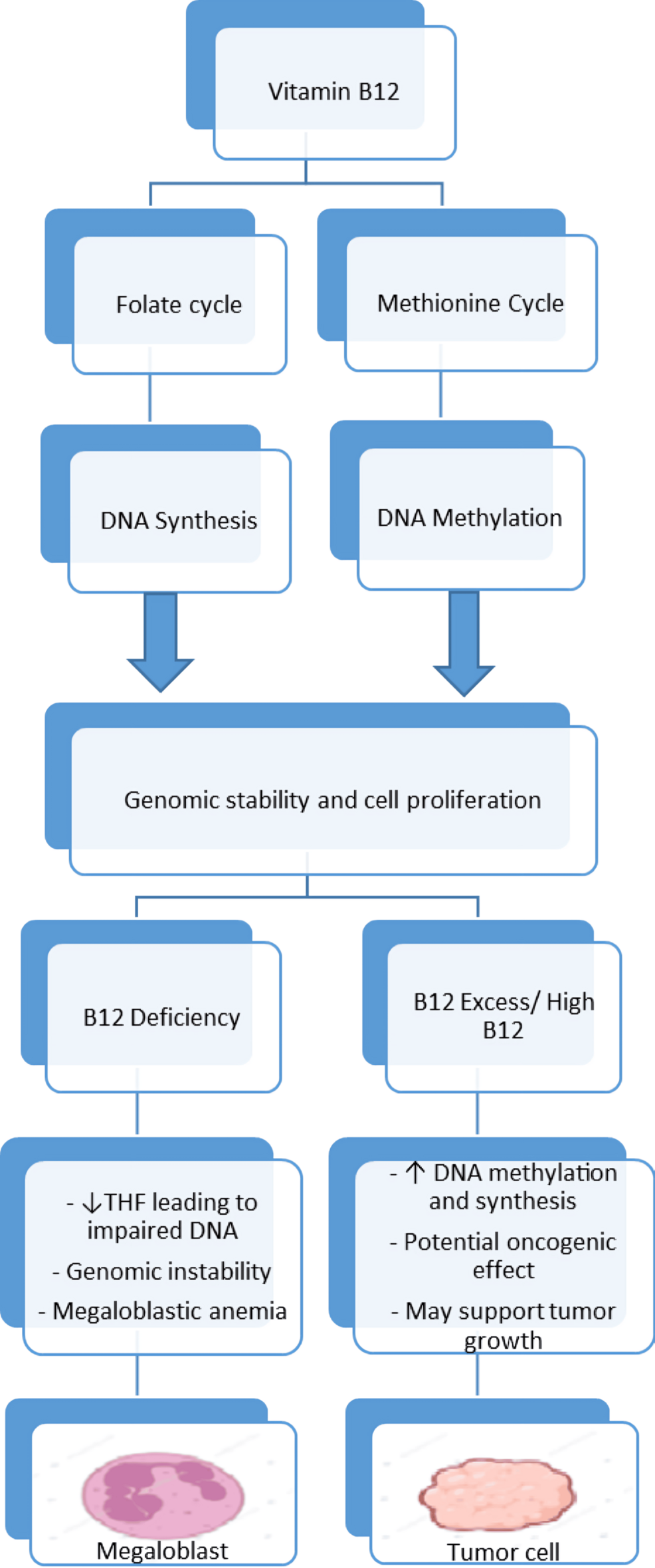
Cancer operates as a metabolic disease wherein malignant cells consume surrounding nutrition and disrupt normal cellular processes. Vitamin B12 functions as a vital enzymatic cofactor supporting deoxyribonucleic acid synthesis, genomic stability, and cellular repair. Diminished B12 concentrations impair DNA synthesis and promote genomic instability, whereas persistently elevated levels have been shown to have a link with the presence of solid neoplasms and metastasis.
Divergent Findings Across Cancer Treatment Literature
Parallel investigations examining dietary interventions in oncology highlight distinct molecular pathways, such as findings regarding naringenin. While flavonoids like naringenin modulate PI3K/Akt/mTOR and NF-kappaB signaling networks to suppress tumor proliferation and chemoresistance, the review highlights a persistent evidentiary gap regarding micronutrient tracking. Although clinicians routinely monitor hematological parameters like mean corpuscular volume and C-reactive protein for prognostication, the reviewed data demonstrate that tracking post-therapy vitamin B12 trajectories lacks standardized prognostic validation.
Screening limitations and restrictive search parameters across electronic databases show that few targeted trials address this specific biomarker.
The core clinical question remains unanswered: whether clinicians can utilize vitamin B12 trends following cytotoxic therapy to accurately predict survival or alter intervention thresholds.
Disclaimer: The information provided in this article is for educational and scientific communication purposes only and does not constitute medical advice. Always consult with a qualified healthcare provider regarding any medical condition, diagnosis, or treatment plan.