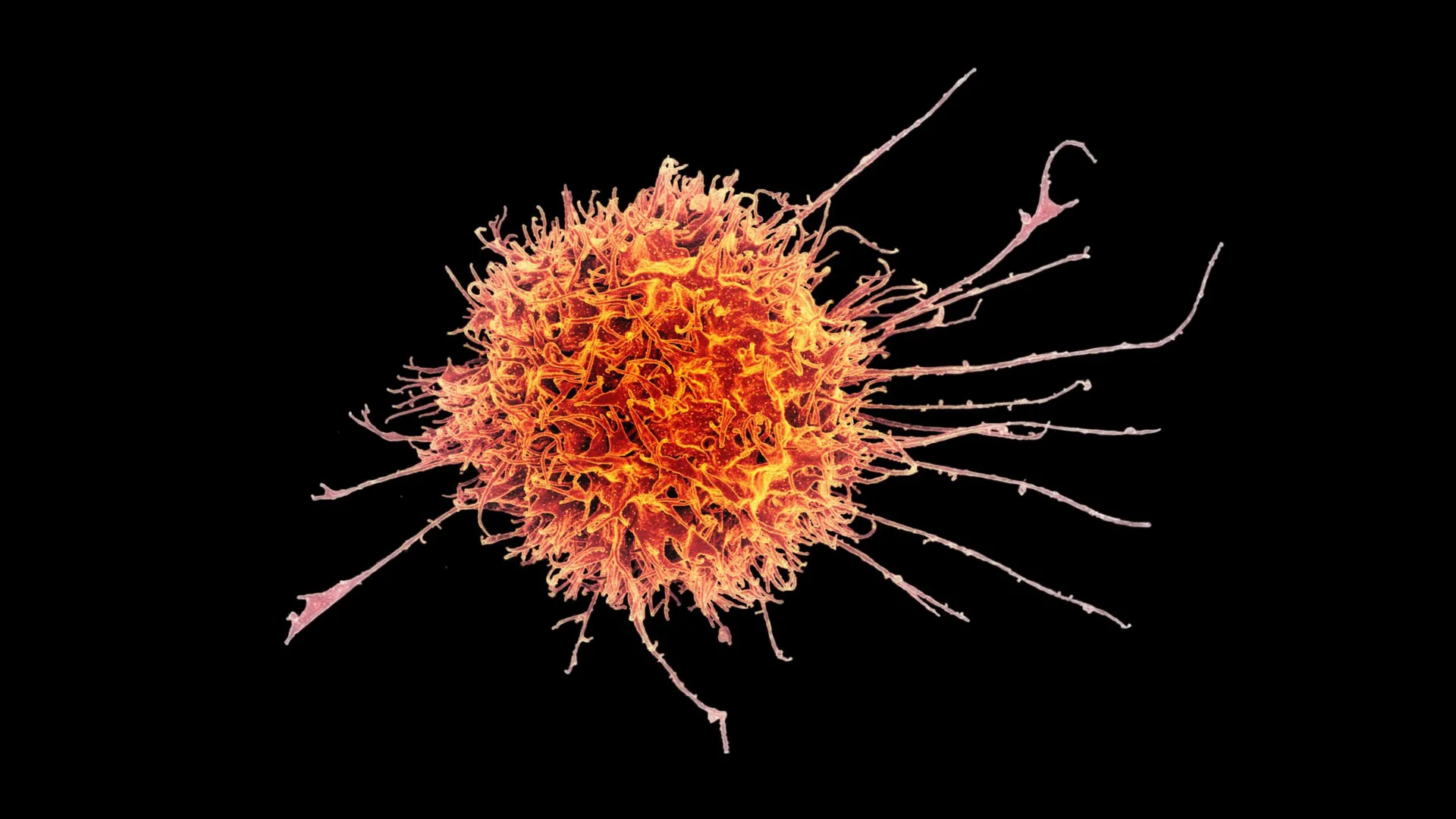
Researchers Supercharge Natural Killer Cells to Penetrate and Destroy Solid Tumors
Researchers have developed a method to reprogram natural killer (NK) cells to infiltrate and actively attack solid tumors, addressing a long-standing barrier in cancer immunotherapy. By exposing circulating NK cells to specific cellular signals in a laboratory setting, scientists at Stanford Medicine have created a specialized, tissue-resident population capable of penetrating tumor microenvironments that typically exclude immune cells.
Key Clinical Takeaways:
- Scientists successfully transformed circulating blood-based NK cells into tissue-resident killers by exposing them to controlled levels of TGF-b and direct contact with epithelial tumor cells.
- In preclinical mouse models, these supercharged cells demonstrated enhanced infiltration into solid tumors and effectively slowed the growth of melanoma and head and neck squamous cell carcinoma.
- Unlike some current immunotherapies, NK-based treatments could potentially be manufactured as “off-the-shelf” products, offering a more accessible pathway for a broader patient population.
Biological Mechanism and the TGF-b “Goldilocks” Signal
The ability of the immune system to combat cancer has historically been limited by the physical and chemical defenses of solid tumors. While circulating immune cells function effectively in the bloodstream, they often fail to penetrate the dense, immunosuppressive environment of solid malignancies. According to research published in Science Translational Medicine, the Stanford team identified that the key to overcoming this lies in the differentiation of NK cells into a tissue-resident state.
The research, led by John Sunwoo, MD, identified a precise signaling requirement involving transforming growth factor beta (TGF-b). Sunwoo notes that TGF-b acts as a “Goldilocks” signal; while it is necessary for cells to adopt a tissue-resident identity, an excess of the protein leads to dysfunctional, sluggish cells. The team discovered that short-lived exposure to epithelial tumor cells, rather than a constant supply of TGF-b, produced the most potent killers. These cells expressed specific markers, including CD49a, CD103, and CD39, which are associated with their enhanced ability to deliver perforin and granzyme A to malignant targets.
Preclinical Efficacy and Therapeutic Synergy
In experiments involving tumor organoids and mouse models, the enhanced NK cells showed significant efficacy against human-derived melanoma and head and neck squamous cell carcinoma. The researchers observed that these cells infiltrated the solid tumors. This activity was notably amplified when the NK cells were paired with cetuximab, a monoclonal antibody. By tagging tumor cells for destruction, cetuximab provides a dual-action approach that leverages the enhanced killing capacity of the reprogrammed NK cells.
The study highlights a critical distinction between conventional blood-based immune cells and those adapted for tissue residence. For patients currently evaluating treatment options for advanced solid tumors, these findings suggest a future shift in how immunotherapy may be administered.
Advancing Toward Off-the-Shelf Immunotherapy
A significant advantage of natural killer cells is their potential for allogeneic use—meaning they do not trigger an immune reaction when transferred from one person to another. This biological characteristic could enable the development of standardized, mass-produced cell therapies.

While these results in animal models represent a significant advancement in the study of cancer immunology, clinical validation remains the necessary next step to confirm safety and efficacy in human patients.
Disclaimer: The information provided in this article is for educational and scientific communication purposes only and does not constitute medical advice. Always consult with a qualified healthcare provider regarding any medical condition, diagnosis, or treatment plan.