Researchers Observe Rare Simple Cubic Silver Structure, Previously Seen Only in Polonium
Researchers at Hokkaido University have successfully induced silver to form a rare, simple cubic crystal structure, a configuration previously documented only in the radioactive element polonium.
The findings, published October 21 in Nano Letters, reveal that this unconventional arrangement grants the metal unusually high chemical reactivity.
While silver typically forms a face-centered cubic structure—a common pattern shared by metals like gold and copper—the research team discovered that silver atoms can adopt a simple cubic structure under specific nanoscale conditions. In this rare state, atoms occupy only the eight corners of a cube, a configuration that is generally considered energetically unfavorable in elemental solids.
To achieve this, the researchers utilized a transmission electron microscope (TEM) to trigger the decomposition of silver iodide. By applying an electron beam, the team induced the radiolytic decomposition of the material and observed the resulting silver atoms arranging themselves in real time. According to the study, the formation of this structure is highly selective, occurring specifically from the metastable γ-AgI polymorph.
“It was surprising to find that such a low-density structure could form in a pure metal crystal,” said Dr. Masaya Sakakibara, the study’s first author. “We expected silver nanoparticles to form when silver iodide decomposes under electron beam irradiation, but we didn’t expect them to adopt a simple cubic structure.”
Once formed, the simple cubic silver displayed distinct physical behaviors compared to its conventional counterpart. While standard face-centered cubic silver remains stable under high-vacuum conditions, the simple cubic version began to oxidize into silver oxide shortly after its creation.
“Within 100 seconds of its formation, it began to transform into silver oxide,” Sakakibara added.
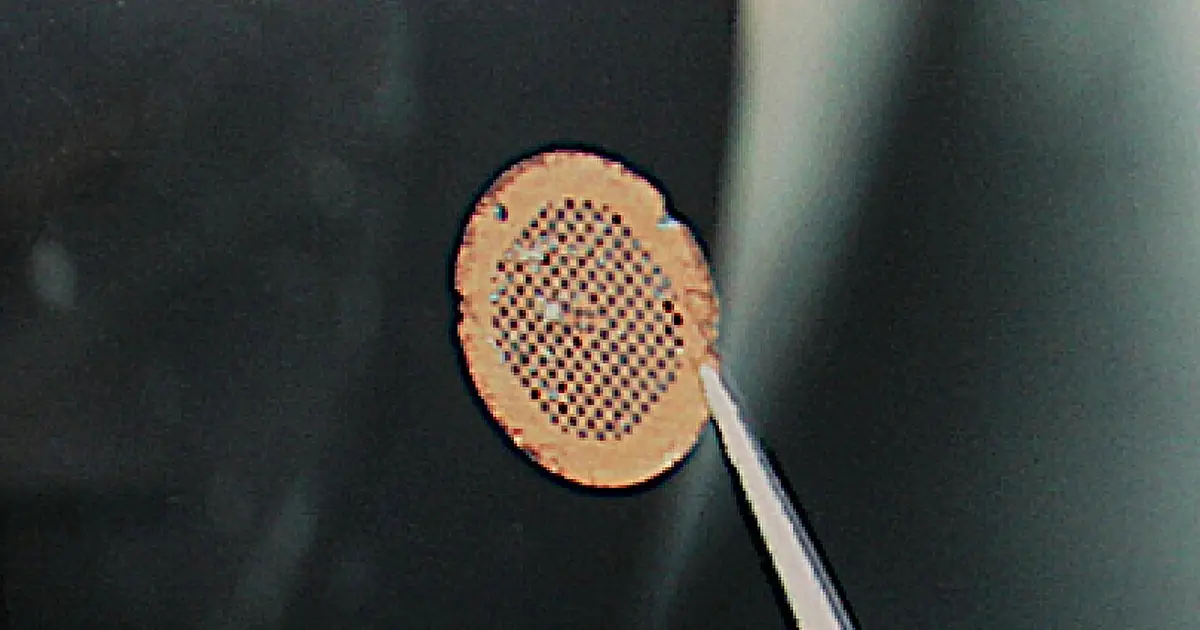
Professor Yuki Kimura, a co-author and head of the Low Temperature Nanomaterial Science Laboratory at Hokkaido University, noted the wider impact of the work. “This is a new approach to discovering previously unknown crystal structures, which could also help us develop materials with novel properties in the future,” Kimura said. “Going forward, we will continue investigating the physical and chemical properties of simple cubic silver in greater detail and extend this approach to other elements and compounds.”
Future research targets other elements
The researchers also intend to extend the electron-beam approach to other elements and compounds, searching for further crystal structures that are normally inaccessible.
The paper, authored by Masaya Sakakibara, Hiroki Nada, Yuji Kunisada and two additional researchers from Hokkaido University and Tottori University, was published in Nano Letters on October 21, 2026. Its DOI is 10.1021/acs.nanolett.6c03635.
Professor Yuki Kimura heads the Low Temperature Nanomaterial Science Laboratory at Hokkaido University, which is situated on the university’s main campus in downtown Sapporo, just north of Sapporo Station.
The laboratory’s research focus encompasses the discovery of previously unknown crystal structures through far-from-equilibrium conditions, specifically utilizing electron-beam-induced radiolytic decomposition to kinetically stabilize structures typically inaccessible in elemental solids, such as the simple cubic silver phase documented in the recent Nano Letters study.
The research, which involved a team of five authors from Hokkaido University and Tottori University, suggests that utilizing far-from-equilibrium conditions can kinetically stabilize structures that are typically inaccessible, potentially expanding the known limits of metallic bonding.