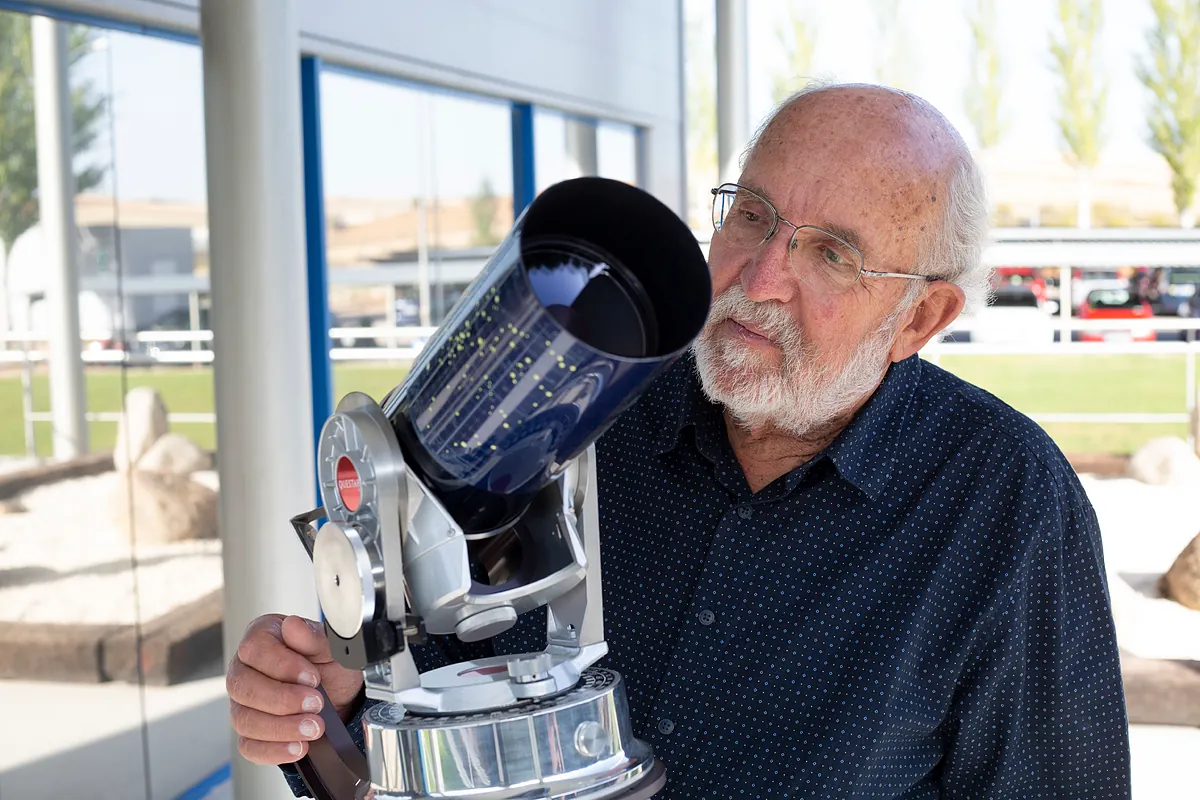
Nobel Physicist Michel Mayor Dismisses Mars Colonization as Nonsense
Nobel Prize-winning physicist Michel Mayor dismissed the prospect of human colonization of Mars during a series of media interviews in Granada on November 5, 2026, according to As.
- Mayor, who won the 2019 Nobel Prize in Physics, described the idea of colonizing other planets as an “absolute madness.”
- The physicist warned that the Earth is humanity’s only viable home and must be protected.
- He said that scientific projections of a million people living on Mars within a century are “pure fantasy.”
Mayor criticized the growing influence of billionaires in space exploration, arguing the field has shifted from scientific curiosity to commercial interests. He told elmundo.es that private actors are motivated exclusively by profit and space tourism, a direction he does not support. The physicist warned that plans to deploy hundreds of thousands of satellites in low orbit threaten to impair scientists’ ability to observe the cosmos.
He emphasized that the privatization of space represents a drift that could hinder fundamental research.

Mayor told elmundo.es that the greatest obstacle to detecting biosignatures in exoplanet atmospheres is the magnetic activity of host stars. Starspots, flares, and similar phenomena create noise that masks the subtle chemical signals researchers seek. He explained that many scientists are now focused on developing methods to filter out this stellar interference.
The physicist said that instruments must become significantly more precise to isolate potential biomarkers from stellar variability. Despite the difficulty, he described the search for extraterrestrial life as a colossal challenge for the next generation of astrophysicists and expressed optimism about eventual progress.

“There is a lot of nonsense said about this topic,” Mayor said, according to [as.com]. He emphasized that while he has no objection to science fiction, observers must clearly distinguish between fiction and physics. The scientist, who was born in Lausanne in 1942, told [elmundo.es] that “we will not go” to Mars.
Scientific barriers to colonization
Mayor pointed to specific environmental hazards that make habitation on Mars unrealistic. The planet lacks oxygen, its atmosphere is composed primarily of carbon dioxide, argon, and nitrogen, and its soil is toxic, [as.com] reported. “Unless people like living underground, we will never live there,” he told [elmundo.es].
The physicist also criticized the shift in space exploration toward private commercial interests, noting that billionaires are driving a trend he does not support.
He warned that the deployment of hundreds of thousands of satellites by private entities threatens to hinder the ability of scientists to observe and study the cosmos, [elmundo.es] reported.
Searching for life in the universe
Despite his skepticism regarding colonization, Mayor remains focused on the search for extraterrestrial life. He said that the next generation of astrophysicists faces a “colossal” challenge in identifying Earth-like planets with temperatures suitable for chemical reactions, according to [elmundo.es].
The search for intelligent life has yielded no results after more than 60 years of investigation by the SETI project using radiotelescopes, [as.com] reported. Mayor said that the European Space Agency’s Gaia mission may announce the discovery of approximately 1,000 new planets in December, [as.com] reported. “Nobody knows anything about it,” Mayor said regarding the search for intelligent signals, according to [elmundo.es].