
Breakthrough in Cancer Immunotherapy: Chinese Scientists Develop Scalable Method for Engineering ‘supercharged’ NK Cells
Beijing, China – In a important leap forward for cancer treatment, researchers at the Institute of Zoology of the Chinese Academy of Sciences have unveiled a groundbreaking method for generating potent, lab-engineered natural killer (NK) cells for immunotherapy. Published recently in Nature Biomedical Engineering, the technique promises to overcome key hurdles in current CAR-NK therapies, possibly making this promising treatment far more accessible and affordable.
Natural killer cells are a critical component of the body’s natural defenses against viruses and cancer. CAR-NK therapy – where NK cells are genetically modified with chimeric antigen receptors (CARs) to specifically target and destroy cancer cells – has shown immense promise. Though, current methods rely on harvesting mature NK cells from sources like blood and cord blood, a process plagued by inconsistencies, low efficiency, high costs, and lengthy processing times.
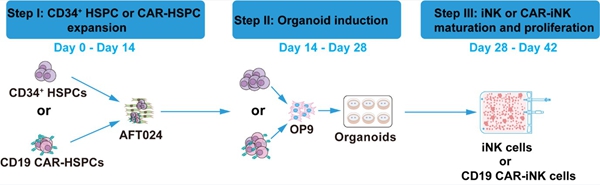
the team, led by Professor WANG Jinyong, has bypassed these limitations by developing a method to generate induced NK (iNK) cells – essentially, creating NK cells from scratch in the lab – and then further engineering them with CARs (CAR-iNK). Crucially, they start with CD34+ hematopoietic stem and progenitor cells (HSPCs) derived from cord blood, a readily available source.
“previous attempts to generate NK cells from these HSPCs faced challenges with both efficiency and the functionality of the resulting cells,” explains Prof. Wang. “Our innovation lies in shifting the genetic engineering process to an earlier stage of cell development, combining CAR modification with robust
