Researchers capture mouse totipotent stem cells via chemical induction
Chemical Reprogramming Captures Stem Cell Potency
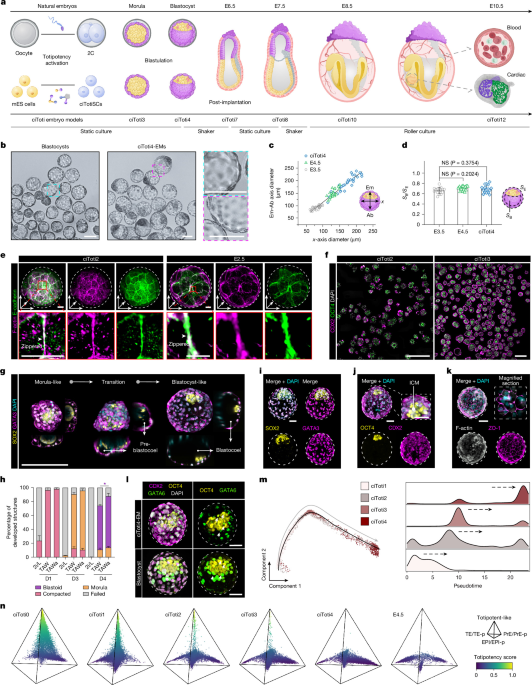
Researchers have captured mouse totipotent stem cells by utilizing chemical induction, establishing a platform to model early mammalian development outside the traditional limits of fertilized embryos. According to findings published in Nature, defined chemical cocktails successfully reprogram standard murine stem cells into states matching the earliest stages of embryonic growth, mirroring both zygotic genome activation and subsequent developmental milestones.
-
Key Clinical Takeaways:
- Chemical cocktails bypass the need for genetic modification, reprogramming naive embryonic stem cells directly into totipotent-like states.
- These stem cell models recapitulate developmental progression from zygotic genome activation through gastrulation and early organogenesis.
- Single-cell sequencing and transcriptomic profiling confirm that the chemically induced models match the molecular signatures of in vivo blastomeres.
For decades, studying the foundational steps of mammalian embryogenesis relied heavily on isolating scarce blastomeres from live blastocysts, a method limited by ethical constraints and technical availability. Seminal work by Tarkowski in 1959 laid the initial groundwork for isolating blastomeres, but capturing and expanding true totipotency in vitro remained elusive. Traditional embryonic stem cells are pluripotent rather than totipotent, meaning they can form tissues of the fetus proper but lack the capacity to generate extraembryonic lineages like the trophectoderm and primitive endoderm, which are essential for implantation.
Chemical Interventions Stabilize Cells in Expanded Potential State
Recent advances documented in Cell demonstrate that chemical interventions, such as spliceosomal repression and targeted chromatin remodeling, stabilize cells in an expanded potential state. These models track closely with single-cell RNA sequencing maps generated during normal mouse gastrulation. By analyzing the transcriptomic heterogeneity of these cell clusters, investigators can map gene expression trajectories from pre-implantation stages straight through to late organogenesis without relying on natural zygotes.
Despite these technical strides, researchers continue to define the strict criteria required to prove absolute developmental equivalence between synthetic models and natural embryos. Evaluating totipotency requires rigorous functional tests, including contribution to both embryonic and extraembryonic tissues following blastocyst injection. While chemically induced models demonstrate high-efficiency blastocyst-like structure formation in vitro, variations in batch-to-batch transcriptomic integration and epigenetic fidelity remain under active investigation.
Future Directions in Synthetic Embryology
The transition from transgene-free generation of post-gastrulation whole embryo models to fully functional organogenesis platforms points toward a shifting paradigm in developmental biology. Laboratories are refining culture conditions using specialized serum preparations to support extended ex utero development. As these molecular protocols mature, the scientific community moves closer to dissecting the precise signaling pathways that govern mammalian cell fate decisions during the earliest hours of life.
Disclaimer: The information provided in this article is for educational and scientific communication purposes only and does not constitute medical advice. Always consult with a qualified healthcare provider regarding any medical condition, diagnosis, or treatment plan.