Reducing Trade Tensions and Uncertainty Benefits Global Economy
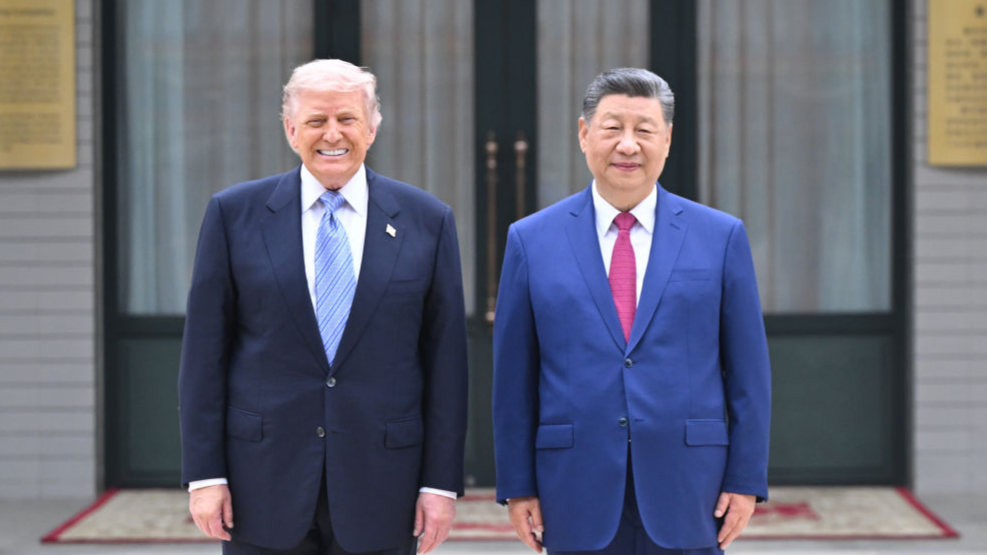
The recent summit in Beijing between U.S. President Donald Trump and Chinese leader Xi Jinping has signaled a potential for reduced bilateral trade tensions, a move that analysts suggest could stabilize the global economy. While specific policy breakthroughs remain undisclosed, the prospect of lessened friction aims to mitigate the geopolitical risk premium currently impacting international markets and large-scale capital expenditures.
For the modern C-suite, uncertainty acts as a pervasive, invisible tax on growth. When trade policies are subject to sudden shifts, corporations instinctively freeze capital expenditure (CapEx) and delay long-term strategic pivots to protect liquidity. This “wait-and-see” approach creates a drag on global GDP, as companies prioritize defensive hedging over productive investment. The recent dialogues in Beijing, though characterized by some observers as lacking immediate concrete breakthroughs, offer a vital reprieve from the volatility that has defined the last several fiscal quarters.
The fundamental goal for global markets is the restoration of predictability. As noted by analyst Kozack, “Anything that helps reduce trade tensions and uncertainty is good for the two large economies and the global economy.” This sentiment underscores a critical macroeconomic reality: the interconnectedness of the world’s two largest economies means that their stability is the bedrock upon which global supply chain resilience is built.
As corporations navigate this period of cautious optimism, many are seeking guidance from risk management consultancies to model various geopolitical scenarios and protect their EBITDA margins against sudden tariff fluctuations.
The Macroeconomic Ripple Effect: Moving Beyond the Summit Theatrics
While the immediate aftermath of the summit has been marked by a lack of granular detail regarding specific trade deals, the market’s reaction is focused on the broader trajectory of the yield curve and global liquidity. In periods of high geopolitical friction, the “risk premium” associated with cross-border transactions rises, driving up the cost of capital and complicating debt restructuring for multinational entities.
If the current momentum toward stability holds, You can expect a shift in how institutional investors allocate capital. We are moving away from a regime of extreme defensive posturing and toward a more nuanced approach to emerging market exposure. However, the transition will not be instantaneous. The market requires more than just high-level meetings. it requires the codified certainty of bilateral agreements to truly de-risk the global trade landscape.

“The market is currently pricing in a ‘stabilization dividend’ that is more psychological than structural. Until we see specific adjustments to tariff structures or investment protocols, the volatility remains embedded in the underlying indices.”
The current economic climate requires a dual-track strategy: maintaining high levels of operational flexibility while simultaneously preparing for a potential resurgence in trade volume. This balance is particularly difficult for industries with high exposure to trans-Pacific logistics, where the cost of a single policy shift can erase an entire quarter’s worth of margin gains.
Three Pillars of Economic Re-calibration
The potential reduction in trade tensions will likely manifest across three primary industrial and financial pillars. Understanding these shifts is essential for any enterprise looking to optimize its fiscal position over the next two to four quarters.
- Supply Chain Optimization and De-risking: For years, the global manufacturing sector has been forced into a “just-in-case” inventory model to mitigate the risk of sudden border closures or trade embargoes. A reduction in tension allows firms to move back toward “just-in-time” efficiencies, significantly reducing warehousing costs and freeing up working capital. Companies are increasingly partnering with supply chain and logistics providers to redesign these networks for both efficiency and resilience.
- Predictable Capital Allocation: Stability in the U.S.-China relationship provides a clearer horizon for long-term CapEx. When the threat of sudden retaliatory tariffs diminishes, boards are more likely to approve large-scale investments in automation, infrastructure, and R&D. This shift from defensive liquidity hoarding to active deployment is a key driver for global economic recovery.
- Regulatory and Compliance Harmonization: Trade tension often brings a flurry of new regulations, sanctions, and compliance requirements. A cooling of tensions simplifies the landscape for international trade law firms and corporate compliance departments, reducing the administrative burden and legal overhead associated with cross-border commerce.
The interplay between these pillars is what will ultimately dictate the velocity of the global recovery. For instance, a more predictable regulatory environment directly facilitates more efficient supply chain movements, which in turn supports more robust capital allocation strategies.
The Bottom Line for Global Enterprises
The “stalemate” nature of the recent summit suggests that while the era of extreme volatility may be plateauing, the era of absolute certainty has not yet arrived. For the global business community, the current environment is one of “cautious re-engagement.” The focus for the upcoming fiscal quarters must remain on agility. Organizations that can pivot between high-efficiency models and high-resilience models will be the ones to capture the upside of any sudden stabilization in trade relations.

As we look toward the second half of 2026, the metric to watch is not the volume of new treaties, but the reduction in the “uncertainty premium” seen in global bond markets and equity volatility indices. If the dialogue in Beijing leads to even incremental improvements in trade predictability, the impact on global liquidity and corporate investment could be profound.
Navigating these complex shifts requires more than just market intuition; it requires vetted, expert partnerships. To ensure your organization is positioned to capitalize on a stabilizing global economy, explore the World Today News Directory to connect with the world’s leading corporate advisory services and strategic partners.