Rebuilding Democracy: Lessons from Poland’s Transition
Poland is currently navigating “democratic frontsliding,” a piecemeal restoration of liberal institutions following the October 2023 election of Donald Tusk’s pro-democracy coalition. The process reveals that reversing systemic autocratization—specifically the dismantling of the rule of law—requires more than electoral victory, confronting deep-seated institutional “booby traps.”
For the C-suite and institutional investors, this isn’t just a political curiosity; This proves a masterclass in systemic risk. When a state spends eight years undermining judicial independence and co-opting media, the resulting “democratic backsliding” creates a volatile regulatory environment. The current challenge is that winning an election does not automatically reset the legal clock. Firms operating in the region are now facing a landscape where the rules of engagement are being rewritten in real-time, necessitating a pivot toward political risk consulting to navigate the friction between new mandates and old institutional wreckage.
The Mechanics of Democratic Frontsliding
The transition in Poland introduces a new conceptual framework: “democratic frontsliding.” Unlike traditional democratization—which often follows sweeping revolutions or the sudden collapse of an autocratic state—frontsliding is an incremental, patchworked process. It begins with an electoral shift but proceeds through a grueling series of piecemeal repairs.
The Law and Justice (PiS) government, which held power from 2015 to 2023, didn’t just change laws; it altered the political edifice. By undermining the rule of law and attacking judicial independence, PiS created a structural deficit in governance. Now, the Civic Coalition must attempt to restore these systems without accidentally adopting the same “decisionist” methods used by their predecessors.
This creates a profound operational dilemma for the state. If the government follows a strictly proceduralist approach, they risk leaving the damage unrepaired and demobilizing their supporters. If they take decisive, unilateral action to purge illiberal remnants, they risk capitulating to the very illiberal playbook they aim to dismantle.
- Institutional Inertia: The restoration of liberal democracy is proving significantly harder than the initial act of winning an election, proving that pro-democracy leadership is not a magic bullet for systemic recovery.
- The Veto Complexity: The presence of “veto players” ensures that legislative victories in parliament do not immediately translate into operational reality.
- External Dependency: The process highlights a critical need for support from external actors, particularly the European Union, to validate and stabilize the restoration of the rule of law.
The market hates this kind of ambiguity.
Institutional Booby Traps and Veto Players
The Tusk government has pledged to repair degraded institutions and hold PiS accountable, but they have encountered what Jan-Werner Mueller describes as “booby traps” laid by the previous administration. These traps are not merely political obstacles; they are legal and structural hurdles designed to obstruct a successor’s ability to govern.
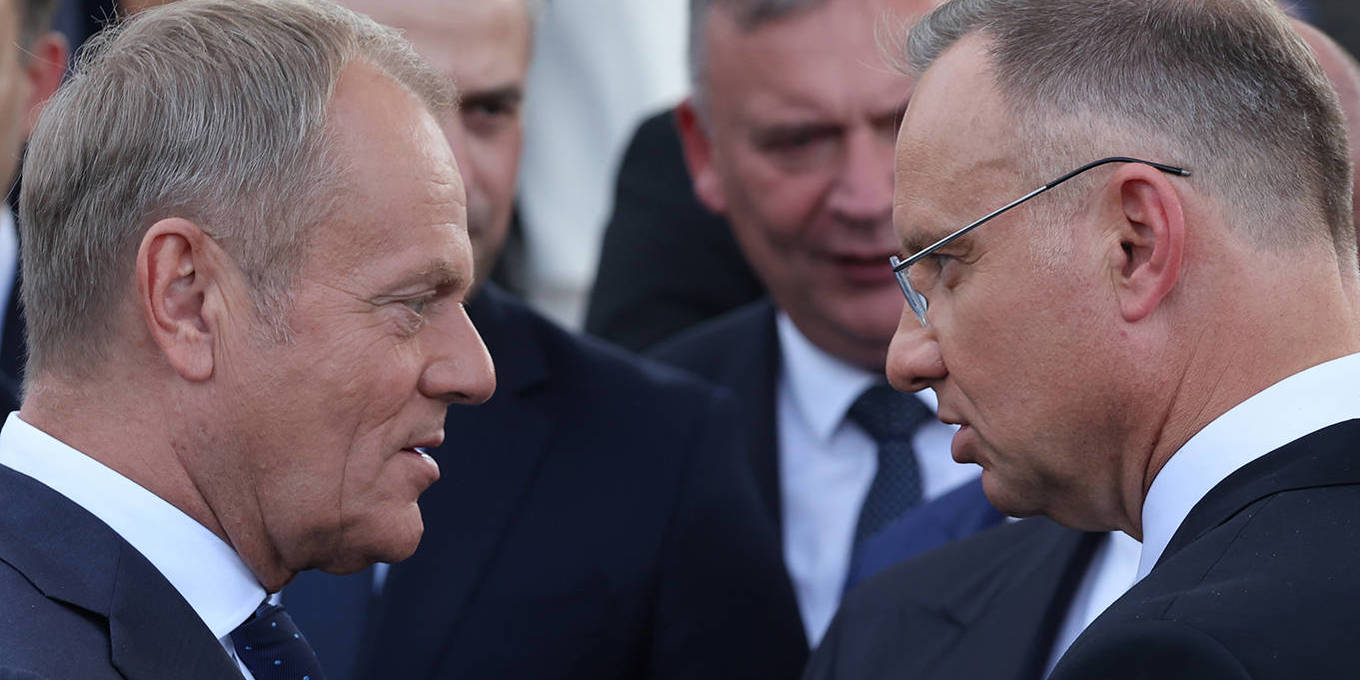
A primary example of this friction is the role of the Polish President. While the Prime Minister leads the government, the President remains the commander-in-chief and represents the country internationally. Crucially, the President possesses the right of veto and legislative initiative, meaning any bill passed by parliament must be signed by him to enter into force.
This creates a bottleneck. Even with a decisive majority in both chambers of parliament, the pro-democracy alliance faces a presidency that can act as a definitive veto player. While the President cannot conduct foreign policy entirely on his own, his ability to stall domestic legislation creates a state of regulatory limbo. For B2B entities, this instability makes long-term capital expenditure (CapEx) planning nearly impossible without the guidance of corporate legal counsel specializing in Eastern European jurisdictions.
“The case of Poland shows that resuscitating democracy is very hard work. Poland should serve as a warning to governments and international organizations that assume—wrongly—that democracy will automatically follow the election of a pro-democracy leader.”
This warning extends beyond the halls of government. When the rule of law is “degraded,” as the Tusk government describes it, the predictability of contract enforcement and property rights vanishes. The “return to Europe” narrative is a strong signal for FDI, but the actual rehabilitation of the judiciary is a leisurely-motion process.
The Hungary Parallel and Global Ripple Effects
The Polish experience is now being viewed as a blueprint—or a cautionary tale—for other nations facing similar transitions. The most immediate parallel is Hungary, where Prime Minister Viktor Orbán and the Fidesz party have spent 16 years tilting the electoral playing field. As Hungary faces its own elections, the “lessons from Poland” suggest that even a victory for the opposition would not be a clean break from illiberalism.
The risk for global firms is the emergence of a “new type of democratic transition” where the transition period itself is characterized by prolonged instability and institutional conflict. We are moving away from the era of “shock therapy” transitions toward a period of “incremental patching.”
Companies that relied on the centralized, predictable (if illiberal) nature of the previous regime now find themselves in a fragmented environment. The shift requires a move toward strategic compliance advisors who can manage the transition from a state of “captured” institutions to a restored liberal framework.
The trajectory is clear: the election was the starting gun, not the finish line. The real work—and the real risk—lies in the “frontsliding” phase, where the ghost of the previous administration continues to haunt the legal architecture of the state.
As Poland and potentially Hungary navigate these institutional traps, the ability to distinguish between political rhetoric and structural reality will separate the winners from the losers in the European market. To find vetted partners capable of managing this level of geopolitical volatility, the World Today News Directory remains the primary resource for sourcing specialized B2B expertise in risk and legal recovery.