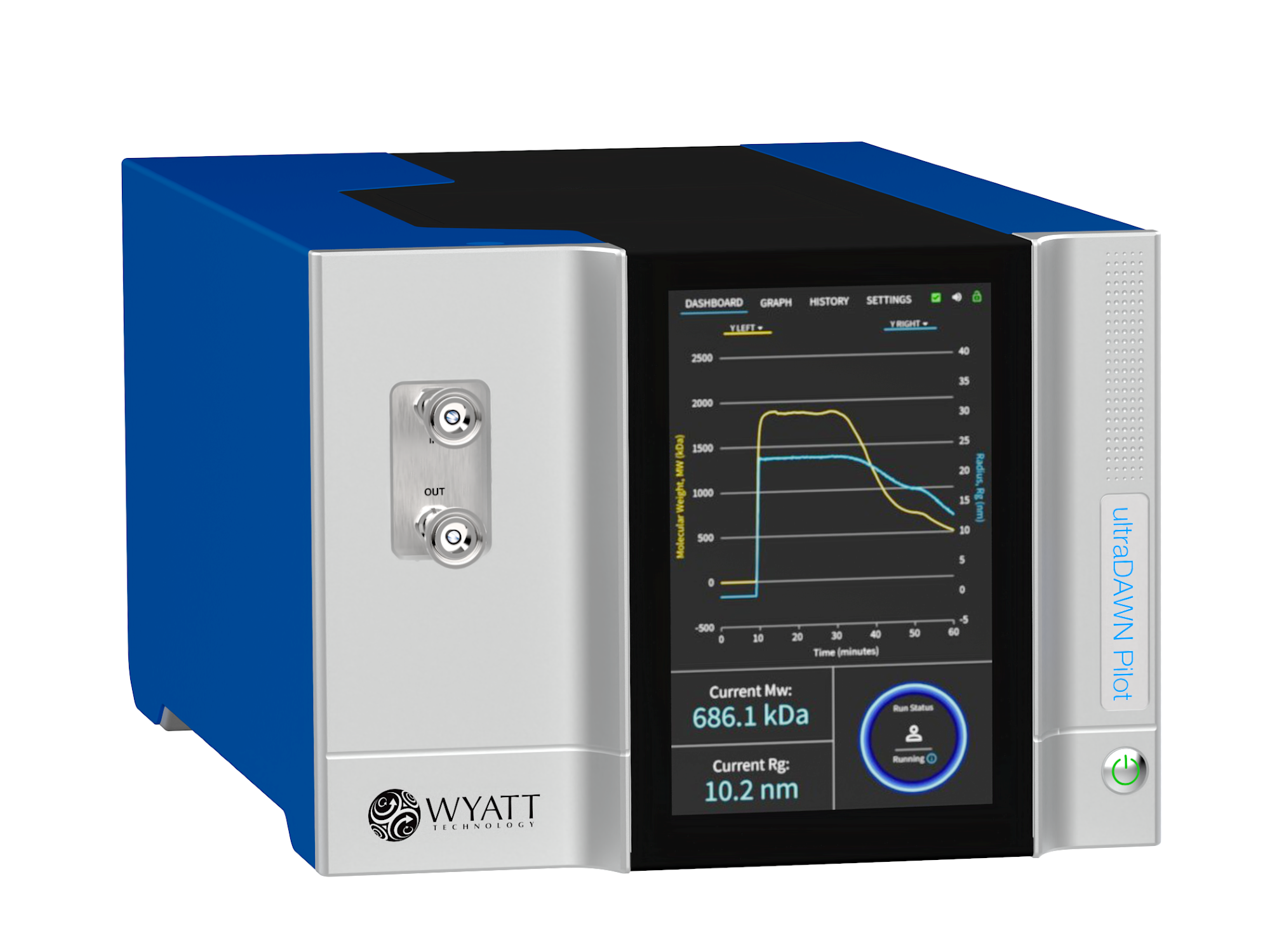
Real-Time Downstream Bioprocess Monitoring With the ultraDAWN Detector
As enterprise bioprocessing scales up to meet modern clinical demands, traditional offline analytics create severe operational bottlenecks that delay iterative development and obscure high-frequency process dynamics. Addressing this friction head-on, Waters Corporation highlights the critical operational shift toward real-time analytics in downstream bioprocess monitoring, relying on technologies like the ultraDAWN PAT Detector platform and real-time OBSERVER Software to continuously measure key biophysical attributes such as molar mass and AAV payload characteristics.
Operational Insights for Bioprocessing Engineers
- High-Frequency Measurement: RT-MALS technology measures process runs as rapidly as five times per second, bypassing the slow sampling frequencies inherent to conventional offline fraction analysis.
- Accelerated Optimization: Real-time results immediately inform subsequent process runs, enabling efficient Bayesian optimization strategies that significantly reduce overall development time and cost.
- Flexible Deployment Configurations: Inline setups integrate directly into process chromatography flow paths, while online configurations manage slipstreams for ultrafiltration/diafiltration (UF/DF), formulation, fill-finish, and complex fluidic reactions.
Overcoming the Bottlenecks of Offline Bioprocess Analytics
Conventional downstream bioprocessing relies heavily on offline analysis for deep product characterization. While comprehensive, this traditional approach fails to match the rapid time scale of modern process dynamics. According to Dr. Daniel Some, Senior Principal Product Manager at Waters Corporation, the reliance on offline methods manifests in two distinct operational pain points: limited sampling frequency and extended analytical turnaround time.
In standard workflows, operators collect a limited number of fractions during a run and ship them to an analytical support lab only after completion. Turnaround times spanning hours to weeks mean analytical data routinely lags behind subsequent process development iterations. Consequently, engineers plan new runs without precise visibility into how previous conditions affected the product. This lack of immediate feedback makes efficient, data-driven optimization strategies difficult to execute.

Deploying RT-MALS and OBSERVER Software for Continuous Monitoring
To eliminate these investigative lags, the ultraDAWN PAT Detector platform introduces multi-angle light scattering directly to the production workflow. Driven by real-time OBSERVER Software, RT-MALS evaluates process streams continuously, capturing data at frequencies up to five times per second. This high-density data stream records rapid structural changes and biophysical attributes—including molar mass and adeno-associated virus (AAV) payload characteristics—without adding wait-time costs to the manufacturing cycle.
Integrating inline and online configurations allows process developers to match detector deployment precisely to specific unit operations. Inline setups embed directly into the primary process flow path during chromatography operations. Conversely, online configurations divert an active slipstream via an auxiliary pump—sometimes controlled directly by the OBSERVER Software—making them well-suited for ultrafiltration and diafiltration (UF/DF), final formulation, fill-finish steps, and microfluidic mRNA-Lipid Nanoparticle (mRNA-LNP) encapsulation processes.
Scaling from Bench-Scale Detection to Pilot Operations
Transitioning process analytical technology from bench-scale systems to pilot-scale environments introduces distinct engineering hurdles. Extending the ultraDAWN platform to the higher-flow ultraDAWN Pilot Detector requires careful management of physical system constraints. While the foundational integration remains conceptually consistent between bench and pilot scales, engineers must account for varying pressure limitations driven by scaled-up columns, larger pumps, and specialized tubing configurations. System tolerance to backpressure naturally drops at elevated flow rates, demanding rigorous pre-run verification by technical teams before scaling up production runs.
By bypassing the wait times associated with traditional analytical labs, inline and online biophysical analytics shorten the timeline to return on investment, which frequently ranges from just a few months to a year. Process optimization teams seeking to modernize their validation pipelines and ensure reliable chromatography or formulation control frequently consult with qualified bioprocess engineers and analytical instrumentation specialists to align hardware configurations with strict regulatory and throughput requirements.