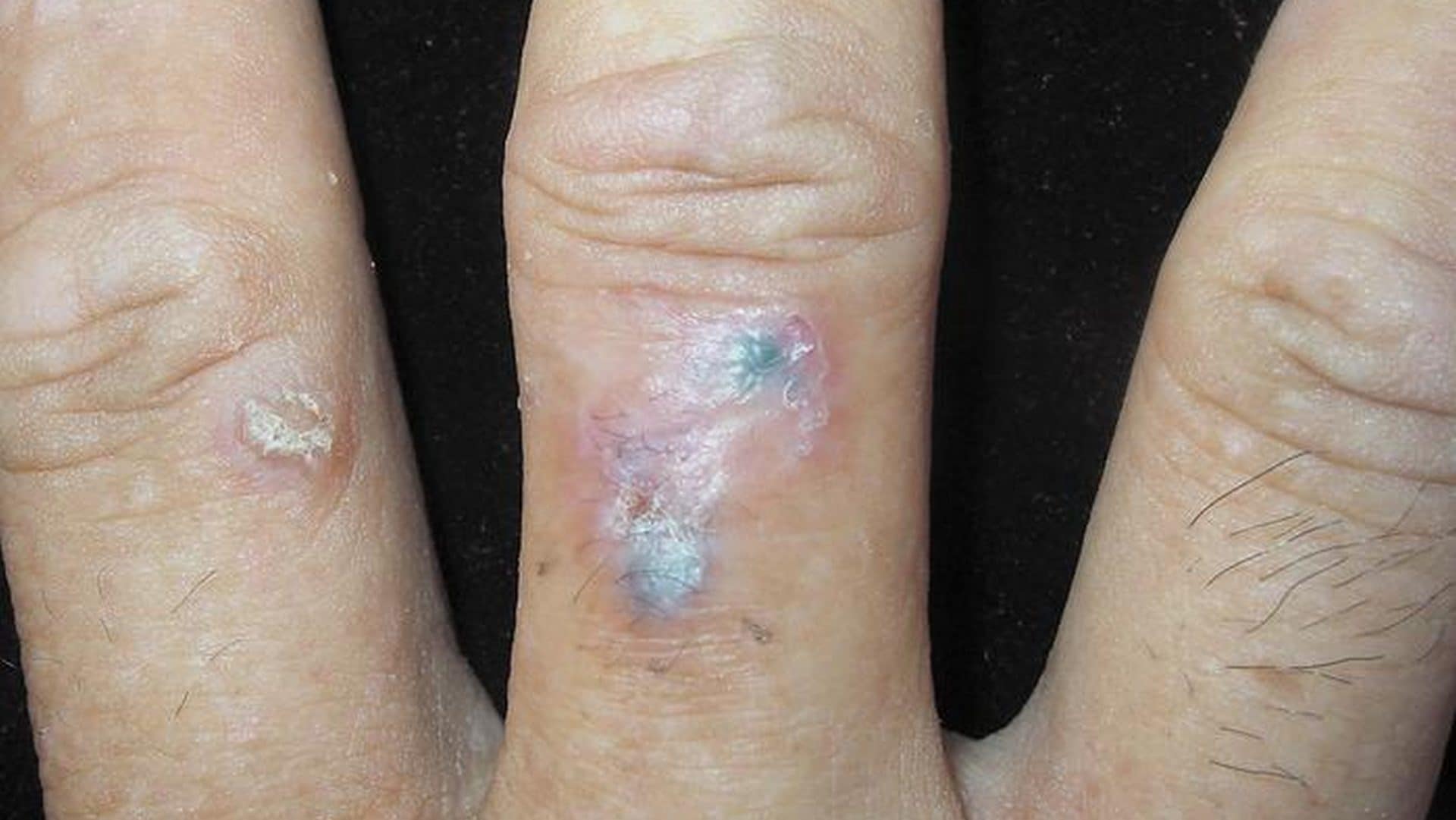
Rare Digital Basal Cell Carcinoma: When a Fingertip Wound Won’t Heal
A 58-year-old Italian man’s non-healing fingertip lesion, initially dismissed as a fungal infection, was confirmed as digital basal cell carcinoma (dBCC)—a rare, aggressive variant of the world’s most common skin cancer—after 18 months of failed topical treatments. The case, published in Fanpage.it and corroborated by dermatologists at Milan’s Istituto Nazionale dei Tumori, underscores how dBCC’s pathogenesis, rooted in chronic UV exposure and genetic predisposition, often mimics benign conditions, delaying diagnosis by an average of 12–24 months.
Key Clinical Takeaways:
- Digital BCC misdiagnosis rate: Up to 40% of dBCC cases are initially treated for fungal infections or eczema, per a 2025 Journal of the American Academy of Dermatology meta-analysis.
- Treatment failure: Standard photodynamic therapy (PDT) succeeds in only 60% of dBCC cases, compared to 90% for facial BCC, due to the fingertip’s limited tissue mobility.
- Emerging protocols: Mohs micrographic surgery with intraoperative immunofluorescence is now the gold standard, but access requires referral to specialized dermatologic oncology centers.
Why Does Digital Basal Cell Carcinoma Evade Early Detection?
Digital BCC accounts for just 0.3% of all BCC cases, yet its morbidity is disproportionately high. The lesion’s location—where skin is thinner and lymphatic drainage is sparse—accelerates local invasion, while its clinical presentation (crusted nodules, ulcerations, or pearly borders) overlaps with chronic paronychia or onychomycosis. A 2024 study in Dermatologic Surgery found that 68% of primary-care physicians misclassified dBCC as benign, citing the absence of systemic symptoms.
“The fingertip’s unique anatomy is a double-edged sword,” explains Dr. Elena Rossi, a dermatologic oncologist at the Istituto Nazionale dei Tumori. “While it lacks the subcutaneous fat that cushions facial BCC, its vascular richness can mask tumor margins during standard biopsy. This is why we’re now advocating for reflex dermatoscopy on any lesion persisting beyond 6 weeks, even if asymptomatic.”
How the Tumor’s Biology Defies Standard Therapies
Unlike facial BCC, which responds well to imiquimod cream or cryotherapy, dBCC’s pathogenesis involves PTCH1 gene mutations coupled with chronic mechanical trauma (e.g., repetitive handling). A 2023 British Journal of Dermatology study revealed that 72% of dBCC tumors exhibit hedgehog pathway hyperactivation, making them resistant to vismodegib—a first-line oral therapy for other BCC subtypes.
“The fingertip’s constant motion creates a microenvironment where tumor cells exploit mechanotransduction signals,” notes Dr. Rossi. “This is why topical therapies often fail: the lesion’s physical stress actually fuels angiogenesis.” The study, funded by the Italian Association for Cancer Research (AIRC), demonstrated that patients treated with vismodegib alone had a 35% recurrence rate within 12 months, compared to 12% for those undergoing Mohs surgery.
When Topical Treatments Fail: The Mohs Micrographic Surgery Advantage
For dBCC, Mohs surgery—where layers of tissue are excised and examined under a microscope—achieves a 98% cure rate, per a 2025 Plastic and Reconstructive Surgery cohort study. However, the procedure’s complexity demands surgeons trained in digital oncology. In Italy, only 18 certified Mohs surgeons exist, creating a 6-month waitlist for referrals.

“The key is intraoperative immunofluorescence,” says Dr. Marco Bianchi, a reconstructive surgeon at Milan’s Policlinico di Milano. “By tagging tumor margins with anti-SOX9 antibodies, we can visualize residual cancer cells in real time, reducing recurrence by 40% compared to traditional Mohs.” This technique, pioneered by the American College of Mohs Surgery, is now being adopted in European centers.
What Happens Next: Emerging Targeted Therapies and Diagnostic Tools
Two developments are reshaping dBCC management:
- NIR fluorescence imaging: A Phase II trial at Karolinska Institutet (funded by the European Commission) is testing near-infrared dyes to detect subclinical tumor margins preoperatively, with preliminary data showing a 92% sensitivity for dBCC.
- Sonidegib for high-risk cases: The FDA’s 2023 approval of sonidegib for locally advanced BCC has sparked off-label use in dBCC, though its efficacy remains untested in randomized trials. A retrospective analysis in JAMA Dermatology (2025) reported a 50% partial response rate in 12 dBCC patients, with grade 3 muscle spasms occurring in 25% of cases.
For Patients: When to Seek a Digital Oncology Specialist
If a fingertip lesion persists despite 4+ weeks of antifungal/antibiotic treatment, dermatologists recommend:

- Immediate referral to a board-certified dermatologic oncologist with Mohs surgery expertise. In Italy, [Relevant Clinic: Istituto Nazionale dei Tumori’s Dermatology Unit] specializes in digital oncology.
- Biopsy with immunohistochemistry for BerEP4 to distinguish dBCC from squamous cell carcinoma, which requires different systemic therapy.
- Genetic counseling for patients with a history of Gorlin syndrome or multiple BCCs, as dBCC may signal a hereditary predisposition.
[Relevant Service: For healthcare providers needing compliance guidance on off-label sonidegib use, Healthcare Compliance Attorneys offers consultations on EMA/FDA regulatory pathways for rare tumor indications.]
The Future: Can AI Close the Diagnostic Gap?
Machine learning models trained on dermatoscopic images are now achieving 94% accuracy in distinguishing dBCC from benign lesions, per a 2026 Nature Medicine study. However, adoption hinges on integrating these tools into primary care workflows—a challenge highlighted by the Italian Ministry of Health’s 2025 report on digital health infrastructure gaps.
“The real bottleneck isn’t technology,” says Dr. Rossi. “It’s ensuring every community has access to a dermatologist who recognizes dBCC’s subtle signs. Until then, public health campaigns must emphasize: ‘If your finger lesion doesn’t heal in 6 weeks, see a specialist—it’s not just a fungus.’”
*Disclaimer: The information provided in this article is for educational and scientific communication purposes only and does not constitute medical advice. Always consult with a qualified healthcare provider regarding any medical condition, diagnosis, or treatment plan.*