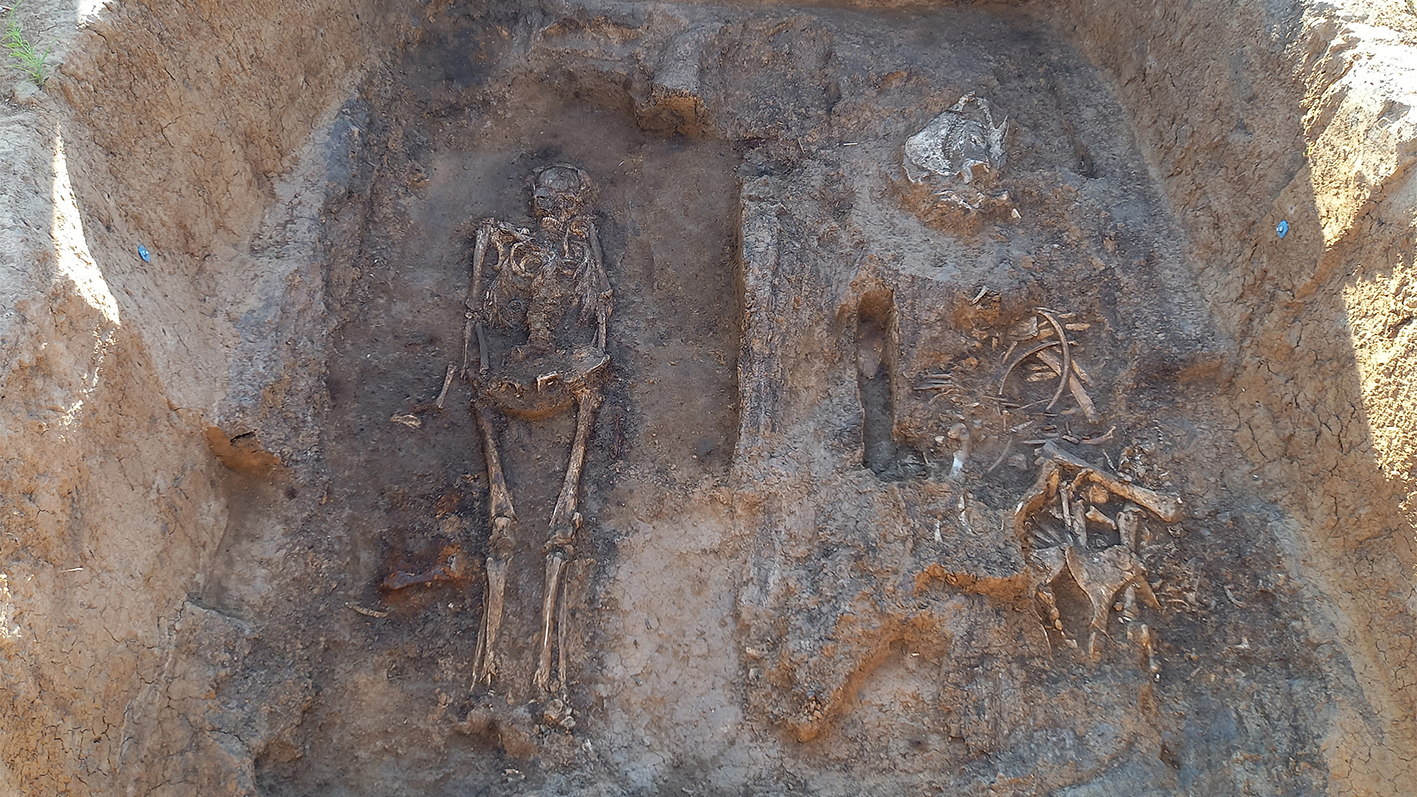
Rare 10th-Century Elite Tomb Unearthed in Russia With Horse and Dog
Archaeologists in Russia have unearthed a rare 10th-century wooden chamber tomb in Suzdal containing the remains of an elite man buried alongside a horse and a dog. Discovered unexpectedly during summer excavations at the medieval Gnezdilovo cemetery located 137 miles northeast of Moscow, the burial provides physical evidence of shared elite funeral customs between medieval Russian and Northern European populations a millennium ago, according to an August 15 translated statement from the Institute of Archaeology of the Russian Academy of Sciences.
Key Clinical Takeaways:
- Rare Archaeological Discovery: Researchers found the 10th-century chamber tomb approximately 3.3 feet underground at the Suzdal archaeological site, representing only the 81st such wooden crypt documented across western Russia.
- Elite Mortuary Assemblage: The crypt contained the skeletal remains of a 25- to 35-year-old high-status male accompanied by a horse, a dog, a battle ax, riding gear, and a silver horseshoe-shaped brooch.
- Geographic Significance: Unlike previous discoveries restricted to urban centers of the Kievan Rus’, this find establishes Suzdal as a critical, previously unknown military-administrative hub for the northeastern territories.
During the late ninth century, the territory encompassing modern western Russia was governed by the Kievan Rus’, a complex political conglomeration uniting Baltic, eastern Slavic, and Norse communities. By the 10th century, regional elites imported Scandinavian mortuary practices, burying nobility in underground wooden crypts stocked with extensive grave goods. The newly revealed burial chamber at Suzdal measures 10.2 by 8.9 feet and sits roughly 1 meter below the surface. Over the centuries, the wooden roof decayed and collapsed directly onto the human and animal remains within.
Anthropological analysis indicates the primary occupant was a man between 25 and 35 years old at the time of death. The assemblage recovered from the crypt features an iron knife, stirrups, riding equipment, a bone comb, and a battle ax. Near the skeleton's neck, researchers identified a silver, horseshoe-shaped brooch used to secure a garment. This material culture underscores the individual's elite status within the community.
Prior to this excavation, all 80 previously documented chamber tombs in western Russia were uncovered exclusively within urban centers of the Kievan Rus' territory. That distribution pattern led historians to believe that administrative power and Scandinavian burial customs were tightly bound to large cities. The Suzdal discovery alters this historical baseline by demonstrating that regional nodes served as active centers of military and administrative control as early as the 10th century.

In total, archaeologists completed 15 excavations at the Suzdal site during the summer season. While the majority consisted of simple earthen pits or barrow-mound dirt coverings, the grave goods varied distinctly by biological sex. Female burials contained silver rings and necklaces adorned with rock-crystal beads, alongside coins. Male burials consistently featured weapons and horse-riding gear. According to the Institute of Archaeology of the Russian Academy of Sciences, these findings confirm that Suzdal operated as a magnet for Old Rus' nobility and projected administrative authority across northeastern territories well before the medieval period's later upheavals.
*Disclaimer: The information provided in this article is for educational and scientific communication purposes only and does not constitute medical advice. Always consult with a qualified healthcare provider regarding any medical condition, diagnosis, or treatment plan.*
Related reading