Rainforest Mantis Strikes: How Females Pack a Powerful Punch
Female giant rainforest mantises deliver a significantly more powerful strike than their male counterparts, a new study from Kiel University in Germany reveals. The research, published in the March issue of Physiological Entomology, details how the predatory force of female Hierodula majuscula mantises increases dramatically as they mature, exceeding that of males by a considerable margin.
Researchers measured the strike force of the mantises throughout their development, observing that young mantises, regardless of sex, exhibited relatively weak strikes – around 2.5 millinewtons after two molts. However, as the insects grew and molted, a divergence emerged. Adult males reached approximately 70 millinewtons, while adult females unleashed strikes averaging around 196 millinewtons. This difference highlights a significant shift in predatory capability as the mantises reach maturity.
Hierodula majuscula, also known as the Australian giant mantis, is native to the coastal rainforests of northern Australia, according to Wikipedia. These insects are ambush predators, remaining motionless until unsuspecting prey ventures within reach. They then strike with specialized raptorial legs, seizing their victims with sharp mouthparts. While lacking venom, the mantis’s bite inflicts damage through fluid loss in the prey, ultimately leading to its demise.
The study’s findings raise questions about the mechanics behind the female mantis’s enhanced striking power. Entomologist Thies Büscher of Kiel University noted that the force generated by females exceeds predictions based solely on the size of key muscles involved in the strike. This suggests the presence of additional anatomical features or mechanisms contributing to the increased force. “Some other animals have evolved ways of storing power…but I haven’t found any hints of such a phenomenon in mantises,” Büscher stated, indicating ongoing research to identify the source of this extra power.
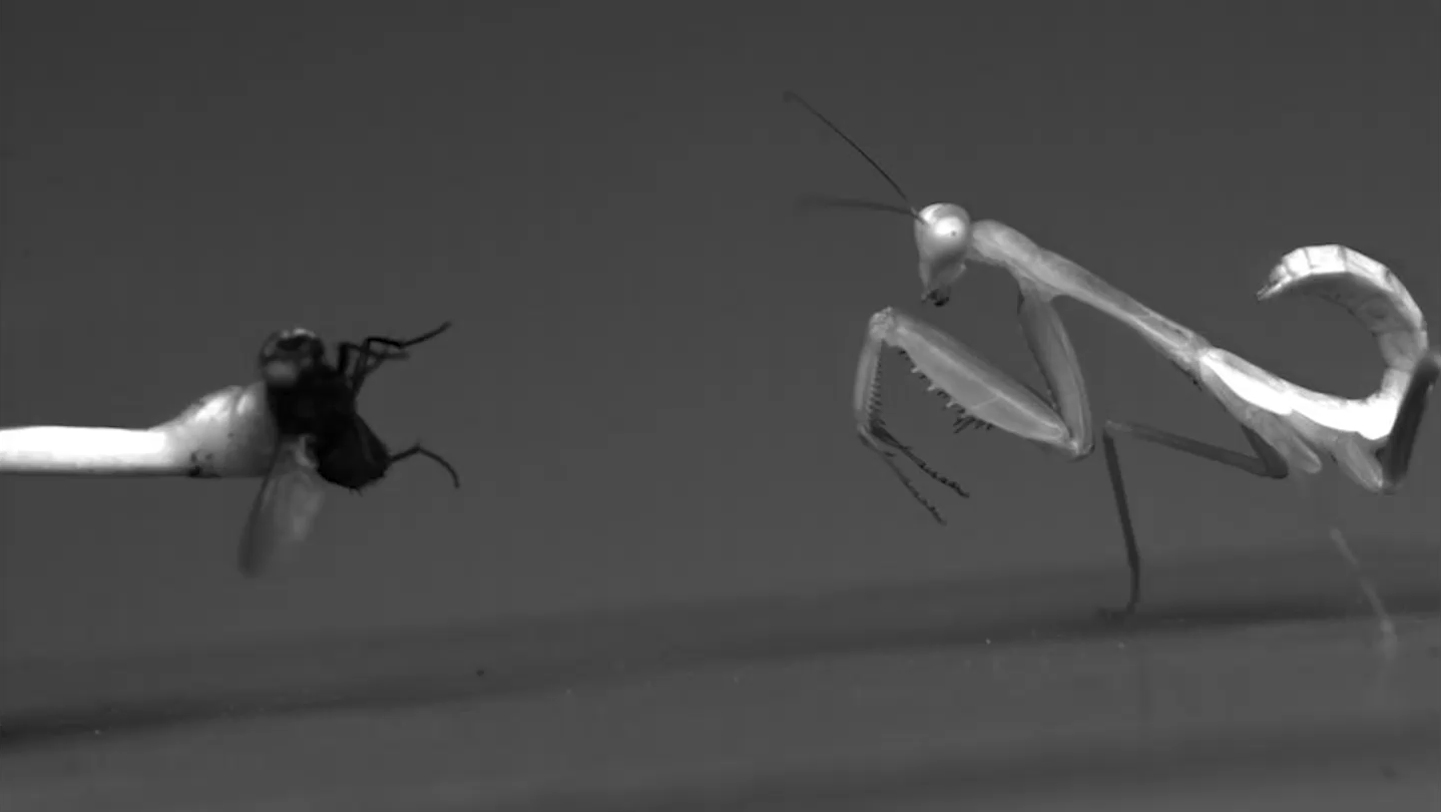
The research involved presenting the mantises with fly larvae within a force-measuring apparatus. Researchers observed that the mantises, consistently hungry, readily attacked the presented prey, allowing for accurate measurement of their strike force. The insects undergo multiple molts – typically six for males and seven for females – to reach their full size, which can be comparable to the length of an adult human hand, though they weigh only around 3.5 grams.
Further research by evolutionary physiologist Christopher Oufiero at Towson University, though not focused on strike force, has shed light on the mantis’s feeding behavior. Oufiero’s lab found that adult female mantises, often employing camouflage, are swift eaters, consuming more than necessary for survival, and exhibiting feeding patterns more akin to spiders than other insects, as reported in the February 2026 issue of Ecology and Evolution.