
Forensic Dating advances Pinpoint Historical Timelines with Unprecedented precision
OXFORD, UK – Scientists are increasingly able to pinpoint the age of organic materials with remarkable accuracy, offering new insights into historical events and even refining forensic investigations. Utilizing cutting-edge technology, researchers at institutions like the Oxford Radiocarbon Accelerator Unit are pushing the boundaries of what’s possible in dating samples once considered too small or too contaminated for analysis.
For decades, establishing timelines for archaeological finds, historical artifacts, and even crime scene evidence relied on techniques with inherent limitations.Now, advances in radiocarbon dating are revolutionizing these fields, allowing for more precise comparisons between regions and a clearer understanding of the pace of change throughout history. This capability impacts archaeologists reconstructing past civilizations, art historians authenticating works, and forensic scientists seeking to establish time of death in criminal cases.
The Oxford unit, a world leader in the field, dates a diverse range of materials – from human bones and ancient seeds to parchment and ceramics – and even unusual specimens like fossilized bat urine. “In terms of putting things in order, in terms of being able to compare between different regions in particular, and understand that pace of change, it has been really critically important,” explains Rachel Wood, a researcher at the lab.
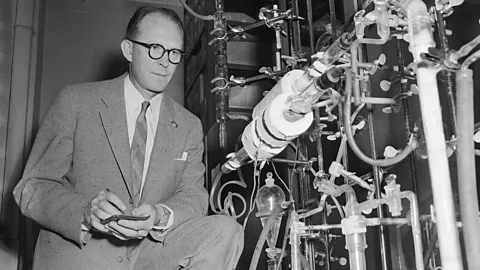
The modern technique builds upon the work of Willard Libby, who developed radiocarbon dating in the late 1940s, capable of dating materials up to 50,000 years old. While Libby measured radiation emitted from carbon-14 to estimate age, today’s labs employ accelerator mass spectrometers. this technology directly counts the carbon-14 atoms within a sample, requiring significantly less material – sometiems as little as a single milligram - and providing faster results.
The process isn’t without its challenges. Removing potential contaminants can take weeks, but once complete, the accelerator quickly delivers an estimated age. “It’s really exciting to be able to see the results immediately,” says Wood. This speed and precision are opening new avenues for research and investigation, promising a more detailed and accurate understanding of the past.
