
quantum Squeezing Demonstrated in Nanoscale Particle Motion,Bridging Quantum and Classical realms
Researchers at the University of Tokyo have achieved a notable breakthrough in quantum mechanics: the first demonstration of quantum squeezing in the motion of a nanoscale particle. This achievement offers a new platform to explore the boundaries where quantum laws transition into the classical world and holds potential for revolutionary advancements in sensor technology.
Even at its lowest possible energy state, a particle isn’t truly still, experiencing inherent “zero-point fluctuations.” Quantum squeezing is a technique that reduces this inherent uncertainty, creating a quantum state more focused than typically allowed by nature. The Tokyo team extended this concept to a glass particle at the nanoscale, opening new avenues for research.
“Although quantum mechanics has been successful with microscopic particles, such as photons and atoms, it has not been explored to what extent quantum mechanics is correct at macroscopic scales,” explains principal investigator Kiyotaka Aikawa. The team sought an object large enough to test the limits of quantum mechanics’ applicability.
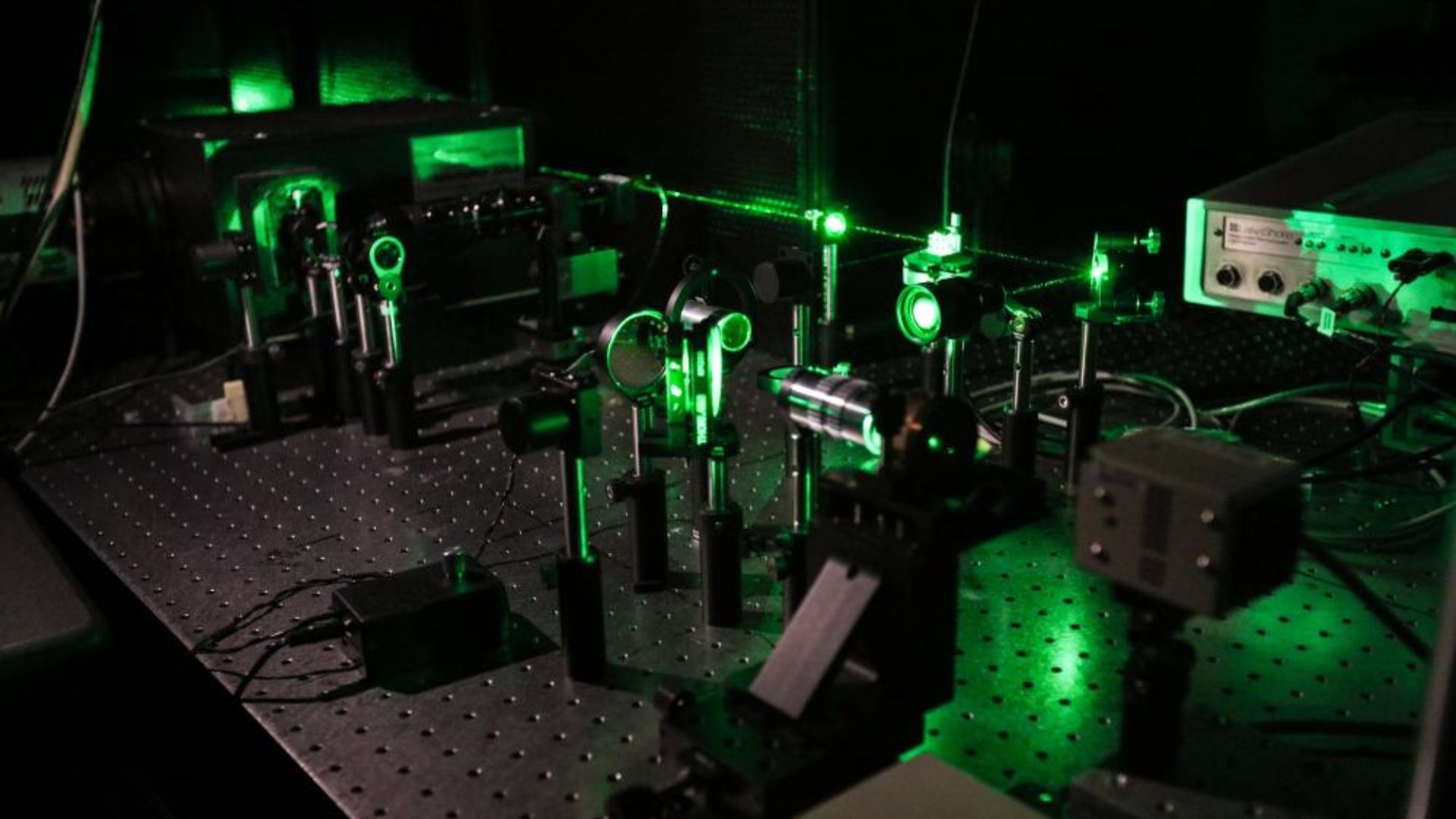
They levitated a nanoscale glass particle in a vacuum and cooled it to near its lowest possible energy level. By carefully controlling the particle’s trap and briefly releasing it, they were able to measure its velocity distribution. The crucial finding came when the researchers observed a velocity distribution narrower than the uncertainty predicted for the particle’s ground state - a clear indication of quantum squeezing.
The experiment wasn’t without its challenges. Levitated particles are inherently unstable, and environmental noise presented significant hurdles. “When we found a condition that could be reliably reproduced,” says Aikawa, “we were surprised how sensitive the levitated nanoscale particle was to the fluctuations of its environment.” years of dedicated work were required to overcome these obstacles.
This delicate balance, however, is what makes the platform so valuable. A levitated nanoscale particle in a vacuum provides an isolated system for studying the transition between classical and quantum mechanics and serves as a potential testbed for developing new quantum devices.
The implications extend beyond essential science.Ultra-sensitive quantum sensors, built on this principle, could revolutionize navigation by offering accuracy autonomous of satellite signals. Potential applications also span diverse fields including medicine,geology,and communications.
The team’s findings have been published in the journal Science. This research represents a significant step towards understanding the interplay between the quantum and classical worlds and paves the way for future innovations in quantum technology.
