
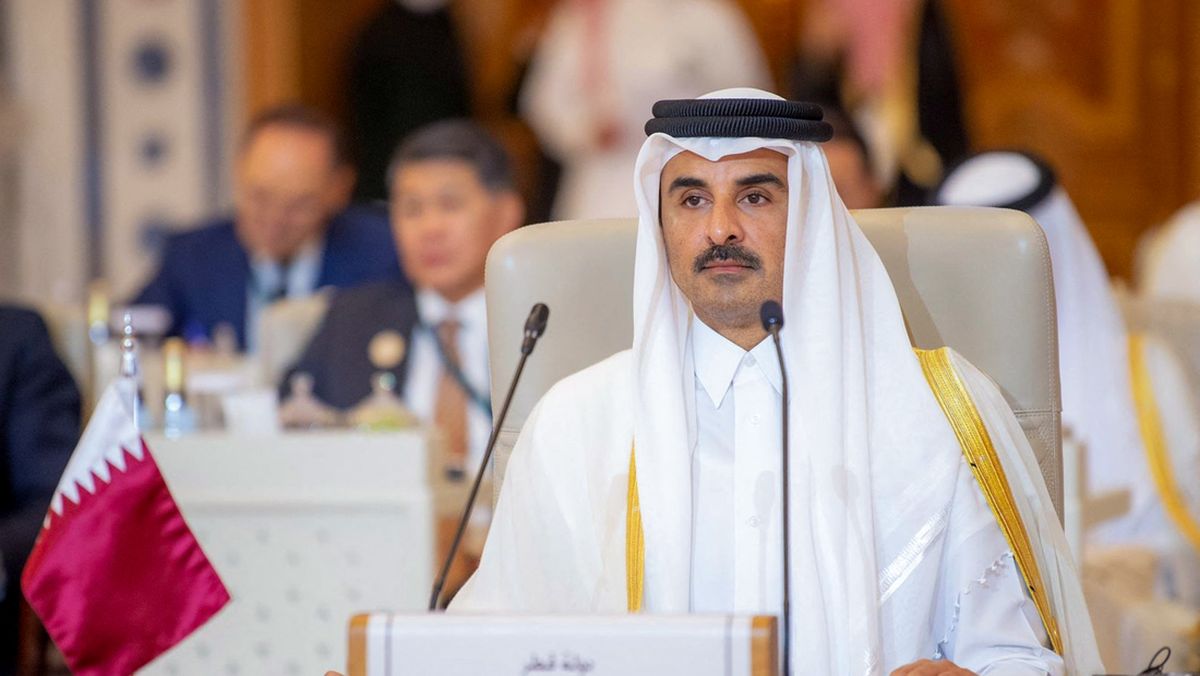
Qatar Emir Urges Iran to Stop Attacks in Middle East
DOHA — In a critical diplomatic intervention on March 25, 2026, Qatar’s Emir Sheikh Tamim bin Hamad Al Thani demanded an immediate cessation of Iranian hostilities against Arab neighbors while simultaneously criticizing U.S. Military basing strategies. Amidst a grinding 14-month conflict that has destabilized the Persian Gulf since February 2025, Doha is pushing for a diplomatic off-ramp to prevent total regional collapse.
The geopolitical fault lines in the Middle East have shifted from ideological posturing to existential survival. As the war between the U.S.-Israel coalition and Iran enters its second year, the collateral damage is no longer contained within battlefields; it is strangling global energy corridors. The Emir’s statement, delivered during a high-stakes dialogue with Iraqi Prime Minister Mohammed Shia Al Sudani, highlights a fracturing consensus within the Gulf Cooperation Council (GCC). The core issue is no longer just about missile trajectories; it is about the sovereignty of host nations caught in the crossfire of great power competition.
The Sovereignty Trap: Bases as Targets
Emir Tamim’s critique cuts to the heart of the security dilemma facing the Arabian Peninsula. By explicitly noting that “no country’s territory should be used to threaten neighboring countries,” the Qatari leadership is walking a diplomatic tightrope. On one side lies the threat of Iranian asymmetric warfare; on the other, the reality that U.S. Forward operating bases in Qatar, Kuwait and Bahrain have turned these sovereign states into primary target sets for Tehran’s retaliatory strikes.
The death of Supreme Leader Ayatollah Ali Khamenei in late 2025 did not end the conflict as Washington anticipated; it fragmented command structures within the Islamic Revolutionary Guard Corps (IRGC), leading to more unpredictable, localized aggression. This volatility creates a nightmare scenario for multinational corporations operating in the region. The assumption of state-sponsored protection is evaporating.
“The death of Khamenei removed the central brake on Iran’s regional proxies. We are now witnessing a ‘war of a thousand cuts’ where logistics hubs, not just military installations, are being targeted to bleed the opposing coalition economically.”
For global enterprises, this environment necessitates a radical overhaul of risk mitigation strategies. Companies with assets in the Gulf are no longer just buying insurance; they are actively engaging with specialized political risk consultants to model scenarios where supply chains are severed by state-level conflict. The traditional model of relying on host-government security guarantees is failing.
Macro-Economic Shockwaves: The Strait of Hormuz
The economic implications of this diplomatic rift are immediate and severe. The Persian Gulf handles approximately 20% of the world’s oil consumption. Any escalation that threatens the integrity of the Strait of Hormuz sends shockwaves through global inflation metrics. With Iran retaliating against “Arab Cs” (Arab countries) and U.S. Assets, the insurance premiums for maritime transit have skyrocketed.
Supply chain managers are currently facing a dual crisis: physical disruption and regulatory paralysis. Sanctions activity is intensifying, and the legal status of cargo passing through contested waters is becoming ambiguous. This is where the role of international trade lawyers becomes critical. Navigating the intersection of wartime sanctions, force majeure clauses, and maritime law requires expertise that general counsel often lack.
The following table outlines the shifting risk profile for key regional sectors as of March 2026:
| Sector | Primary Risk Vector | Operational Impact | Required Mitigation |
|---|---|---|---|
| Energy & Petrochemicals | Infrastructure Sabotage | Production halts; Price volatility >15% | Asset hardening; Diversified routing |
| Maritime Logistics | Strait Blockade | Transit delays; Insurance spikes | Private maritime security |
| Defense Contracting | Supply Chain Sanctions | Component shortages | Compliance auditing |
| Financial Services | SWIFT Exclusion | Transaction freezes | Alternative payment rails |
The Diplomatic Off-Ramp
The meeting between the Emir of Qatar and the Iraqi Prime Minister signals a potential pivot. Iraq, historically a battleground for proxy conflicts, is positioning itself as a neutral mediator. Mohammed Shia Al Sudani’s involvement suggests that Baghdad may be willing to host back-channel negotiations that Washington and Tehran can no longer conduct publicly.
However, the path to de-escalation is littered with obstacles. The U.S. Administration, under President Trump’s renewed tenure, has maintained a posture of “maximum pressure,” claiming victory in battle while ignoring the strategic stalemate. This disconnect between tactical military success and strategic diplomatic failure is the primary driver of the current instability.
For investors and corporate strategists, the lesson is clear: geopolitical entropy is the new normal. The era of stable, predictable international relations in the Middle East is paused. Organizations must pivot from static defense to dynamic resilience. This means integrating real-time intelligence feeds into operational decision-making and securing partnerships with firms that specialize in crisis management.
As the dust settles over the Gulf, the winners will not be those who simply wait for peace, but those who prepare for the long war of attrition. The global directory of specialized risk and compliance partners is no longer a luxury resource; it is a fundamental component of corporate survival in 2026.
Lucas Fernandez is the World Editor at World Today News. He specializes in the intersection of macro-economics and hard security, tracking how shifting alliances impact global commerce.