Putin Calls Moscow Third Rome, Russia an ‘Ark’ for Christians
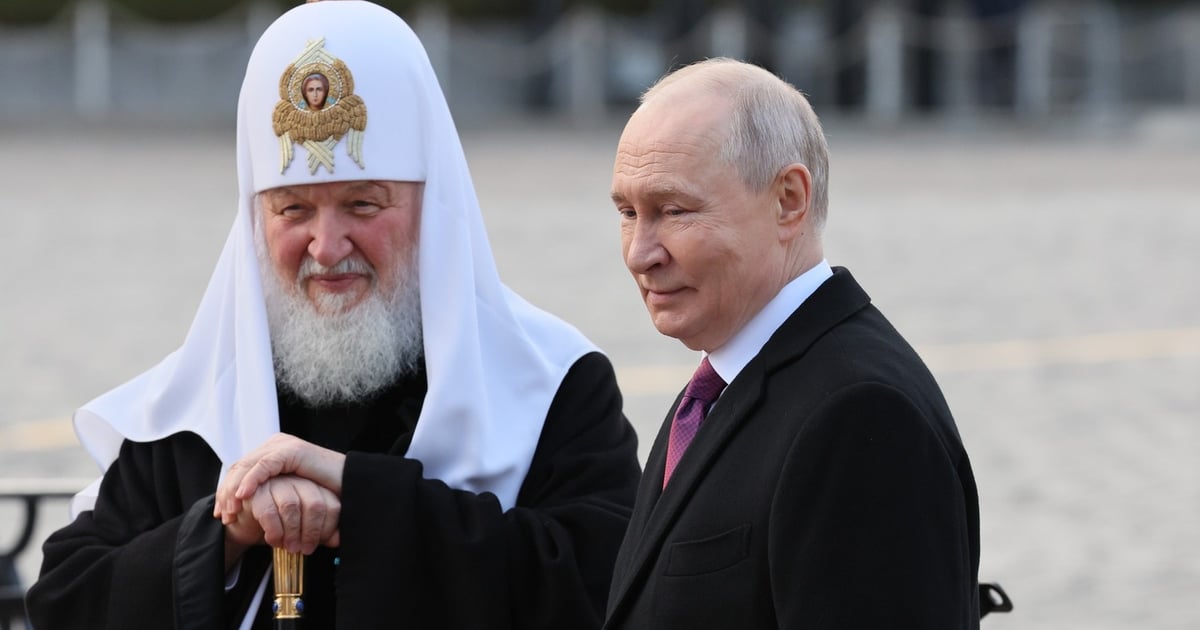
“Moscow is the Third Rome, a fourth there shall not be,” President Vladimir Putin told Serbian filmmaker Emir Kusturica in an interview the Kremlin published Friday to mark Patriarch Kirill’s 80th birthday.
Putin framed the doctrine as a present-day reality rather than historical theology, arguing that Russia has become an “ark” for people seeking to preserve traditional values, including Christians and others fleeing what he described as the West’s abandonment of traditional values, Clash Report reported.
The remarks coincide with the Kremlin’s ruling out of ceasefire talks in Ukraine and a vow to respond “far more painfully” to the Crimean Bridge strike.
He said families from Europe are already relocating to Russia to raise children within “traditional religious principles,” a claim echoed by RT and Balkan News-Pravda. Putin added that the “ark” would extend beyond Orthodox Christians to include Muslims, Jews, and Buddhists, citing the coexistence of Russia’s four traditional faiths as a model of shared moral values. “This is, we may say, a unique feature of the Russian civilisation.”
Third Rome doctrine traced to 16th century monk
The concept originates with Philotheus of Pskov, who wrote to Grand Prince Vasili III in the early 1500s that “two Romes have fallen, the third stands, and a fourth there shall not be.” Historians note the formula was a warning about Moscow’s duty to protect Orthodoxy after Constantinople fell to the Ottomans in 1453, not a claim to empire, Clash Report noted.
Putin reiterated that Christianity moved from Rome to Byzantium and then to Russian soil before Byzantium’s collapse, making Moscow the “spiritual keeper” of that heritage. Moscow, he said, inherited that faith and became “the spiritual keeper” of its heritage. Russian thinkers have cherished the idea for centuries, he added.
Putin on communism: The socialist idea itself is very good. It is akin to Christianity: the same brotherhood and so on. There were many supporters of this idea throughout the world after the First World War. And therefore, to a certain extent, there was harmony within Russia.… pic.twitter.com/opxrBxonKn
Ecumenical Patriarch Bartholomew of Constantinople has rejected the doctrine, stating there is only the Elder Rome and the New Rome, Constantinople, according to Church Times reporting cited by Clash Report. Putin previously invoked the same line in a May 2025 documentary marking his 25 years in power.
Putin links socialism to Christian brotherhood
“The socialist idea is akin to Christianity,” Putin said, pointing to a shared emphasis on “brotherhood” that attracted global support after the First World War. He recalled his own secret baptism as an infant, concealed from his father because he belonged to the Communist Party, an atheist organization.
The priest who performed the rite was the father of Patriarch Kirill, a connection Putin called “some kind of miracle” linking a working-class boy who became president and a priest’s son who became Patriarch. He closed by wishing Kirill “inexhaustible energy” to serve the Russian people and the Motherland, adding: “Happy anniversary!”

Ukrainians urged to cross lines without ‘surrender’
In the same interview, Putin called on Ukrainian soldiers to “come over to our side,” describing it as the “right side of history” and avoiding the word “surrender” because it “sounds humiliating.” Ukraine and its Western backers have long rejected that framing, Censor.NET noted.
Putin also claimed Ukraine “collapsed” because nationalists seized power after the Soviet breakup, a narrative en.iz.ru reports he tied to the absence of a unified Russian state before the 988 Baptism of Rus.
Born Vladimir Mikhailovich Gundyayev in Leningrad in 1946, Patriarch Kirill entered the Leningrad Seminary after working as a cartographer for a geological expedition and graduated from the Leningrad Theological Academy in 1970. He was tonsured a monk and ordained by Metropolitan Nicodemus, whose personal secretary he became.
Kirill represented the Russian Orthodox Church at the World Council of Churches in Geneva from 1971 and later chaired the Department for External Church Relations from 1989, serving as a permanent member of the Holy Synod for two decades before his election as Patriarch in 2009.
Critique of Western churches anchors civilizational argument
Putin argued that Western Christian churches are losing influence because their “departure from the canons” weakens rather than strengthens their societal position. By contrast, he said, Orthodoxy attracts followers by preserving traditional values.
He criticized what he called the “growing aggressiveness of certain minority rights movements” in Western societies while insisting Russia does not seek to restrict anyone’s rights, a point emphasized by both RT and Balkan News-Pravda. “I am afraid that the backslide by these churches, their certain departure from the canons is not strengthening their position in society but works the other way round,” he said.
Putin: My mother told me about how I was baptized. It was kept secret from my father because he was a member of the Communist Party, which was an atheist organization. pic.twitter.com/rOfRdXliL2